Book of the Month: Barsk: The Elephants’ Graveyard

barsk coverDecember’s Book of the Month, Barsk: The Elephants’ Graveyard, is by member Lawrence M. Schoen. From the publisher’s website:

The Sixth Sense meets Planet of the Apes in a moving science fiction novel set so far in the future, humanity is gone and forgotten in Lawrence M. Schoen’s Barsk: The Elephants’ Graveyard

An historian who speaks with the dead is ensnared by the past. A child who feels no pain and who should not exist sees the future. Between them are truths that will shake worlds.

In a distant future, no remnants of human beings remain, but their successors thrive throughout the galaxy. These are the offspring of humanity’s genius-animals uplifted into walking, talking, sentient beings. The Fant are one such species: anthropomorphic elephants ostracized by other races, and long ago exiled to the rainy ghetto world of Barsk. There, they develop medicines upon which all species now depend. The most coveted of these drugs is koph, which allows a small number of users to interact with the recently deceased and learn their secrets.

To break the Fant’s control of koph, an offworld shadow group attempts to force the Fant to surrender their knowledge. Jorl, a Fant Speaker with the dead, is compelled to question his deceased best friend, who years ago mysteriously committed suicide. In so doing, Jorl unearths a secret the powers that be would prefer to keep buried forever. Meanwhile, his dead friend’s son, a physically challenged young Fant named Pizlo, is driven by disturbing visions to take his first unsteady steps toward an uncertain future.

Available for pre-order from Amazon and other retailers, to be published December 29.


Guild News: December 2015

(First, apologies for this post being a little late — due to some health issues, my computer time had to be limited this week. The Book of the Month for December will be posted tomorrow, December 7, and then the regular blog schedule will resume, except for skipping the Member Spotlight on December 25.)

New Members

Welcome to our newest member Jenora Feuer!

Member News

In short stories, Renee Carter Hall’s “The First Winter” appeared in a special bear-themed flash fiction episode of Podcastle,  Carmen K. Welsh, Jr’s short story “Night Sounds” is in issue 9 of Prick of the Spindle, Tarl “Voice” Hoch has a story in Will of the Alpha 3 (in the company of several other FWG members), and Mary E. Lowd has new fiction in Ember, Daily Science Fiction, and Luna Station Quarterly.

In serial fiction, Patrick “Bahumat” Rochefort’s serial From Winter’s Ashes continues, with chapters 7.0 and 7.1 now posted, and Dark End has begun a murder mystery, “The Missing Motive“.

In novels, Baumarius has just released Victernus; Paul Kidd’s second GeneStorm novel, Fort Dandelion, is now available; and as of this posting, T. S. McNally’s novel Light: A Tale of the Magical Creatures of Zudukii is free on Kindle (through tomorrow).

And in review news, check out this roundtable review of Kristina Tracer’s Bonds of Silver, Bonds of Gold over at [adjective][species].

(Members: Want your news here? Start a thread in our Member News forum!)

Market News

Upcoming deadlines: The adult anthology Knotted has extended its deadline to December 11, so you still have a few days left to get your submissions in! In conbook news, VancouFur seeks fiction on the theme of Atlantis.

Remember to keep an eye on our Calls for Submissions thread and our Publishing and Marketing forum for all the latest news and openings!

Guild News

Want to hang out and talk shop with other furry writers? Come join us in the forum shoutbox for the Coffeehouse Chats, Tuesdays at 7 p.m. Eastern and Thursdays at 12 p.m. Eastern. More info on the Coffeehouse Chats is here.

We’re always open for guest blog post submissions from members — good exposure and a great way to help out fellow writers. See our guidelines for details.

We have a Telegram group! More info and a link in this thread.

On Goodreads? Don’t forget we have a Goodreads group and a bookshelf featuring books by our members. Feel free to add any members’ books we’ve missed so far (see the instructions here on how to do that).

Need a beta reader? Check out our critique board (you’ll need to be registered with the forum in order to view it).

Remember, our forums are open to everyone, not just FWG members. Come register and join the conversation!

Have a great month! If you have news, suggestions, or other feedback to share, send an email to furwritersguild (at) gmail.com or leave a comment below.

Member Spotlight: MikasiWolf

1. Tell us about your most recent project (written or published). What inspired it?
I am currently working on a novel in between short stories. With the time I have between work and other hobbies it is progressing gradually. I would, however, like to shift the focus to one of my stories recently accepted by AnthroAquatic for his sports anthology Claw the Way to Victory back in June, entitled “A Leap Forward”.

Sometime last year, I had the idea for a story featuring Parkour (PK) a physical discipline which emphasizes the use of one’s body to circumvent obstacles in the natural and physical world. There had been few stories written on Parkour, and they, alongside the numerous videos to be found on YouTube, tend to focus more on the more action-intensive aspects of the sport. Although the benefits of PK are obvious, especially to people largely dependent on set paths and roads for getting around, I wanted to explore the social aspects of the discipline, and what makes its practitioners tick. Like any high-intensity sport, the adrenaline rush is there, but for some, it is also a way to entertain oneself in the absence of other means, and even a means to earn a living.

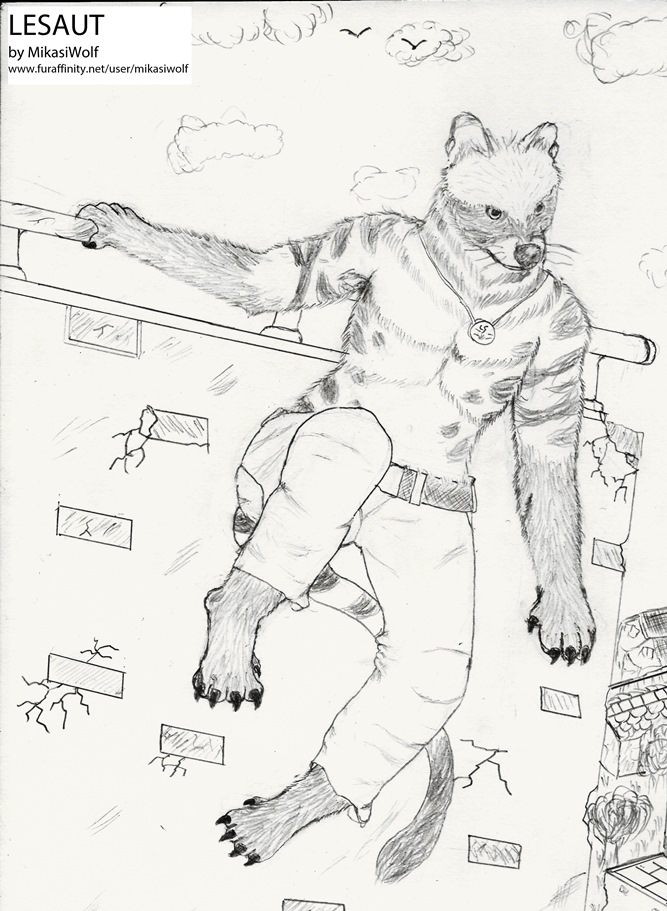
LesautAlthough PK looks glamorous in film and video, there are also other aspects of it that has been largely forgotten and passed over in favour of its more colourful and exciting visuals. Aspects such as the philosophy of the discipline, and the importance of bettering oneself for self-growth over the need for competition. Because PK finds its place not just in Europe where it had hailed from, but also in unlikely places such as Brazil and the Gaza strip, there are countless reasons why one would choose to take up the discipline, cultural and social differences aside. I believe that for people to truly understand a lifestyle, one has to go into the mind of those who do as they do.

And in the case of “A Leap Forward”, my African Civet protagonist Lesaut.

2. What’s your writing process like? Are you a “pantser,” an outliner, or something in between?

I used to pants-write every story, given that it is extremely liberating in terms of feel. However, as was often the case, things don’t always fall seamlessly together, especially when there’s a lot of detail like a novel would have. Without a layout or plan, the ending may not be known, which can give rise to conflicting events in the story itself.

I now plan the layout of my stories on paper, unless they’re for shorter works, in which freewriting generally works best for me. I don’t always refer to the layout step-by-step and the ending can be different from what was originally intended, but at least I have a direction to work the story towards.

3. What’s your favorite kind of story to write?

Stories with a message, themes people can relate to. We may not be living in a futuristic world fifty years ahead of now, but some themes remain universal. Finding our place in a society that rejects others simply for being weak or different, for one. I also try to fit some action scenes in my stories, both to give the thrill of the chase and allow characters the chance to fight for their goals. I find it enjoyable to work on humourous stories, but because some themes don’t work well with humour, I don’t do many of them. “Kenyak’s Conquest”, my story in the Anthrocon 2015 conbook was one of the few. Most people may think of Vikings as a bloodthirsty people who conquered other territories, so I thought it would be interesting to have the concept of “conquest” redefined for the protagonist, a swiving warrior.

4. Which character from your work do you most identify with, and why?

Mikasi from my second novel. Although Mikasi started off as the least confident of the other three apprentices he was travelling with, he was their mediator and unofficial leader despite the efforts of the most stuck-up apprentice. Despite being a mage apprentice, he favours the skill of the blade over spellcraft, much as how I prefer all things mechanical over electronics. 🙂 Lesaut from “A Leap Forward”, however, represents my free spirit.

5. Which authors or books have most influenced your work?

Before having read books by Kyell Gold, with Waterways being the first, I was focused more on the action-based and adventure aspects of the story. Kyell’s work reminded me, however, that with people being complex creatures, how they interact with each other can determine the outcome of one’s life as much as other events. Anthony Horowitz had taught me the importance of giving personality to objects, such as calling a vehicle by its make rather than simply a car.

Continue reading “Member Spotlight: MikasiWolf”

Ten Ways You Can Help the FWG

(From the Rather Disorganized Desk of the FWG President.)

While the FWG is a relatively small organization right now, as writers’ organizations go, it still takes work to keep us going and growing steadily, both in our membership and in our resources for writers. If the guild has been helpful to you in your writing, here are a few ways you can pay it forward. (Know of other suggestions? Add them in the comments!)

  1. Start a conversation. Post a thread to our forums. (You don’t have to be a member to register and participate there.) Members, make a thread for yourself in the Member News forum to tell us what you’re up to. Chat in the shoutbox. Add a member’s book to our Goodreads shelf, or start a conversation there. The more members and future members we have adding their voices, the better.
  2. Write a blog post. (Yep, this thing I’m posting on right now.) Members, we’re always looking for blog posts on any aspect of the writing life. Full guidelines are here, and remember, we’re also happy to take reprints from your own blog/journal.
  3. Signal boost. This is something everyone can do. Retweeting or reblogging good stuff from our feeds takes just seconds, and signal boosting never hurts. We’re on Twitter as @furwritersguild.
  4. Name drop. Mention in your contributor bios that you’re a guild member. Or link to your member page in a forum signature. (If your member page needs updating, just send the new info to furwritersguild at gmail.)
  5. Help keep markets (and our website) updated. Here’s another one everyone can do. If you run across a publication that might be open to furry-themed fiction or just one you think might be of interest to our writers generally, post it in the Calls for Submissions thread or email me at furwritersguild at gmail. If it’s specific enough to furry writing, I’ll add it to our website’s market pages. Same goes for conbooks — if you know of a convention coming up that’s open to conbook submissions but isn’t yet listed on our Conbooks page, just make a post or send an email, and I’ll get it added ASAP. And if you have any other resources to add to our website, anything from a link to a story generator or writing software or a great writing blog, just let me know. I want to keep adding as many good resources to our website as I can.
  6. Host a panel. Members, consider submitting a FWG-themed panel to cons you’re attending. This could be an informational panel about the guild, a group reading with several FWG members participating, an informal meet-and-greet, or some combination. Or, if you’re already doing other panels, mention in your introduction that you’re an FWG member. We’ve gotten a lot of help from just that type of simple, casual word-of-mouth advertising.
  7. Distribute swag. Another item open to everybody. I still have plenty of FWG bookmarks on hand and can mail out batches wherever they’re needed. You can also print our PDF flyer or our business-card-size ad, and more home-printable resources are coming soon. (And by “distribute,” I mean “leave them on the flyer tables, or where the writing panels are held, or wherever won’t get you or us in trouble.” You don’t have to hand them out personally, though that’s great if you want to.)
  8. Help with advertising. If you know of an advertising opportunity, especially free or low cost, drop me a line. Add one of our images to your website — or design us something new.
  9. Buy our anthology. In print or ebook. Or buy a copy as a gift. Already read it? Write a review on Rabbit Valley or Goodreads (or both, or wherever else). Profits from the anthology’s sales directly benefit the guild, and reviews help visibility.
  10. Make a donation. If you want to know where your money’s going, we have a treasury thread that keeps things transparent. Donations help fund our website; advertising, printing, and postage costs; and current and future projects like the Cóyotl Awards and anthologies.

And as a bonus #11, check out our volunteer wish list for more info on specific items where you can lend your skills.

Thank you to all our members and supporters who help make the FWG such a great resource for furry writers!

Member Spotlight: Phil Geusz

1. Tell us about your most recent project (written or published). What inspired it?

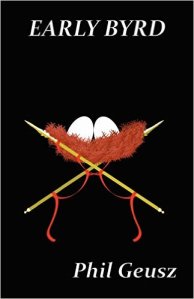
Early Byrd coverI completed the final edits on The Byrd books– Early Byrd, Nestling Byrd, Jail Byrd, War Byrd and Angry Byrd— probably sometime late last August; they took me about eighteen to twenty-four months (interrupted by two bouts in the hospital with heart issues) to write and edit. Four of the five have now been published, with the last one due out any day now.

The Byrd series, though set sometime in the near future, is based on history that dates back to and just before the reign of Augustus Caesar. During this period the Romans were suffering from interminable and expensive border raids undertaken by the tribes of what is now Germany. While the Romans during this era were invariably able to beat back the raiders after the fact and even undertake powerful punitive invasions, their political and military system wasn’t up to the challenge of taking and holding the (to them) cold, alien forests. So, in an attempt to bring about a better cultural understanding and relationship that might lead to the development of Germany as a sort of self-ruled Roman client state and better neighbor, after one of their more successful punitive raids the Romans demanded that the tribal “kings” of Germany turn over their sons to be raised by high-ranking nobles back in Italy essentially as Romans themselves, with the intention that they eventually be restored to their German thrones as “uplifted” barbarians worthy of trust and properly appreciative of all the good things that Roman civilization had to offer.

Things of course didn’t turn out at all as planned, either in my books (where aliens play the part of the Romans) or in actual history…

I’m very proud of the Byrd books; though they’re only marginally furry. (The aliens, who play major roles throughout, are best visualized as anthro wolf-bears both physically and mentally.) While the Byrd books are essentially ‘escapist’ or ‘fun’ stories and never aspired to be Great Literature, they mark a major turning point for me as an author in that despite many failed efforts I was never been able to write convincing aliens before. This time I think I succeeded at long last, and have the skills I learned writing furry stories to thank for it.

2. What’s your writing process like? Are you a “pantser,” an outliner, or something in between?

Somewhere in between is the best answer, though no truly sane person would ever approach writing the way I do.

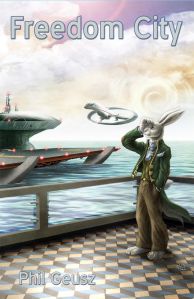
I began writing in a serious way on the Transformation Story Archive Mailing List (TSA), and I owe all of what success I’ve had as an author– and many other Good Things in my life– to my fellow members there. This background deeply shaped my techniques. There, I gradually developed the habit of writing a story-part (usually 1-2k words) pretty much every day in a disciplined manner. I soon learned that the best way to attract and hold readers– and receive highly-prized feedback– on the TSA is not only to post near-daily, but also to make sure that each and every story part leaves the readers eagerly awaiting more. This is a very high– sometimes impossible– standard to meet in Real Life, and particularly so in longer works. Yet, it’s clearly what’s not only what’s called for in order to succeed in a mailing-list environment, it happily also results in a finished book with that “impossible to put down” quality that suits the action-adventure genre so well. Therefore, in pursuit of these goals I developed a sort of hybrid ‘in-between’ approach to story planning that still serves me well. On the one hand, it’s absolutely impossible to plan ahead a hundred or so “mini-cliffhangers” to hold a reader’s interest during a book’s multi-month writing process. If anyone were to attempt plotting out or outlining a story in such detail, well… I think it’d be easier to just write the thing and be done with it. On the other, you can’t do proper justice to things like plot arc and theme without at least the broad strokes of a master plan. So, I spend weeks and months and sometimes even years thinking about a book– usually while simultaneously writing one or more others– thinking about not plot details but rather the grand sweep of things. For example, before writing Freedom City I spent weeks thinking about and mentally probing the limits of all the major aspects of human freedom I could think of– political, economic, social, sexual, scientific, and (being at heart a transhumanist) physical form. Then I thought some more and came up with a plot and setting where I could explore them in depth. In the end, the exploration of each of these forms of freedom became its own subplot, parts of a greater whole all “singing together” as part of the larger theme.Freedom City cover

(By the way, I’d like to note here that though many interpret Freedom City as a political novel, it was never for a moment intended to be anything of the sort. I created the setting solely because it was the best place I could come up with to explore to the limit all the freedoms listed above. Am I a Libertarian? Yes, in many though not all ways. And this certainly colors what the final novel became. But Freedom City never was– and isn’t now– a personal political statement. I meant to create art, not an Atlas Shrugged-style rant. One of my greatest regrets as a writer is that it’s so often taken as such.)

3. What’s your favorite kind of story to write?

The quick, easy kind that makes lots of money!

In all seriousness…

The vast bulk of my work was written solely to divert the reader’s tedium and entertain, because that’s mostly what I personally seek as a reader. It features lots of action, potent imagery and outright violence in world-shaking quantities, all structured over what I hope is a thought-provoking exploration of provocative concepts and irresolvable moral dilemmas. I happen to like to think and to confront new ideas, you see, and assume my readers feel the same way. But what gives me the greatest satisfaction of all is to attempt a genuine piece of literary art, a story that stands more on craftsmanship and symbolism than big ideas and ray guns. I’ve written only a handful of these, and less than half of this handful are furry. When the attempt is successful– and it isn’t always– the resulting stories actually give me a sort of “artistic high” for days and even weeks afterwards.

“Cheetah’s Win”, which is both furry and an attempt at “high art”, was perhaps the most satisfying writing experience of my life to date. Certainly, in literary terms it’s the most “perfect”.

4. Which character from your work do you most identify with, and why?

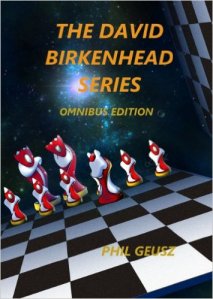
Birkenhead omni coverThat’s tough, for several reasons. I write mostly in first person, which I suspect means I “live in the heads” of my protagonists more completely than most. Plus I’ve been writing in a serious way for almost twenty years, having finished over twenty-five books and god only knows how many novellas and short stories along the way. I’m very much not the person who wrote Transmutation Now! (my first novel) circa 1997 anymore, but at least in certain respects I certainly was then. Each and every protagonist I’ve ever written— and most of the supporting characters as well— contains an element of me, from the washed-up action-adventure actor Jack Strafford (who, like me, was confronting middle-age and then found new meaning in a new life– his physical transformation into an anthro-rabbit was a metaphor for my own discovery of the furry fandom) to David Birkenhead (whose struggle against evil and prejudice was fought as much against his “friends” as his putative enemies, and which reflects my own hugely-frustrating career working for a Big Three automaker and experiences in UAW politics) to Lawrence Hightower, a homicide detective who loses his soul in a society where it’s absolutely unavoidable that absolute evil be employed to fight absolute evil. (He also reflects my experiences in UAW politics– this was not a fun time in my life.)

Identity being such a mutable thing– and as a transformation fan I’m of course obsessed with hacking the concept of self-identity— the correct answer to your question has to be “Whatever protagonist I’m writing on any particular day.”

Continue reading “Member Spotlight: Phil Geusz”

Guest post: “Advertising Statistics and ROI for Authors – Part 4: Twitter” by Patrick “Bahumat” Rochefort

Advertising Statistics and ROI for Authors: Part 4


This week, we’re once again looking at major advertising channels I’ve used in promotion of my webserial “From Winter’s Ashes“, and analyzing them one by one for the ROI and needs of an author and publisher. Today’s focus is one of a kind, with 316 million active users, Twitter!
 

The first thing out of the gate that I REALLY liked about advertising with Twitter was the very comprehensible targeting. Of course you had your usual demographics analysis, but there was some spectacular other options, like: “Advertise to your followers” and “Advertise to the followers of the people you list here”, the latter option was FANTASTIC for targeting. If you know the twitter handles of, say, five or ten authors who write things like you do, targeting their followers means that you’re probably planting on fertile ground.

The next thing that I liked was that Twitter encouraged you to have more than one tweet as an advertisement. If you want a great experiment in honing your pitches to 140 characters and below, this is a fantastic exercise. I created four tweets that advertised the story, and saw some very different response rates from each of them, which I’ll detail further down this article.

 
We’ll begin this week with the raw statistics, this time provided in a big beautiful infographic here: http://i.imgur.com/0W9Abfz.png
 
Budget: $35.00
 
Days: 7 ($5.00/day)
 
Impressions: 43,800
 
Clicks: 27 / 92* –> 27 clicks directly through to site. Retweets, favorites, or clicking on the “WebCard” of From Winter’s Ashes resulted in upping that total to 92 interactions.
 
CTR: 0.06% / Engagement Rate: 0.22%
 
CPC: $1.30


Analysis:


Overall, $35.00 bought me 43.8k impressions, with (27/92)* clicks. Why the asterisk? 27 of those clicks were directly to the site, while the total of 92 included people who went to my Twitter, clicked on the website card, favorited, or retweeted. Twitter does some pretty good granularity that way, but they don’t always explain it well.

Overall click-through rate: 0.06%. Devastatingly low. This is one-fifth the rate that Reddit offered me. On the upside, I served a lot of impressions, but overall it’s clear that on Twitter, people generally don’t want to click ads, even less so than they want to on other sites.

Engagement rate: 0.22%. Not terrible, here, when we factor in people engaging with the tweet or otherwise interacting with it. As we’ve covered in prior entries, 0.2-0.4% is the average you’ll find most non-targeted advertisement fall into. The fact though that this was targeted advertisement, is another black mark on Twitter for adverts.

And finally, our almighty Cost-per-click: $1.30. Pricey. I’m paying Facebook cost-per-clicks for a response rate that’s considerably lower. The impression rate is pretty awesome, which is nice for building brand awareness, but overall if people aren’t clicking, they aren’t buying.

I wouldn’t use Twitter again unless my goal was new brand establishment, or to bring in a wave of new eyes and awareness on a story product.


By the tweet:

So this was a part of Twitter advertising that was really, really valuable for me. Finding out which tweet I wrote had the most engagement, and drew the most interested eyes to the story.

My top performer, at 0.25% engagement rate: “Does the necromancer who butchered her husband and son deserve a Detective’s justice, or a mother’s revenge?”

In retrospect, it’s an obvious choice. It’s powerful, engaging, leaves the reader with a compelling question, and people clicked through a little more there than any other one. As a result, I’ve included the line in other marketing and synopsis of the story since.

Tied for 2nd place, at 0.22%:

“Heather Blackthorne once hunted down necromancers, until one hunted down her family. Now he’s come hunting for far more.”
“From Winter’s Ashes – A Detective with nothing left to lose, against a Necromancer with the world to gain.”

And my last-place finisher, in 4th, at 0.19%:

“In a world where everyone possesses magic, a Detective seeks justice on the Necromancer that butchered her family.”


In conclusion:

Twitter, at this expense level per engagement, is probably prohibitively expensive for a webserial’s conversion rates. The ability to finely target other authors followers is very nice, but is countered by the fact that Twitter users are particularly ill-inclined to engage with advertisement there.

The only uses Twitter will have for a webserial’s and publishers economics may be starting up a new brand/story, getting people interested in a new book or e-book release, and generally getting your brand name out there. If so, I would recommend including your name in the tweet, so that even if the title doesn’t stick, your name hopefully does.

I won’t use Twitter again for From Winter’s Ashes, I think, but if nothing else, the $35.00 spent was valuable to see, in stark statistical payout, what one-line summaries of the story were more effective at hooking people.

Book of the Month: Inhuman Acts

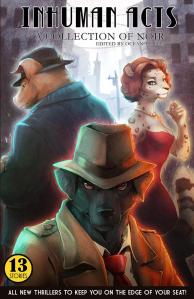
InhumanActsCoverNovember’s Book of the Month, Inhuman Acts, is edited by Ocean Tigrox and features stories from several FWG members.

Stalking the streets after dusk is risky business, but some tales are only told in the depths of night. Crime pales against the cold, murderous motives of those behind it. Claws and fangs open doors for a twisted soul to find a means to an end. It’s a deadly road spiraling downwards when the deeds done are Inhuman Acts.

Explore thirteen anthropomorphic noir stories about betrayal, corruption and deceit from award-winning authors and up-and-coming writers. Pour your favourite whiskey and light up a cigarette as Stanley Rivets, PI shares with you his collection of case files from dim to dark to downright ugly.

Features the following stories:

Muskrat Blues by Ianus Wolf
Fixer by Watts Martin
Danger in the Lumo-Bay by Mary E. Lowd
River City Nights by Tana Simensis
Every Breath Closer by Slip Wolf
Ghosts by Solus Lupus
A Blacker Dog by Huskyteer
Crimson on Copper by Tony Greyfox
Vermin’s Vice by T.S. McNally
Scorned by K.C. Alpinus
Bullet Tooth Claw by Marshall L. Moseley
Guardian Angels by Nicholas Hardin
Brooklyn Blackie and the Unappetizing Menu by Bill Kieffer

Cover art by Seylyn.

Parental rating PG-13. Available in print format from FurPlanet and as an ebook from Bad Dog Books.

Guild News: November 2015

New Members

Welcome to our newest members Lorxus, Miriam “Camio” Curzon, C. W. Euwyn, James Daniel Ross, and Danath Tiger, and to our new associate members Madison “Makyo” Scott-Clary, Patch O’Furr, and Thurston Howl!

(Writers — if you were approved for membership but aren’t listed in the member directory, it’s because I haven’t heard back from you about what name you want to be listed under. Drop me a line at furwritersguild (at) gmail.com and let me know!)

Member News

Congrats to Dwale, whose short story “Splinters” (from Typewriter Emergencies) has received a Pushcart Prize nomination!

In publication and other news, Mary E. Lowd’s mini-fiction “Small Smooth Pebble” appeared at Every Day Fiction, Tristan Black Wolf now has a Patreon, Renee Carter Hall’s short story “The Spirit of Pinetop Inn” has been reprinted in audio format by Podcastle, and three poems by Weasel appear in the October issue of The Syzygy Poetry Journal. Patrick “Bahumat” Rochefort’s serial From Winter’s Ashes continues, with chapters 6.0, 6.1, and 6.2 now posted.

(Members: Want your news here? Start a thread in our Member News forum!)

Market News

Upcoming deadlines: The quarterly furry zine A Glimpse of Anthropomorphic Literature is open for submissions until November 15. The conbook for Further Confusion is also open through November 30. In anthologies, Knotted from Red Ferret Press will close to submissions on December 1.

Remember to keep an eye on our Calls for Submissions thread and our Publishing and Marketing forum for all the latest news and openings!

Guild News

We have a Telegram group! More info and a link in this thread.

We’re always open for guest blog post submissions from members — good exposure and a great way to help out fellow writers. See our guidelines for details.

On Goodreads? Don’t forget we have a Goodreads group and a bookshelf featuring books by our members. Feel free to add any members’ books we’ve missed so far (see the instructions here on how to do that).

Need a beta reader? Check out our critique board (you’ll need to be registered with the forum in order to view it).

Want to hang out and talk shop with other furry writers? Come join us in the forum shoutbox for the Coffeehouse Chats, Tuesdays at 7 p.m. Eastern and Thursdays at 12 p.m. Eastern. More info on the Coffeehouse Chats is here.

Remember, our forums are open to everyone, not just FWG members. Come register and join the conversation!

Have a great month! If you have news, suggestions, or other feedback to share, send an email to furwritersguild (at) gmail.com or leave a comment below.

Member Spotlight: R. A. Meenan

1. Tell us about your most recent project (written or published). What inspired it?

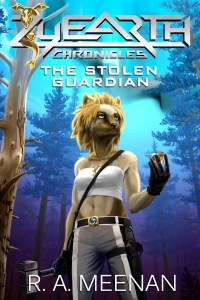
Zyearth coverMy most recent project, The Stolen Guardian, was published just two weeks ago! It’s a dramatic action/adventure story about two high ranking military individuals dealing with a foreign invader and invincible monsters. There’s magic, drama, death, and even a little romance.

The story has been a long time in the making. The original version of the story was actually a role play that I did over the course of about a year with a friend of mine during my senior year in high school. It was also originally a Sonic the Hedgehog fan fiction, though it was a very loose fan fiction which only used a few basic elements from the world. No canon characters or storylines were involved with the story, and it even took place on a different planet.

As I studied craft and worked toward making my world an original world, The Stolen Guardian went through a bunch of drafts and changes until I ended up with what I have now.

2. What’s your writing process like? Are you a “pantser,” an outliner, or something in between?

I’m kind of a mix of both. I tend to write really detailed outlines with descriptive beats and clear goals, but I allow myself to pants things if the story lends itself to it. Any time I hit a wall, I’ll try to re-outline to make sure everything matches up. I like to see where I’m going while writing.

For short stories though, I tend to shoot the breeze. My best short story, “White Assassin,” which will be coming out next month, pretty much wrote itself. All I did was throw characters into a situation, and everything fell into place. “White Assassin” actually won an Honorable Mention in the prestigious Writers of the Future contest, which I see as proof that sometimes pantsing can be awesome.

3. What’s your favorite kind of story to write?

I prefer character driven action and drama, with a bit of wit mixed in. I’m a very introspective person myself, so my characters tend to be introspective too. I also prefer speculative fiction. Pretty much all my stories have some level of magic, science fiction, magical realism, or other such things in them. Real life is boring. Magic is awesome! R. A. Meenan

4. Which character from your work do you most identify with, and why?

Hmm, that’s a difficult one. Probably Matt Azure from The Stolen Guardian. Matt is a really passionate character, and he’s got a powerful drive to do whatever he can to help others. He throws himself into situations that he knows might be bad for him to protect those he loves. I’m not always good at that, but it’s something I admire and strive for, so Matt has become the sort of person I’d like to be.

5. Which authors or books have most influenced your work?

Three authors really stick out in my mind. Michael Crichton, author of Jurassic Park, was my first major inspiration. A lot of my writing style reflects his, such as close third person POV, lots of different POVs in a book, extreme detailed descriptions, and we even have similar characters.

The second is K. M. Carroll, author of The Spacetime Legacy series. She was one of the first really serious authors I ever sent my work too and she was completely honest about how much my writing sucked at the time! But she was patient and she helped me develop my craft and style, and still helps me with editing and marketing strategies today. She’s also an amazing author in her own right, and she always amazes me with how many books she’s put out. She has a big family, but she’s found a way to be the best mom ever, while still writing quality books and putting out several a year. She’s a big inspiration.

The last author that has really influenced me was Jess E. Owen, author of the Summer King Chronicles. K. M. Carroll introduced me to Jess’s books and I fell in love immediately with her writing style. I love the fact that she has such a strong sense of style and her characters feels so real. I’ve found over the years that some animal books never feel right because the characters never feel like animals, but Jess’s books aren’t like that at all. I also love the way she describes things, especially flight. Any time I get to describe flight myself, I think of Jess’s books, which makes flight feel so authentic and beautiful. The fact that she has an amazing series of great animal books has inspired me to believe I can do the same.

6. What’s the last book you read that you really loved?

Gosh, I read so many books, that’s hard to know! I think A Shard of Sun by Jess E. Owen is one. I’m actually rereading it for the third time. I’m also reading The Martian right now, which has immediately grabbed my attention. Excellent books.

7. Besides writing, how do you like to spend your free time?

I’m a college professor of English, which means lots of essay grading, so generally I don’t have a lot of free time. But when I do get it, you’ll often find me drawing or painting, walking through the botanical gardens by my home, or playing any number of video games. I’m a huge Assassin’s Creed and Halo fan, and I’m looking forward to both of the new games. Especially Halo. The game comes out on my wedding anniversary!

I also spend a lot of time reading webcomics. Questionable Content and Furry Experience are my two favorites.

8. Advice for other writers?

A lot of writers tell you to write every day. Don’t listen to them. Write on your own schedule. Make sure you’re making time to write, but don’t kick yourself if you don’t write every day. Sometimes life is more important than writing.

Also, don’t be afraid to try a lot of different genres. Sometimes writing a brand new genre will be a breath of fresh air and will rejuvenate you as a writer.

9. Where can readers find your work?

My novel is available on Amazon here.

Readers can also visit www.zyearth.com and access the first two chapters of The Stolen Guardian there. I’m also going to be releasing three short stories in the next three months, all of which can be downloaded for free from my website.

You can also find me on Goodreads.

10. What’s your favorite thing about the furry fandom?

The openness! I’ve only really been involved with the furry fandom for about a year, and I was pleasantly surprised by how quickly I was drawn in and how kind everyone was. It seems like furries happily invite everyone into their circles and it’s made me feel really special. I’m very glad and blessed to be a part of such a wonderful group of people.

Check out R. A. Meenan’s member bio here!
Guest post: “Advertising Statistics and ROI for Authors – Part 3: Facebook” by Patrick “Bahumat” Rochefort

Advertising Statistics and ROI for Authors: Part 3


For the next few parts, we’re going to look at major advertising channels I’ve used for my webserial “From Winter’s Ashes” and analyze them one by one for the ROI and needs of an author and publisher. Today’s focus is one of the busiest sites in the world, Facebook!
 
Facebook advertising is extremely cagey about presenting its stats in a standard advertising way, which doesn’t inspire much confidence in me. However, the response results weren’t terrible:
 
My response rate was 32 interactions out of 1055 impressions, which translates into 3% CTR. Compared to Reddit and Google, there’s definitely a LOT more engagement per impression. 
 
Almost 90% of those engagements came from Mobile users, which means that if you’re going to use Facebook for a webserial or author’s, make *absolutely* sure that your site works well on mobile devices. Mobile devices are taking the internet by storm, make absolutely sure your website is presentable to them in mobile format.
 
User demographics were particularly revealing:
 
18–24
5 Likes
261 Impressions
$1.19 Cost per Like
$5.95 Total Spent
 
25–34
3 Likes
242 Impressions
$2.18 Cost per Like
$6.55 Total Spent
 
35–44
7 Likes
263 Impressions
$1.04 Cost per Like
$7.26 Total Spent
 
45–54
9 Likes
168 Impressions
$0.93 Cost per Like
$8.34 Total Spent
 
55–64
8 Likes
121 Impressions
$0.86 Cost per Like
$6.86 Total Spent
 
 
Gender Breakdown:
 
Female: 
22 Likes 
709 Impressions 
Cost per page like: $1.09 
Engagement 3.1%
 
Male: 
10 Likes 
336 Impressions 
Cost per page like: $1.08 
Engagement 2.9%
 
 
Country Breakdown:
 
Canada: 1 Like, 134 Impressions
United Kingdom: 3 Likes, 257 Impressions
United States: 28 Likes, 665 Impressions
 
 
Device Breakdown:
 
All 32 engagements were on mobile devices. No Likes at all occurred on PCs. 
 
25 of the 32 likes came from Android smartphones.
 

Analysis:

The numbers provided are of a limited and low-confidence sample base. As such, some interesting artifacts of data are easy to dismiss as error bars, while other insights provide reliable feedback on the performance of Facebook ads.

The biggest surprise to me was the gender disparity in engagement on Facebook. More than twice as many women as men are clicking on From Winter’s Ashes, despite the advertisement being deliberately as gender-neutral as possible. Facebook simply engages women much more than men.

Age of engagement wasn’t as surprising: Facebook appeals to an older demographic, and that shows. While they’re more likely to have disposable income, they are less likely to engage in modern payment methods, such as PayPal and Patreon. Of the 32 Likes, only two resulted in conversions to Patreon clicks. None of them became Patrons.

Of greater value in this advertisement, if not financially, was that 32 people with Likes on Facebook are 32 people who see each update notice posted to Facebook. (Ideally. As some have noted, Facebook is notoriously bad for playing silly buggers with this.)

Demographically, specific to the story itself, engagement was especially high with Christian women of color ages 40-65, with notable spikes in engagement in Alabama and Ohio. Facebook gives you some incredibly in-depth analysis of your advertisement successes. They know a LOT about you, and they’re not shy about sharing it (in aggregate).

Monetarily, the higher expense of a Facebook Like will only trade off if you’re using Facebook effectively to engage your audience. Your content will definitely matter; Facebook demographics overall are skewed towards women ages 35+. If you believe your content would appeal to that demographic, Facebook might work for you.

Overall, I’m not sure that Facebook’s high cost-per-engagement is a fit for From Winter’s Ashes, or most webserials. I’m wondering if most of my readers are, in fact, engaging the story with mobile devices. (If so, then designing for mobile presentation is critical.) The CPC is, of course, miles and miles too high for the business model of most publishing sites. But it’s a great way to get repeat engagements with customers down the line. I could see Facebook working if you’re already an established author with multiple titles for sale and more in the pipeline.