Fred Patten Presents – his articles about Furry publishing, animation, and history.

Dogpatch Press recently published an excellent post compiling FWG member Fred Patten’s book and film reviews as well as his articles on furry fandom history. As it’s relevant to furry writers and readers, I find it well worth reblogging here.

Patch O'Furr's avatarDogpatch Press

Discussion of the history of furry fandom with Fred Patten, at ConFURence 9.

Fred Patten is the most valued contributor at Dogpatch Press.  He came here during editor down time at Flayrah, seeking a stable place for his reviews and history articles.  (For those who aren’t acquainted with Fred’s impressive resume as a fan historian and curator, he has spent a lot of the recent decade in a convalescent hospital.  Writing is a major benefit to his life and a good cause to support.)

Without Fred’s guest posts, there would be no five day a week schedule here.  Assisting and formatting his articles takes a lot of work, and five days a week makes a very demanding pace.  But I think the promise of regular content should inspire anyone who contributes.  It makes this the most active “Furry News” source.  It’s all non-profit, so…

View original post 346 more words

Guild News: October 2015

New Members

Welcome to our newest members KJ Kabza, Shoji, and Camron Cuccu!

(Writers — if you were approved for membership before September 23 but aren’t listed in the member directory, it’s because I haven’t heard back from you about what name you want to be listed under. Drop me a line at furwritersguild (at) gmail.com and let me know!)

Member News

Lots of new books and anthologies featuring FWG members were released at this year’s RainFurrest. Here’s a possibly-not-complete list (and if I’ve missed yours, please comment and let me know):

A Menagerie of Heroes (RainFurrest charity anthology – general)
An Anthropomorphic Century – edited by Fred Patten
Dungeon Grind – edited by Kandrel and Rechan
Huntress – by Renee Carter Hall
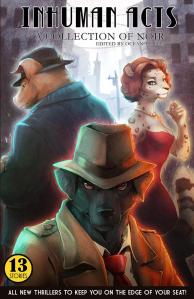
Inhuman Acts: A Collection of Noir – edited by Ocean Tigrox
Koa of the Drowned Kingdom – by Ryan Campbell
Losing My Religion – by Kyell Gold
Naughty Sexy Furry Writing (RainFurrest charity anthology – adult)
The Necromouser and Other Magical Cats – by Mary E. Lowd
Will of the Alpha 2 – edited by Rechan and Lafitte

(Many of these titles are also available in ebook format from Bad Dog Books.)

Phil Geusz also has a new science fiction series at Amazon with the first books out now — check out Early Byrd, Fledgling, and Jail Byrd.

Check your What the Fur conbook from earlier this year for the story “Fleeting” by MikasiWolf. (What the Fur is also holding a writing contest for 2016, accepting entries in both English and French — details here.)

In addition, Laika Dosha (whose creative team includes Patrick “Bahumat” Rochefort) had a successful demo at RF, and the Alpha 0.1 version is now available via Patreon.

In audio offerings, we have the audio edition of Huskyteer‘s story “A Blacker Dog” from Inhuman Acts, recorded by Savrin Drake, and you can also give a listen to an interview with Mary E. Lowd from last spring.

In nonfiction news from our members, George Squares had an article published over at [adjective][species], and Fred Patten presents an exhaustive list of What the Well-Read Furry Should Read.

And finally, congratulations to member Ryan Campbell, selected as the Writer Guest of Honor for RainFurrest 2016!

(Members: Want your news here? Start a thread in our Member News forum!)

Market News

Upcoming deadlines: The anthology WERE- is open to submissions until October 31, and the new quarterly furry zine A Glimpse of Anthropomorphic Literature is open for submissions until November 15. (We also have other anthologies with later deadlines listed on our Paying Markets page.)

In conbook news, Further Confusion is now open through November 30.

Remember to keep an eye on our Calls for Submissions thread and our Publishing and Marketing forum for all the latest news and openings!

Guild News

Thanks to all who made our Meet & Greet and Cóyotl Awards ceremony a success at RainFurrest! If you weren’t able to be there, check out the full list of Cóyotl Awards and nominees (plus the awesome song) at the Cóyotl Awards website. And now that 2014’s awards are complete, it’s time to start thinking about potential nominees for 2015. If you’ve read furry literature published this year that you think is worth recognizing, come tell us about it in the 2015 Recommended Works thread in our forums.

On Goodreads? Don’t forget we have a Goodreads group and a bookshelf featuring books by our members. Feel free to add any members’ books we’ve missed so far (see the instructions here on how to do that).

We’re always open for guest blog post submissions from members — good exposure and a great way to help out fellow writers. See our guidelines for details.

Need a beta reader? Check out our critique board (you’ll need to be registered with the forum in order to view it).

Want to hang out and talk shop with other furry writers? Come join us in the forum shoutbox for the Coffeehouse Chats, Tuesdays at 7 p.m. Eastern and Thursdays at 12 p.m. Eastern. More info on the Coffeehouse Chats is here.

Remember, our forums are open to everyone, not just FWG members. Come register and join the conversation!

Have a great October! If you have news, suggestions, or other feedback to share, send an email to furwritersguild (at) gmail.com or leave a comment below.

Member Spotlight: T. S. McNally

1. Tell us about your most recent project (written or published). What inspired it?

By the time this is released, the most recent published work will be “Vermin’s Vice”, a short story in the anthology Inhuman Acts: A Collection of Furry Noir, released at Rainfurrest this year.

I’ve always felt that noir is supposed to show the shadows of life to the reader, and I’ve also felt that a lot of times those that put up a show of prosperity tend to use those material things to either hide or distract themselves from the fact that we are, at heart, animals.

So my wish was to show that the seedy elements of society, while seedy, are probably just more honest than those we consider more wholesome, who tend to see external expressions of base desires as undesirable. But in the end, those desires are still there, waiting to be unlocked.

Also having a hand in part of the main anthology’s final name was pretty cool. It was a challenge to think of a word that would project something furry, while sounding more grim and not so fluffy. I only got half of the final answer as my suggestion for the title was “Inhuman Avenue” based on other noir titles with street names. I do like the current title better, both the word inhuman and acts hold double meanings. Basically it could be read as “Furry (inhuman) Stories (acts)”, but it has that dark edge to it.

2. What’s your writing process like? Are you a “pantser,” an outliner, or something in between?

Oddly I’ve done both from time to time. However, the thing that seems to be consistent with me is that I know how I am going to start a story, and the ending I want to see happen. Usually those details are outlined. It is the in-between parts that are more fluid.

I may outline scene orders, but not too much more than that.

3. What’s your favorite kind of story to write?

The genre I seem to write the most is Action/Adventure type. I’ve been bleeding into narrative based social commentary here and there. Usually the later ends up better when an event triggers the need for it.

For instance, Travis McCuddy’s suicide inspired, I feel, one of my better of these types: “Passing with Failure”. In it a computer reinterprets the Turing Test in a most disturbing way based on how the life story surrounding Mr. Turing himself. As a warning though, it’s not a furry piece.

It is tough to write good social commentary pieces without being too preachy, and when it happens it can be quite stirring. So I consider doing them when I feel like particularly challenging myself.

4. Which character from your work do you most identify with, and why?

I don’t quite identify with any in particular. Usually most characters I create are exaggerations of particular characteristics that I am capable of. All in all though, I tend to be a bit boring, as watching a man type on a screen doesn’t make for entertaining narrative in its own right.

Unless you have a psycho fan holding you captive and pressuring you to via Misery of course.

5. Which authors or books have most influenced your work?

Stories happen all around, and I feel it’s important not to try and get too caught up with trying to emulate specific items. However, we were all young once and for some odd reason I was a Sonic fan. I liked the Saturday AM arc in particular and I created fan fiction based on it, so I think the late Ben Hurst could be seen as a major influence.

Exaggerated and colorful character development I always feels are great ways to hold stories together, and that is something those old Sonic cartoons did very well (barring the throw away half-episodes). It also holds true to many furry fiction, and the creatures we use help solidify this. It is also why I am stronger at character development than at setting development.

6. What’s the last book you read that you really loved?

In a recent podcast of Fangs and Fonts I noted that I haven’t been a reader of books as much as I should be. I read articles, blogs, and such, but fictional novels have been few and far between. I also have a tendency of to not gush too much over things and works an always looking with a bit of a critical eye toward them. I find that’s what makes me more creator than consumer.

I do have one thing going for me, and that’s retention. I can remember details about things long after they have passed.

That being said the last story I loved that I read was Fredrick Douglas’s autobiography An American Slave as Written by Himself. My favorite thing about this story was how you could see he had to hold back a raging peeve he had that occurred throughout his life when the institutions of Christianity were used to preach the justification of slavery. The bittered passion Douglas felt over this, you could feel rising up, but him having to hold it back to keep himself distracting from the narrative. You come to find the reason he felt so strongly over that is, as a man of God himself, it tore him up to see the very beauty of his religion being used as a tool to cage black people.

At the end he added an epilogue where he finally lets all that emotion go.

I feel those furs within the minority who identify as Christian (or gays who do so as well) will find echoes of themselves in there. It’s amazing that as much as things seem to change, how constant certain things really are. And thus, the story, while over 100 years old, is still very relevant to this day.

7. Besides writing, how do you like to spend your free time?

If I really have not much else to do, I will read some news articles here and there. I don’t game as much as I used to, I seem to find that my job keeps my mind stimulated and engaged to the point where I don’t feel I need to escape to feel influential or important as I one did. I’m in a rare position of feeling empowered and essential in my workplace, and ironically I’m applying many lessons I learned in my virtual tenures of leadership to my real world ones.

Other than that I’m also working on non-fiction items. There are the Flayrah articles, but that’s technically technical writing. However I also want to share some of the lessons and problems I’ve solved in my spare times that I feel will help individuals and society as a whole. I plan on calling it “The World in Rooview”. The pilot will be about sometime in the future, or it could be one of those projects I start and never fulfill.

8. Advice for other writers?

If there is a universal trait about humanity it is this: We are a creature of narrative. All conflict can be drawn to simply a competing of narrative. We all want to write our own stories and have endings we want to see.

Conflict or “drama” is what arises when two endings cannot exist in the same narrative desires of two groups/individuals.

9. Where can readers find your work?

I have a Goodreads profile here: https://www.goodreads.com/author/show/8578080.T_S_McNally

I have free stuff up on SoFurry here: https://www.sofurry.com/browse/user/stories?uid=164657

I would advise against buying my novel of Light right now. I plan on releasing a new version with “bug fixes” later in the year and will be doing a promotion at that time.

10. What’s your favorite thing about the furry fandom?

Above all else, our perseverance. We deal with a lot of garbage from others in this world. And when Nuka released his statistics on furries and their history with bullying, it shows we seem to have always had to in some shape or form.
Many have taken this bitterness of others and allow it to fester within them, consuming them to the point where they themselves become bitter. Many have done so, and continue to do so. As we hear stories about needless violence, death threats from the shadows, we see the negative sides of anonymity.
However, in opposition to that stands this fandom, ones who use anonymity not to spread fear, anger, or disgust. Instead we try to spread happiness, joy, and creativity.
My hope, if anything, is that is a foundation that will not change.


Check out T. S. McNally’s member bio here!
Guest post: “Advertising Statistics and ROI for Authors – Part 1” by Patrick “Bahumat” Rochefort

Advertising Statistics and ROI for Authors: Part 1

 
In a past career and under current contracts, I’m responsible for the advertising analysis of clients and customers. As a small business owner and operator, making sure that my dollars spent pay back in sales is critical for me. In this series, I’m going to dissect and analyze my paid advertising efforts for my current webserial, From Winter’s Ashes.
 
I advertised the WebSerial through three major channels of online targeted advertising: 
 
Reddit – 170 million users, offers targeted advertising by subreddit. In this case, /r/Fantasy with a user base of 83,750 readers, with a peak daily readership of ~1300.
Facebook – 1.5 billion users, 1.1 billion active users.
Twitter: 316 million active users.
 
My methodology on this analysis involved making minimum advertising commitments to each advertising channel. Each represents the minimum financial commitment through advertising on that channel:
 
Reddit: $10, for a month-long campaign on modestly populated subreddit.
Facebook: $35, at $5/day for a week. 
Twitter: $35, at $5/day for a week.
 

Understanding your key metrics for advertising your writing and determining the cost effectiveness:
 
1. Impressions. How many times was your advertisement served? Chances are good that actual human eyeballs didn’t see them. (Thanks, AdBlocker). Depending on the website, 35%-85% of users block ads. Young markets with tech-savvy users block ads much more.
2. Clicks / “Engagements”. How many times was one of your advertisements actually interacted with?
3. Engagement rate: What percentile of your ads served resulted in an interaction? (For Search advertising, 3% is a good target. For display advertising, 0.3% is a solid average.) So per thousand impressions, expect an average of 30 clicks on Search advertising like Google, and 0.3% on display advertising like Reddit/Facebook/Twitter.
4. Cost Per Click (CPC). The core metric in any advertising campaign: Divide the cost of your campaign by the number of times the ad was interacted with. That’s what you paid per click. 
5. Conversion rate: What percentage of visits to your website, overall, resulted in income?
6. Conversion income: What’s the average income that a conversion supplies you?
7. AIpV / Average Income Per Visitor: On average, how much money do you make per click on your website?
8. ROI-A: Return on investment on your advertising. Realistically, 10-20% is a good target. Most ads, if they’re profitable at all (most aren’t), will return only 10-20% more in additional sales than the advertising cost you. The best campaign I’ve ever run for a client returned a 310% ROI, but that was a finely tuned Google Search ad campaign for a regional, limited-supply professional service. 
 
Be aware that some advertisers (Facebook) will obfuscate their metrics or want you to use their own interaction metrics, which can make it very difficult to determine to industry standards some of these metrics. If you plan to make a serious advertising campaign on one of these advertisers, spend extra time learning what metrics will matter, and look to professional advertiser forums for appropriate targets for your campaign there.
 
 
How to determine if your advertising campaign for your writing will be profitable (MATH TIME):
 
1. Look up your own website’s conversion rate. (If you don’t know, divide your number of transactions on your site in a month by the number of unique visitors in a month. Google Analytics can help you determine this.)
2. Determine your conversion income. (Divide your monthly income from your site by the number of paying customers on your site.)
3. Divide your conversion rate by your conversion income. 
4. Look up the average CPC on the advertising channel. 
5. Compare that against your AIpV. 
 
Chances are distressingly good that your advertising campaign will not be profitable. Sorry. Just because it won’t be profitable doesn’t necessarily mean it won’t be useful, however. When building a name or a brand, having a lot of Impressions hitting eyeballs consistently can help build your brand awareness, and get your name to stick in people’s minds.
 

A sample advertising campaign, using plausible numbers:
 
Author writes a book titled “FooDog Generic Fantasy”, and sells it directly from their own website as well as through other distribution channels. It’s a nice book! It’s got great cover art, a solid synopsis with plenty of hooks, and the pricing is well within market norms for a genre book.
 
Author decides they want to advertise their book. The Author has a choice between two fundamentally different kinds of online advertising: Search Advertising, and Display Advertising. Search advertising displays when someone searches for a related search term that the Author specifies. Display advertising shows to (potentially) just anyone visiting a site/network.
 
Because the product is a book with a specific title, Author wisely decides that people aren’t likely to be searching for their book by name if they don’t know about it. The title of their fabulous book is “FooDogs Generic Fantasy”, and Author rightly determines that almost nobody will do a Google Search for the nonsense term “FooDogs” unless they already know about the book anyway, and the words “generic” and “fantasy” aren’t going to be useful search terms. (Google will agree with them, and degrade or decline their advertising.)
 
So Author wisely decides to advertise FooDog Generic Fantasy on display ads, instead. Author is hopefully either decent with art design, or else they’ll be paying someone else for nice artwork for their ads. If Author is going to do it themselves, Author needs to know the technical specifications of the display advertising on their channel, such as resolution of image, size limits, file formats, and form factors. Author will also have to invest the time (10-30 minutes per channel) setting up their user accounts to advertise. 
 
It takes Author 1 hour to make their own art to their satisfaction, and Author spends 30 minutes setting up their first advertising campaign, researching, and implementing the ad, and another 30 minutes tuning it to their target: Readers who would plausibly enjoy and be interested in FooDog Generic Fantasy. Author knows not to waste their money advertising to people who would prefer to read Wartime Specific NonFiction, so they ensure their ads go where they’d be most effective.
 
Author makes a $35 investment in one weeks’ worth of advertising, and is down 2 hours of labour.
 
After week’s worth of waiting and tweaking, Author’s results come in:
 
Impressions: 35,000
Clicks: 105
Engagement Rate: 0.3%
Cost per Click: $0.33
 
Author’s results from this advertising campaign are firmly average for a Display ad campaign. So, the advertiser is delivering pretty average results on the internet. Not great, not terrible. 
 
Next, Author goes to their own website, to track their statistics:
 
Visitors last week: 105
Conversions: 3
Visitors this week: 210
Conversions: 7
 
Conversion Rate: 3%. (Firmly average for retail sales online. Not great. Not terrible.)
 
Author sells FooDog Generic Fantasy eBook for a retail price of $6.00. Of that $6.00, $4.85 is the Author’s profit after taxes and fees. 
 
Since this is all that the Author currently sells on their site, calculating the average income per conversion is easy: $4.85.
 
Author’s advertising campaign ostensibly brought in 4 additional customers, for a net benefit of $19.40. 
 
The ROI-A on this advertising campaign, therefor, is -45%. Ouch! 
 
BUT.
 
While it cost the author money out of pocket to commit to this advertising, it teaches the Author a few valuable lessons about their own website’s offerings: 
 
1. Author’s advertising campaign was average, it was middle of the road, it was unremarkable. It worked. It was not a failure. By every metric the professionals care about, the ad did what it was supposed to do.
2. Author’s website sucks at making them money. 
3. Author paid only $15.60 (net) to double their site traffic for a week, and put their name and brand awareness into the minds of 105 additional customers. That’s about $0.15 per potential customer, and that isn’t counting the number of people who saw Author’s name and advertising and had it stick in their minds.
 
If Author had, say, a second and third book to offer on their website for sale, that average income per conversion might rise from $4.85 to $7.50 as readers found interesting looking titles to buy. In this case, Author would still be losing money, but they would be losing only $5.00 for the same advertising and brand marketing benefit.
 
The better your website is at making conversions of visitors, the more effective your advertisement will be. We’ll see in part 2 my personal experiences with advertising channels, and why controlling your CPC (and, more importantly, improving your conversion rate and income-per-conversion) matters for an author.


Member Spotlight: Ocean Tigrox

1. Tell us about your most recent project (written or published). What inspired it?InhumanActsCover

The project I’m most excited for is Inhuman Acts which is an anthology of anthropomorphic noir stories set to be published by FurPlanet and released at Rainfurrest 2015. Anthropomorphic literature has an interesting ability to spin any genre, and I wanted to see a variety of different noir stories seeing how they change when you add animals to the mix. Noir and mystery are some of my favourite genres so I’m happy to bring some of that love into this project. It’s been a big challenge to step up and be a lead editor, but it’s been a lot of fun too.

2. What’s your writing process like? Are you a “pantser,” an outliner, or something in between?

I used to be a heavy outliner but would find myself bogged down on trying to figure out the story and never sitting down to write it. Now I like to start with a central concept, a main conflict, or a twist and go from there. From the initial idea, I set up some characters, point them towards some plot points and a goal or a climax, then let them fill in the rest. I still like the loose structure of knowing where the story is going, but by allowing the characters to lead me there, the story becomes more organic and real. Sometimes they get to the end I set for them and they replace it with something better!

3. What’s your favorite kind of story to write?

A story filled with twists and mysteries. I love creating interesting and smart characters, tossing them in dangerous situations or traps, and watching them find a way out. When a reader comes back and tells that an ending took them by surprise, it always puts a grin on my face.

4. Which character from your work do you most identify with, and why?

There’s a story I’ve written that I’m trying to publish about two teens in small town Saskatchewan. It’s really a love letter to what it was like growing up in such a small rural community and the two main characters are a reflection of my experiences and thoughts. There’s something about such a small community and a simpler life that creates a world view most people don’t see and you appreciate the small things in life.

5. Which authors or books have most influenced your work?

One book that changed my outlook on literature was Douglas Adams’s Hitchhiker’s Guide to the Galaxy. Most sci-fi I had read up to that point came from Arthur C. Clarke and others, and when I was looking for a book for a grade twelve book report, I stumbled upon Hitchhiker’s Guide. Here was a book that took everything I knew about stories and literature and turned it on its head. A ridiculous tale of world building and hilarity while still telling a fantastic story. It showed me that there’s no real rules to writing and you shouldn’t be afraid to try new things.

6. What’s the last book you read that you really loved?

In preparation for editing Inhuman Acts, I brushed up on some classic noir titles. One of them was The Maltese Falcon. It was great to see the foundation of a lot of hardboiled crime and noir elements before they were even tropes. I’m still a sucker for reading the classics and you’ll often find there’s more than one crowding up my reading pile.

7. Besides writing, how do you like to spend your free time?

TigroxDeskI enjoy playing games of all types: video games, board games, table top RPGS, card games (I’m even a level one Magic judge), and even just any kind of puzzle I can get my paws on. There’s usually a pair of headphones or ear buds near me at any time so I can listen to my music. I’ve also taken up poi spinning to dance along with my music. When the weather’s nice (AKA not winter), I like to take my motorcycle out to the mountains to go soak in the hot springs.

8. Advice for other writers?

“Write now! Edit later!” is my writing mantra. It’s something I often have to chant it to myself over and over while writing up a first draft. Otherwise I’ll want to go back and edit what I’ve written and worry too much about if it’s right when the story isn’t even written yet. I’ve seen too many beginning writers get stuck in this editing loop, worried if their first chapter or first scene is good enough before they’ve even written more. Finish writing the story first! There’s always time for editing later and you’ll have the accomplishment of having written a full first draft.

9. Where can readers find your work?

Check out Inhuman Acts when it’s released and let me know if you liked it! While at the FurPlanet table, you can find my stories in some anthologies like Roar 6, The Furry Future, and the latest Rainfurrest charity anthologies. I also have a story in Rabbit Valley’s Pulp! and occasionally I post stories on my SoFurry account: ocean.sofurry.com. You can listen in on the bi-weekly writing podcast I co-host called Fangs and Fonts (fangsandfonts.com). It’s put on by myself and my local furry writing group. We talk about writing techniques and the writing culture in the fandom.

10. What’s your favorite thing about the furry fandom?

The fact that you can be whoever you want to be in this fandom. The furry fandom is very open and friendly, and it’s great to see so many people get along without caring about gender, race or sexual orientation. You wanna be a purple tiger fox or a orange elephant or a green wolf? Cool! I hope it continues to be a place where people can be themselves and happy with who they are.


Check out Ocean Tigrox’s member bio here!

RAWR 2016: A workshop for furry writers

rawr logoFurry writers now have their own five-day workshop, the Regional Anthropomorphic Writers Retreat (RAWR), to be held in the California Bay Area in January 2016 (ending on the first day of Further Confusion).

From their website:

Come spend five days writing and critiquing stories with other furry writers from across the world! The workshop will be led by Kyell Gold and may feature special lectures from other published furry writers.

This is a great opportunity for you to meet and bond with a small group of other writers in the fandom, a relationship that can continue beyond the workshop for years to come.

Welcome to an intense, thoughtful, enjoyable visit. We hope to see you there!

. . .

During the five-day workshop, you will read and critique your fellow workshoppers’ stories, write and edit your own, and have some time to talk one on one with the workshop leaders about your goals and challenges in writing. The workshop also includes instructional sessions from experienced guest writers (subject to availability).

RAWR 2016 will be limited to 6 participants. The application deadline is October 5, and the application, as well as more information about lodging, travel, and cost of the workshop, can be found on their website. You can also follow them on Twitter at @RAWRWorkshop, and there’s a thread on our forums where the organizers are answering questions.

Book of the Month: Typewriter Emergencies

typewriter coverSeptember’s Book of the Month, Typewriter Emergencies, is the first furry anthology from Weasel Press, edited by our associate member Weasel and featuring stories from several guild members.

Welcome to the first release of Typewriter Emergencies, a collection of psychologically damaging and hard-hitting furry literature. It’s a mad world we live in, a world where we are still uncovering some of the darkest of our secrets. We were asking a lot when we started our submission call. We were asking our authors to really dig the knife into their story; to give us the real maddening details, the secrets, the loss of control. And they did just that. This anthology has a total of thirteen gut-wrenching stories from several talented individuals. It’s a collection that drops the reader into thirteen rough worlds without anything to protect themselves, only the leadership of the characters they’re following. Each author handles a different aspect of the universe, touring the reader through some rather diverse struggles. Typewriter Emergencies is a journey not lightly made, and one that will definitely leave a deep impression on our readers. Weasel Press is proud to have our first furry collection on the books, and we hope you will enjoy every moment this intense anthology has to offer.

Includes stories by Dwale, W.B. Cushman, Junior Gordon, Timothy Wiseman, G. Miki Hayden, Neil S. Reddy, Gareth Barsby, Phil Geusz, Amethyst Mare, Jerod Underwood Park, Con Chapman, Mark Plummer, and Renee Carter Hall.

Available direct from Weasel Press and from Amazon.

Guild News: September 2015

New Members

Welcome to our newest members Erin Quinn, BanWynn, and Dire Wolf!

(Writers — if you’ve been approved for membership recently but aren’t listed in the member directory, it’s because I haven’t heard back from you about what name you want to be listed under. Drop me a line at furwritersguild (at) gmail.com and let me know!)

Member News

Patrick “Bahumat” Rochefort continues to reveal the world of Laika Dosha, and From Winter’s Ashes is now on Wattpad as well. Weasel’s documentary Poetry is Dead! has been completed. John Van Stry has two new books available on Amazon, Demigods and Deities (book five of the Portals of Infinity series) and Lost Souls, the first book of a YA series. M. C. A. Hogarth’s The Three Jaguars business comic is now available as a collection.

In crowdfunding news, Ember: A Journal of Luminous Things is seeking funding for their next year of publication. The Spring 2015 issue included Renee Carter Hall’s “The Frog Who Swallowed the Moon,” and Mary E. Lowd’s “Frankenstein’s Gryphon” will appear in Fall 2015. One of the perks of the campaign is a book of writing prompts from Ember contributors, including both of those members.

Congrats, everyone!

(Members: Want your news here? Start a thread in our Member News forum!)

Market News

Upcoming deadlines: Thanks to an extended deadline, there are still a few days to get your stories in to the furry anthology Fragments of Life’s Heart, now closing on September 7.

New markets: The new quarterly zine A Glimpse of Anthropomorphic Literature will open for its first submissions on September 15. Fred Patten’s next anthology, Gods With Fur, is now open until May 1 (see link for full guidelines). And if you like your were-creatures as something other than wolves, the anthology WERE- is open to submissions until October 31.

Remember to keep an eye on our Calls for Submissions thread and our Publishing and Marketing forum for all the latest news and openings!

Guild News

If you’re headed to RainFurrest this year, be sure to join us for our FWG Meet & Greet Thursday at 9 PM, followed immediately by the Cóyotl Awards ceremony at 10 PM. Come put some real-life faces to the online names!

On Goodreads? Don’t forget we have a Goodreads group and a bookshelf featuring books by our members. Feel free to add any members’ books we’ve missed so far (see the instructions here on how to do that).

We’re always open for guest blog post submissions from members — good exposure and a great way to help out fellow writers. See our guidelines for details.

Need a beta reader? Check out our critique board (you’ll need to be registered with the forum in order to view it).

Want to hang out and talk shop with other furry writers? Come join us in the forum shoutbox for the Coffeehouse Chats, Tuesdays at 7 p.m. Eastern and Thursdays at 12 p.m. Eastern. More info on the Coffeehouse Chats is here.

As always, our forums are open to everyone, not just FWG members. Come register and join the conversation!

That’s all for this month! Send an email to furwritersguild (at) gmail.com with news, suggestions, and other feedback, or just comment here.

Guest post: “The Lady or the Tiger or the Wolf?” by Carmen K. Welsh Jr.

The Lady or the Tiger or the Wolf?

by Carmen K. Welsh Jr.


I was asked by more than one person while writing my book if I’ve owned any dogs. The answer is no. Most of my life, I have actually identified with cats more but decided many years ago that I refused to get into the eternal debate about which pet is Better: a Dog or a Cat. I didn’t want to get caught up in nonsense and senseless hype.

Both cats and dogs are no better or worse than the other. I don’t even like that there’s such a debate. As an animal lover, it makes more sense to learn to enjoy and learn more about as many creatures as possible, even those one may be deathly afraid of, because, it’s nature, and nature’s cool.

Many cultures do not, or once did not, view animals as separate species. Animals were spirit guides, soul companions as well as kin. Depending on the individual, and among many animal-lovers and pet owner anecdotes, a human and a particular creature will bond no matter what, solidifying the idea that the human and animal species have more in common than is understood.

To tell you the truth, since I was a child, I felt drawn to cats (both literally and figuratively as well as artistically). I would draw them constantly. Cartoon cats I would often copy and change to my liking. If one reads my FWG bio, my first character at age 5 or 6, was a cat with bat wings! My avatar is an anthro snow leopard from one of my short stories. Saturday night, with my older brothers, watching original Star Trek episodes had me drawing on leftover cardboard a space opera comic with a galactic ship complete with captain and crew (all cats! What I wouldn’t give to find some of those drawings).

Also, as a child, I was deathly afraid of dogs. I mean, it made sense. Cats hate dogs because dogs chase them, right? But dogs also barked with large teeth when one walked by their wired fences or wooden gates. Yet, when I stayed in Jamaica with relatives, and after a few summers, having even lived there, going to school and all (talk about culture shock) the dogs there seemed… nicer. The strays didn’t try to bite. Dogs would run to a person, mouth wide open, tails wagging. House dogs seemed quiet and not growly. They also looked similar, lanky, medium size and short-furred, but that’s because being on an island did not allow for a varied gene pool. United States’ dogs seemed meaner to me at 8 years old. Do I sound as if I’m making ‘cultural stereotypes’ on dogs?

But I learned from those dogs and how to interact with them. Also, my grandma, being of old ideas, believed cats were evil and didn’t want them around. However, she had no problem with canines. There was a dog known as Old Max in the neighborhood. Though he had an owner, he would amble about our block. Nearly every household he visited would feed him, including my grandmother. He was a stately gentleman and never barked loud and always allowed us children to play with him.

It took more years and experience to realize that dogs weren’t the antithesis to cats. They couldn’t be. It was like comparing from the old adage about apples and oranges. One could love cats and still love dogs! Once I understood that I began to incorporate more dogs into my writings.

Also, plenty of my beloved childhood films during the 1980s had canine actors I cheered for! I loved the Benji film series as well as Disney’s A Dog of Flanders, Ol’ Yeller, The Shaggy Dog and its sequel The Shaggy DA. One of my favorite Disney animations is Lady and the Tramp, which I count as the earliest inspiration for my novel draft. But I equally loved The Aristocats!

If I’m the animal writer I believe myself to be, then I should learn from them, and not just the ones I readily relate to. A writer should step out of the comfort zone. Writing what one knows is fine, yet it’s even better to learn new things so one could write on that as well. I read more on dogs, I met friends’ dogs and I began to study them.

When my thesis needed new life, I began to dig deeper into why I loved dogs (ah, puns). That’s when the story’s voice and tone were found. Not just deciding on Third-person vs. First POV (on my thesis mentor’s advice, I switched all previous drafts to first-person), but experimenting with other literary vehicles to best tell my story. Instead of the ‘aloof’ third-person I used for my cat characters in my fantasy series (there’s those stereotypes again), I would let go and let my dogs tell their own stories in immediate First-person.

Because such a voice felt more historical, I wanted a sense of the familiar as well as what we humans often overlooked or took for granted in canines. Though I still haven’t had a dog for a companion yet, I’m looking forward to many more adventures with both dogs AND cats. See? Cats aren’t the only muses for writers; dogs can be a writer’s best friend too. And yes, I went there. *groan*

Member Spotlight: Kevin “Rikoshi” Frane

1. Tell us about your most recent project (written or published). What inspired it?

My latest project is a new novel that I’m working on called Stargazer, the sequel to my 2013 novel Summerhill. In the course of writing Summerhill, the nature of the setting kept expanding and growing more complicated, and I realized I’d need more than one book to fully explore it. This time around, I’ve flipped the dynamic a bit: this is the story of Katherine, one of Summerhill’s traveling companions from the first book, and now he’s her sidekick, which will hopefully let me tell a fun story that’s sufficiently different to its predecessor. I’m posting the first draft to Patreon (for free!) as I’m writing it, too, so readers can follow along as the story takes shape.

2. What’s your writing process like? Are you a “pantser,” an outliner, or something in between?

For me, it depends on whether I’m working on a novel or a short story. For novels, I tend to have a central theme and central conflict in mind, I start writing a first draft, and about halfway through I stop to outline the rest (and after I complete that draft I look at the whole thing and re-outline it so that it makes better sense). When it comes to short stories, usually those ideas are simple and self-contained enough that I can just hop onto the page, play around with them, and see where they go (which sometimes winds up being ‘nowhere,’ but that’s thankfully pretty rare!).

3. What’s your favorite kind of story to write?

I suppose I’m quite fond of writing stories where I really get into someone’s head, for better of for worse, and show the reader what makes them tick. Even the nicest person you know has issues they’re dealing with and sometimes thinks nasty thoughts about certain things, and even a complete jerk can be relatable or sympathetic on some level, and so I think it’s fun to explore that sort of thing, and to leave the reader with some thoughtful insights. That, and I like to use fantastical backdrops to explore otherwise mundane, everyday issues, because then you’re giving the reader something fun and different while also giving them something they can personally relate to.

4. Which character from your work do you most identify with, and why?

This is a tough one! If I had to pick one, though, I’d probably have to say Arkady Ryswife from my novel The Seventh Chakra — not because I’m an artificially augmented super-spy ferret, but because his entire core conflict is doubting his own capabilities and putting too much pressure on himself for fear of letting down others, and those are both things I can personally identify with a whole lot.

5. Which authors or books have most influenced your work?

I drew a lot of inspiration early on from the works of David Weber, particularly his Honor Harrington series, when it came to laying out large, convoluted plots and interweaving setting and story without having to resort to info-dumping on the reader. Nowadays my style doesn’t really resemble his at all, but I learned a lot about long form structure and plotting from those books. Kazuo Ishiguro’s wonderful novel The Remains of the Day was a great example of how feature an unreliable narrator in addition to showing how a slow and subtle buildup can still reach a devastating conclusion, and David Mitchell’s Cloud Atlas was just monumentally inspirational for how diverse one single author’s writing can be within a single work.

6. What’s the last book you read that you really loved?

David Mitchell again, with The Bone Clocks. It’s a masterful look at an individual’s life from so many different perspectives, and a story that goes from banal to surreal in a way that’s hard not to be impressed by.

7. Besides writing, how do you like to spend your free time?

My big hobbies include tabletop roleplaying, amateur photography, wine, and Star Wars (honestly a lot of my time goes to Star Wars in some form or another).

8. Advice for other writers?

Read. Read, read, read. Read things that you like, read things that are outside your normal area from time to time, read things by your peers and by people who inspire you, but read. It’s such a fundamental part of being a good writer that it can often be too obvious, and it’s something I see get ignored all too often. You can’t be a good concert pianist if you don’t listen to music, and you can’t be a good writer if you don’t read stories. So read. Read short stories twice; you’d be amazed how much different the experience can be, even if it’s only been a day. Learn to identify what you like and what you don’t like, and then try to discern why you do and don’t like those things.

9. Where can readers find your work?

My novels are all available on Amazon if you search for me by my people-name, and of course directly from the furry publishers themselves: FurPlanet and Sofawolf Press. My short stories are available on FurAffinity, where my username is ‘Rikoshi,’ and I’ve had stories published in numerous anthologies, such as New Fables from Sofawolf Press and ROAR from FurPlanet.

10. What’s your favorite thing about the furry fandom?

Honestly, just the sheer amount of creativity that this fandom has bundled up in with itself, and I think it’s important for people to not lose that spark of imagination. We’re not all writers or artists, but we’re all here because we’ve got a fantastic propensity for make-believe and suspension of disbelief; sometimes it’s serious, sometimes it’s silly, but it takes all kinds and I’ve never come back from a convention not feeling energized to write something, whether it was a larger project or just some quick thing.

Check out Kevin “Rikoshi” Frane’s member bio here!