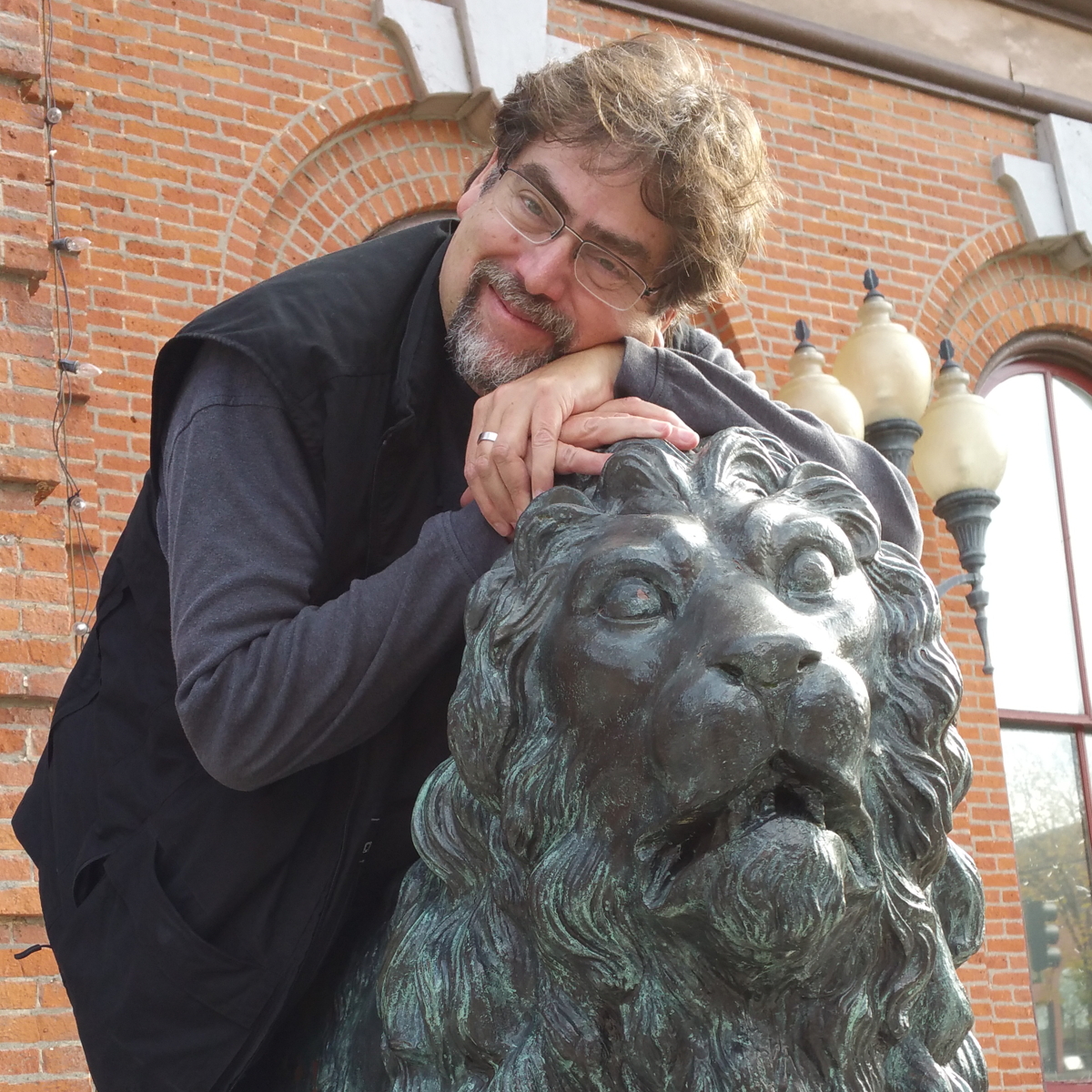
Member Spotlight: Sorin Kat

1. Tell us about your most recent project (written or published). What inspired it?

My most recent published pieces as a short story in FANG.  Exploring themes of betrayal and especially betrayal of friends or loved ones, the action piece followed an agent for a covert intelligence agency that gets tricked into romance and betrayed by the secret object of his affections.  I was really thrilled to explore some of the aspects of betrayal in love.  While in a limited scope because of the length limits and requirements of the piece, I was most excited about digging in the surface of the concept of love by trickery and if it really can ever be a one-sided exercise.

2. What’s your writing process like? Are you a “pantser,” an outliner, or something in between?

I am definitely more of a pantser when I write.  While I like to have an idea in my head when it comes to the direction the story will go, I often enjoy the organic joy of discovering the twists and turns with my characters.  I feel this adds a sense of life and energy to the story that the characters are taking the reader on as well.

3. What’s your favorite kind of story to write?

I enjoy writing urban paranormal/fantasy, romance and science fiction.  Often i find the most compelling stories include a mix of these genres.  As for the types of stories, I like stories with a dark side, betrayal, loss and elements of hopelessness go a long way to craft a story that the characters can overcome… or fall to, depending on the overall mood of the tale.

4. Which character from your work do you most identify with, and why?

While there is not a specific character in my work that I relate to whole cloth, I tend to relate more to the characters that express a strong sense of self and often find themselves the underdog of my stories.  I find that characters that start the story strong have the furthest to fall and the most compelling build back up again which I enjoy.

5. Which authors or books have most influenced your work?

I take influence from a lot of authors both furry and non.  In the mainstream, Orson Scott Card, Jim Butcher, David Eddings, Ursula K. Le Guin, Alan Dean Foster and Anne McCaffrey are my tops!  Within the fandom I often find inspiration in the writings of Kyell Gold, Kevin Frane and Ryan Campbell.

6. What’s the last book you read that you really loved?

A book by Alan Dean Foster called Quozl about a lapine-like race of aliens that come to earth on a generation ship to colonize it only to find that humans are already there!  The story is compelling, following a few generations of the colonists and looking into their unique culture shaped by their ultra-violent past.  A very interesting read!

7. Besides writing, how do you like to spend your free time?

Truth be told, I’m a geek.  Most of my free time is taken up with tabletop board games and RPGs, Live Action Role Playing (and the crafting and costume work that goes with it), computer games, movies and socializing with friends!

8. Advice for other writers?

So cliche, but write!  In the end it doesn’t matter what, but write often and keep everything you write, even if you hide it in a shoe box and pull it out to marvel at your improvement, just do it!  Computer, pen and paper, anything, just write!

9. Where can readers find your work?

I post stories on SoFurry under Sorinkat, or you can check out some of my published works in the RainFurrest charity anthologies, FANG 7 and a few scattered convention books.

10. What’s your favorite thing about the furry fandom?

I love the general sense of acceptance that the fandom has.  It’s so refreshing to be part of a group of people that are willing to let people be who they are and are generally friendly about it!


Check out Sorin Kat’s member bio here!
Books of the Month: The Latte Segment + In Honor’s Shadow

April’s Book of the Month is another double feature, this time showcasing furry fiction by two of the fandom’s up-and-coming authors.

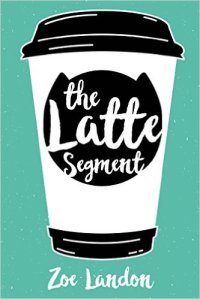
First, The Latte Segment by Zoe Landon:

latte cover“Sarah Madsen is a modern young rabbit with a cozy urban life. A yuppie, perhaps, though she’d disagree with the label. After all, yuppies don’t hang with eccentric artists in beat-down studios, much less date them. And they don’t get pushed out of their apartment by profit-hunting developers, forced to pick between an impossible market and an unsustainable rent.

As she hunts for a new place to live, she learns how her comfortable lifestyle is seen by those around her. Some are sympathetic and kind, some cold and indifferent, some jealous and hostile. None can relieve her frustration from knowing that her easy life is slowly slipping out of her control. She’ll take control anywhere she can find it, but not everyone appreciates her attempts to help. Not even herself.

A story of class and success in the millennial age, The Latte Segment explores how well we can trust others, and ourselves, to do the right things in our lives — or, to do anything about them at all.”

Available in ebook and paperback from Amazon.


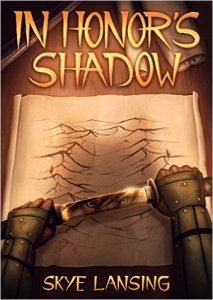
Next up is In Honor’s Shadow by Skye Lansing:

honor cover“What use is honor without victory?

The Wolf Clan stands divided amid a bitter civil war. For years the noble Hayashi Family has struggled to wrest control of the clan from their rivals, the Hitomi, but one disastrous battle has exhausted their power. Now every warrior within Hayashi territory must decide what role they shall play in the upcoming conflict.

Shiro, the magistrate of an unimportant village, is tasked with a dangerous mission to stop the Hitomi Family’s army. Lacking supplies, troops, and support, he knows any direct confrontation is doomed to failure. Only through guile does he stand a chance against the forces arrayed before him.

Meanwhile, Hayashi Seiko seeks to throw off the oppressive mantle of courtly life by joining her brother in the field as a proper onna-bugeisha. She leapt at the chance to prove her worth as a soldier upon hearing that the war had turned against her family, but can she really escape the politics of a society that reveres duty and honor?”

Ebook available from Amazon and all other major retailers; you can find all the ordering links at the author’s website.

Guild News: April 2016

New Members

Welcome to our newest members Shaun “Gnarl” McGrath, Arian Mabe, Jeeves the Roo, Eric M. Witchey, and KC Alpinus!

Member News

It’s awards season, so first of all, congratulations to all our members whose work was nominated in the Ursa Major Awards and the Cóyotl Awards!

In book news, Kyell Gold has released Black Angel, Over Time, and the collection Twelve Sides. In short fiction news, Mary E. Lowd’sHigh School Dogs” (a prequel to her novella In a Dog’s World) is now online at Deep Sky Anchor, and issue 2 of A Glimpse of Anthropomorphic Literature is now available, featuring stories and book reviews from several FWG members.

In crowdfunding news, there are 21 days left in Jess E. Owen’s Kickstarter for By the Silver Wind, Book IV of the Summer King Chronicles.

If you’re into gaming/RPGs, check out Paul Kidd’s A Fistful of Quidloos and Heroes of Morhost, and if film/comic reviews are your thing, Dronon has published several recently at Flayrah. Like poetry too? Check out Weasel’s poem “Midnight’s Starving” in Yellow Chair Review.

(Members: Want your news here? Start a thread in our Member News forum!)

Market News

Upcoming deadlines: The anthology Gods With Fur closes May 1, and issue 3 of A Glimpse of Anthropomorphic Literature is open until May 15. For conbook deadlines, we have five conbook listings with deadlines ranging from April 15 to May 1; check out all the details at our conbook page.

New markets: Poets, get your work in before April 22 for the second [adjective][species] poetry collection. Full guidelines here. For short stories, we have a new listing for The Society Pages, an anthology seeking stories exploring “civilized furry society.” The deadline is June 1, but you must submit a query before sending your story; see their guidelines for full information.

Remember to keep an eye on our Calls for Submissions thread and our Publishing and Marketing forum for all the latest news and openings!

Guild News

Voting is now open for this year’s Cóyotl Awards! Voting ends July 1.

Want to hang out and talk shop with other furry writers? Come join us in the forum shoutbox for the Coffeehouse Chats, Tuesdays at 7 p.m. Eastern and Thursdays at 12 p.m. Eastern. More info on the Coffeehouse Chats is here. (Remember, our forums are open to everyone, not just FWG members. Come register and join the conversation!)

Elsewhere on the Internet, we have a Goodreads group with a bookshelf featuring books by our members. Feel free to add any members’ books we’ve missed so far (see the instructions here on how to do that). We also have a Telegram group, and you can find more info on that and a link in this thread.

Remember, we’re always open for guest blog post submissions from FWG members — it’s a great way to help out fellow writers. See our guidelines for the details.

Have a creative and successful month! If you have news, suggestions, or other feedback to share, send an email to furwritersguild@gmail.com or leave a comment below.

Member Spotlight: Ryan “Not Tube” Campbell

1. Tell us about your most recent project (written or published). What inspired it?

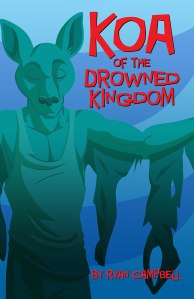
koa coverMy most recent book is my novella, Koa of the Drowned Kingdom, published through FurPlanet. It’s about a young fruit bat with torn wings who lives with a family of otters and dreams of rejoining the flighted world of the bats he left behind. The original idea for the book, like most of my books, came from a song on the radio. I don’t remember what it was anymore–something about an upside-down world, I think. That set off the fireworks in my head and I started imagining who would live there (bats, obviously), and what that world would be like. That night I couldn’t go to sleep. The story kept twisting and building itself in my head. By the time I finally dropped off, I’d composed nearly the entire thing, including every major plot point and all the major characters. From there it was just an issue of writing it down. I really tried to focus on a tight, well-edited plot, in which every piece is necessary at least twice. Pull one thread and it should fall apart from both ends. I find writing those kinds of plots very satisfying.

2. What’s your writing process like? Are you a “pantser,” an outliner, or something in between?

It’s funny–I used to be a pantser, but I’ve found lately that that doesn’t work out well when I’m trying to get motivated to write. I have to know before I sit down what I’m going to be working on for the day, and it also helps if I have big major plot events that I’m looking forward to writing–that I’m writing toward. And now that I’m writing bigger, more complicated novels, I pretty much have to have an outline. That’s not to say that ideas aren’t occurring to me all the time during the process, or that I don’t change things or add things as I go! The outline gets modified a lot. The characters speak to me and require me to motivate them in different ways before they’ll agree to move through the obstacle course I’ve set up for them. But I have to know: if I change this plot element, how does that impact the story later? How will this compromise someone’s character arc? And the stories tend to be just a bit too big for me to do that well without an outline.

3. What’s your favorite kind of story to write?

Fantasy all the way. I love working with magic because to me it’s the closest to writing from pure imagination. Anything you can think of you can get away with, as long as you set limitations around it, rules, and then work within those rules consistently. It’d be fun to write scifi, but I kind of feel like I’m not smart enough. To write scifi you have to know how the whole world works, and I’m more an inner mind kind of guy. I’d rather make stuff up than take it apart to see how it works.

4. Which character from your work do you most identify with, and why?

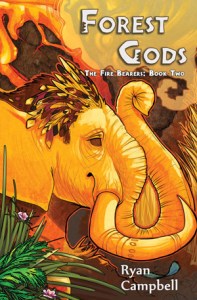
To some degree I identify with all my characters. If we’re talking about The Fire Bearers, then I identify with Clay’s sense of wonder and also his self-doubt. I can be defensive and officious like Doto at times as well. And maybe most of all, I identify with Laughing Dog and his independence, his tendency toward selfishness, and his rejection of his people’s beliefs.forest gods cover

5. Which authors or books have most influenced your work?

Okay, I love love LOVE Robin Hobb and snap up everything she’s written. I love the way she writes characters who push back against their destinies and against the identities the world tries to foist on them. I resonate strongly with the way her characters hurt themselves because they feel like they have to. I’m a huge fan of Terry Pratchett as well. I love the way he blended wisdom and humor, the way he found love and compassion for people in their foibles, in their weaknesses. I think he’s one of the greatest humanist writers I’ve ever read. Going farther back, Ray Bradbury and Tolkien were my biggest influences in my youth. They took me to faraway places when, frankly, I kind of needed to leave the place I grew up.

Continue reading “Member Spotlight: Ryan “Not Tube” Campbell”

Member Spotlight: Lawrence M. Schoen

1. Tell us about your most recent project (written or published). What inspired it?

barsk coverThat would be Barsk: The Elephants Graveyard, which was released by Tor Books on December 29th. The elevator pitch for the book was “Dune meets The Sixth Sense, with Elephants.” It’s a story about prophecy, intolerance, loyalty, conspiracy, and friendship. I invented some new subatomic particles for the book, which I combined with theory of how memory works, to create a galaxy in which a rare drug makes it possible to speak with the dead. All of the characters are anthropomorphic — uplifted animals to use the SF term, or as I prefer to call them “raised mammals.”

The origins of the book go back almost 30 years, to when I was a professor at New College in Florida, and legendary furry author and editor Watts Martin was the roommate of one of my students. Watts invited me to participate in an RPG based on Steve Gallacci’s Erma Felna: EDF, and despite the preeminence of felines in the story, I got it into my head that I wanted to RP an elephant character and started riffing on what their world was like. We never did play that game, but I began writing a novel and Watts even published the first two chapters in the pages of Mythagoras.

2. What’s your writing process like? Are you a “pantser,” an outliner, or something in between?

Like a lot of authors I started out as a pantser, but nowadays I’m a born-again outliner. Back in 2010 I participated in Walter Jon Williams’s master class, the Taos Toolbox. Walter teaches a technique called “novel breaking” in which you basically tear a book apart and rebuild it, scene by scene. When you’re done, you not only know how each scene advances the plot, informs characterization, serves the story (or possibly combinations of two of these, or even all three), but you can see how the scenes interconnect and support one another and serve the narrative engine driving the novel. I like to think of it as creating the completely articulated skeleton of a novel. Everything is there, and it all hangs together, and all you have left to do is add the flesh (words) to it.

When I have a completed set of novel “bones” like this, I can sit down and pick up any scene and I know exactly what’s going to happen there, who’s going to do it, and what it’s going to tell me. It’s a very nicely defined task. How I choose to arrange the words to make all of that happen is the fun part!

3. What’s your favorite kind of story to write?

One that teaches me how to do something I didn’t know how to do.

This may mean I’m stretching my range by trying something new — like writing in a subgenre I’ve never tried before — or perhaps pushing myself to get better at an area where I’m weak — like taking on the task of creating more complex plot and pacing.

I don’t think you ever finish learning how to be a writer. I’m always striving to be a little bit better. Some stories allow me to grow more than others, but when I can see clear improvement in my own style and process, that’s incredibly satisfying to me.

4. Which character from your work do you most identify with, and why?

The main protagonist of Barsk is a Lox, an uplifted African elephant (Loxodonta africana) named Jorl. He’s an academic, an historian who really just wants to stay home and do his research and write books and articles. He doesn’t get to.

There’s a long tradition of reluctant heroes who really have no interest in going off and having adventures or shaping the future or defeating evil. They enjoy their routines and they don’t want to be bothered and don’t tend to think of themselves as possessing the kind of agency necessary to do things.

There’s an awful lot of me in Jorl (and likely vice versa).Lawrence M Schoen 2

5. Which authors or books have most influenced your work?

My earliest influences were authors like Burroughs and Heinlein and Le Guin and Zelazny. They’re among the first authors I discovered and devoured. Nowadays I look elsewhere for influence and inspiration. Writers like China Mieville, and Daniel Abraham, and Karl Schroeder. They dazzle me with their abilities to tell stories, to present rich and compelling ideas, to engage the reader’s interest and emotions.

6. What’s the last book you read that you really loved?

That would probably be Charles E. Gannon’s Raising Caine, which is the third book in an ongoing series. The first two were very enjoyable (and both received Nebula Award nominations), but in this third one we’re starting to see all the pieces coming together and it’s deliciously compelling. I know Chuck, and every time I run into him at a convention I demand to know where he is with book four; I’m hungry to learn what happens next! You’d think that as a friend he’d hook me up as a beta-reader or something.

Continue reading “Member Spotlight: Lawrence M. Schoen”

Book of the Month: Cats and More Cats + The Necromouser

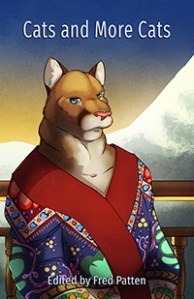
For March, our Book of the Month feature spotlights two books devoted to fantastic felines. The first, Cats and More Cats, is the latest anthology from editor Fred Patten and features authors from the fandom and beyond:

catscoverThe not-so-humble feline has fascinated mankind for generations. From the noble jungle hunter, to the witch’s familiar, to the stray on the back porch meowing to be let in, cats have snuck into our hearts and dreams for as long as mankind has made homes. They have become our companions, and we tell stories about their secret lives and the strange magic they might possess.

This is a collection of those stories, gathering some of the best fantasy and science fiction stories featuring our feline friends, from authors like Clare Bell, Mary E. Lowd, Elizabeth Ann Scarborough, Bryan Derksen, Lawrence Watt-Evans, James M. Ward, and Renee Carter Hall. These fourteen stories will give you a glimpse into the world of cats, and leave you wanting more.

Trouble by P. M. Griffin
Bomber and the Bismarck by Clare Bell
… But a Glove by John E. Johnston III
Born Again by Elizabeth Ann Scarborough
Masters and Students by Bryan Derksen
Trixie by Lawrence Watt-Evans
Destiny by Kristine Kathryn Rusch
Three-Inch Trouble by Andre Norton
Defender of the Small by Jody Lynn Nye
The Luck of the Dauntless by James M. Ward
After Tony’s Fall by Jean Rabe
Magtwilla and the Mouse by Mary E. Lowd
A Spoiled Rotten Cat Lives Here by Dusty Rainbolt
The Emerald Mage by Renee Carter Hall
Furry Fandom and Cats by Fred Patten
A Bibliography for Bast by Fred Patten

Parental rating G. Available from FurPlanet.


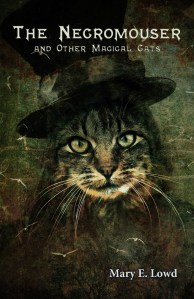
The second book, The Necromouser and Other Magical Cats, features a variety of cat-themed stories from Mary E. Lowd, including four that appear for the first time in this collection:

necrocoverAn angry cat who discovers the techno-mystical ability to raise mice from the dead…

A starving kitten who discovers a secret hidden in the San Francisco bay…

A witch’s cat, a scientist’s cat, and a cat who recognizes no owner…

In this collection, follow the adventures of the beloved tabby cat Shreddy as he faces off with zombies, ghosts, gryphons, foolhardy dogs, and all sorts of household appliances.

Then meet a series of cats whose stories will take you from heartbreak to joy, showing the magic in our own world through the reflection of a cat’s eyes.

Necromouser contains four all new stories and five Ursa Major nominated stories, including “Shreddy and the Carnivorous Plant.”

Contains the following stories by Mary Lowd:

The Necromouser
Shreddy and the Zomb-dogs
Shreddy and the Silver Egg
Shreddy and the Christmas Ghost
Shreddy and the Dancing Dragon
Shreddy and the Carnivorous Plant
Songs of Fish and Flowers
Katelynn the Mythic Mouser
The Wharf Cat’s Mermaid
Magtwilla and the Mouse
Cold Tail and the Eyes
All the Cats of the Rainbow
In a Cat’s Eyes

Parental rating G. Available in print from FurPlanet and as an ebook from Bad Dog Books.


(The editor of this blog wishes to call attention to the fact that she did not use a single cat-related pun in this post. You’re welcome.)

Guild News: March 2016

New Members

Welcome to our newest members Skunkbomb and Jeremiah T. Foxx!

Member News

Congratulations to Lawrence M. Schoen on his Nebula nomination for Best Novel for Barsk: The Elephants’ Graveyard!

The anthology Cats and More Cats, edited by Fred Patten and featuring stories from members Clare Bell, Mary E. Lowd, and Renee Carter Hall (among other authors), is now available from FurPlanet.

In webserial news, Patrick “Bahumat” Rochefort has completed From Winter’s Ashes, and Frances Pauli continues with her two anthro-themed webserials The Earth Tigers and Much Ado About Bluebottles.

Renee Carter Hall has just launched her new blog Three From Waynesboro, about her experiences as one of the 13-year-old girls who wrote the story that became the Tiny Toon Adventures episode “Buster and Babs Go Hawaiian.”

Elsewhere on the Internet, check out this interview with Tristan Black Wolf, a personal essay from Bill Kieffer on Our Queer Stories, and Dronon’s review of The Furry Future.

Congratulations, everyone!

(Members: Want your news here? Start a thread in our Member News forum!)

Market News

Upcoming deadlines: Gods With Fur closes May 1.

New markets: Fur Reality’s conbook is open for submissions on this year’s theme of “Believe,” with “a focus on the paranormal, the mysterious and the weird.” Maximum 3000 words, PG-13 rating, deadline July 18.

Remember to keep an eye on our Calls for Submissions thread and our Publishing and Marketing forum for all the latest news and openings!

Guild News

Ocean Tigrox has been selected as the editor of the next volume of our Tales From the Guild anthology! Watch the forums for more information as the project takes shape.

The Cóyotl Awards are now open for nominations! This year’s awards ceremony will be held at Rocky Mountain Fur Con.

Our cabin for the April session of Camp NaNoWriMo is filling up fast! Come join us — see details here.

Want to hang out and talk shop with other furry writers? Come join us in the forum shoutbox for the Coffeehouse Chats, Tuesdays at 7 p.m. Eastern and Thursdays at 12 p.m. Eastern. More info on the Coffeehouse Chats is here. (Remember, our forums are open to everyone, not just FWG members. Come register and join the conversation!)

Elsewhere on the Internet, we have a Goodreads group with a bookshelf featuring books by our members. Feel free to add any members’ books we’ve missed so far (see the instructions here on how to do that). We also have a Telegram group, and you can find more info on that and a link in this thread.

Remember, we’re always open for guest blog post submissions from FWG members — it’s a great way to help out fellow writers. See our guidelines for the details.

Have a happy and creative month! If you have news, suggestions, or other feedback to share, send an email to furwritersguild (at) gmail.com or leave a comment below.

Member Spotlight: Bill Kieffer

1. Tell us about your most recent project (written or published). What inspired it?

The Goat: Building a Perfect Victim is both one of my most recent and my one of my oldest works. I lost the original files during the decade of hiding. Phil Geusz, always a supportive creature, reminded me that there was a copy in the archive of TSA Talk, an email-based group of writers.

I had an online friendship with a Fur I’ll call My Goat as I haven’t gotten his permission to talk about him in relation to this novella. It was quite intimate and heartbreaking as he’d found his true self in Furry Fandom… and there just wasn’t a way to get that in real life. I’d been sorta slumming in Furry before I met him. He was like a stubborn classical Greek Hero. Eventually, he had to give up Furry to build his life back. I was one of the things he had to give up, too.  And I had to let him go. In real life, I could never be the master he needed (besides the
fact that I was in a committed RL relationship). As I started to let him go, I tried to imagine what type of master would make him happy.  Frank was a very wrong answer; but I felt some sympathy for him.

2. What’s your writing process like? Are you a “pantser,” an outliner, or something in between?

I’m a “pantser,” except when I do a mystery or crime story.  I outline mysteries and crimes so I don’t cheat, trying to be witty. Otherwise, I let my characters pull me along. Last fall, I tried writing two pieces for Munchkin’s Fragments of Life’s Heart… both contained a lot more death than I had planned. Seriously, I write the worst love stories.

3. What’s your favorite kind of story to write?

I like writing TF (transformation) stories.  I like exploring form and function. I like writing Metamor Keep stories, even if most of the Keepers think I’m trying to break the MK universe when I do so.

4. Which character from your work do you most identify with, and why?

Greyflank, from the Tales of the Blind Pig, is a Mary Sue, so he doesn’t count. Wheeler and Clay, from my Metamor Keep stories, are two halves of my soul. Wheeler, the seasoned fighter and former sex slave, represents the part of me that knows what he wants and is looking for. Clay is younger and sheltered, his whole world shattered about him, forced to be the stronger partner. He represents that part of me that only suspects what he wants and how he is to fit that into his life.

5. Which authors or books have most influenced your work?

Piers Anthony. Stephen King. Phil Geusz, Charles Matthias. Alan Dean Foster. Richard Matheson. Alan Moore. I don’t think I write like any of them; but I know I stole some good moves from each of them. From Anthony, I learned sex and attraction needs no moral compass. Actions will tell. From King, I learned the threat of a bludgeoning was more frightening than the bludgeoning itself.  From Geusz and Matthias, I learned how to build serial characters that readers will care for. From Foster, I learned a well-written character can stomp out any plot hole. From Matheson, I learned a living character can explode the slightest story concept into living art. From Moore, I learned to build on the past, twisting it as we go. I also may have picked up a great deal of wordiness from Moore, too.

6. What’s the last book you read that you really loved?

Mindtouch by M.C.A. Hogarth was the last novel to floor me. It put asexual relations in perspective for me and changed my outlook.

7. Besides writing, how do you like to spend your free time?

I like food. I cook, I eat, I stalk the aisles of Trader Joe’s and Whole Foods. I’m a tubby pony.

8. Advice for other writers?

Write.  Write about people. Don’t write, except for kicks, to please anyone. Be pleased when you do. Don’t feel rejection when you are rejected. 9/10 of this stuff is timing. And you’ll never ever see the clock.

Yes, even if you’re writing about badgers and foxes building a better tomorrow, write about people. Hide a statement in your piece. Make Easter eggs for your readers. Give them something they can claim as their own.

9. Where can readers find your work?

The Goat: Building a Perfect Victim is a naughty m/m novella that will be available this summer or fall from Red Ferret Press. This takes place in my “2×4” universe where a few of my stories take place. If I can remember how to build a website, those other stories will be on Xepher.net in a few months. “Brooklyn Blackie and The Unappetizing Menu” appears in Inhuman Acts from FurPlanet. This takes place in a universe I call Aesop’s Planet.  Except for Captain Carrot fan fiction, this is the only published work in that universe. My Metamor Keep stories can mostly be found at the Metamor Keep Story Archives, although my Ursa Major Award nominated short story “The Good Sport” was recently reprinted in An Anthropomorphic Century, also from FurPlanet.

10. What’s your favorite thing about the furry fandom?

I like how it transforms people. I like how it transformed me. It helped me to accept that I’m bisexual. I like that being a horse gave me a framework to hang my anxieties on. I like, most especially, the acceptance that I receive. It’s not universal, but it’s enough.

Check out Bill Kieffer’s member bio here!

Guest post: “The Critique Masochist” by Frances Pauli

The Critique Masochist

by Frances Pauli


As an art school veteran, I am no stranger to criticism. When I create something, I not only expect critique, I immediately crave it. Critique is necessary, it’s useful, it is required. And the more brutal the better. In essence, I have become a critique masochist. How could this have happened? Let me explain.

Art majors at the college level spend their week something like this… Monday through Thursday are filled with studio classes–three hour sessions of drawing and/or painting in the classroom. Sometimes, it’s a clever arrangement of old knickknacks, vases, and Styrofoam balls and sometimes an assortment of nude models which is not nearly as exciting as you might imagine when you’re trying to get the lines right.

Friday, however, is critique day. On Friday, you gather your week’s work, tack it to a wall, and wait for the guns to start firing at you. You learn to love Fridays or you aren’t going to be in art school very long. Freshmen feared the week’s end. Those with tenuous egos invented reasons to be ill on Friday. You could try to dodge, but no matter how clever you were, eventually, it was your work on the wall.

There were only two rules in a peer critique and they are very good ones. First, you must remain absolutely silent while your work is being trashed–er, examined. Second, a critic may not say “I like it” or “I don’t like it” unless the statement is immediately followed by a detailed explanation of “WHY”.

Fridays were fun days in the school of art. If someone wasn’t crying in the halls between classes, it wasn’t Friday. I’m serious. People fled critique day, people sobbed. Some stomped straight to administration and switched majors. But, no matter how you look at it, Friday was a good day. It was Friday that turned me into a critique masochist.

So, back to writing…and critique. Critique is a good thing. It is the single most vital tool to becoming the best at any creative endeavor. We cannot be our own critic. We can try, and please do try. It’s required, you HAVE to learn to look at your work objectively. On the flip side, you will never, ever be as objective as your reader in Connecticut who’s never met you. Seek out the guns. Please. As you do, remember a few things to nurse a happy relationship with criticism. It will find you eventually anyway. If not before publication, then after.

DETACH: Your work may be your baby, but it’s not your baby. Any discussion of your work is not a personal attack. It is not your job to protect it. It is your job to let it be ripped to shreds and reassembled into something better, and golden, and closer to perfect.

EGO AWAY: Put it in a box, lock it in its room, whatever. Your ego will be needed later (when the rejections roll in and make you want to quit) but while receiving and giving criticism, it’s dead weight and will only botch up the whole process.

LISTEN: With both ears and the whole mind. Listen and consider the slim possibility that the critic may be right. Don’t waste time disagreeing or mentally arguing, listen. Listen and pretend they’re a genius–just for now.

SALT: When you have listened, considered and absorbed, THEN remember the grain of salt. This is an opinion–one person’s opinion or a whole class’ opinion, but still an opinion. Do you agree with it? Try. If not, stick to your guns and trust that you know your own goals. Don’t ever think that a suggestion is a rule, that you must change and adapt to every criticism or you will never stop fixing and changing things back and forth. Do change what you agree with. Do give serious thought to any suggestion that comes up more than once, or over and over again from different sources. But in the end, you decide.

Remember the two rules–they are good ones. Don’t interrupt. Never argue during the critique. If anyone ever says, “I like it” or “I don’t like it” insist on a detailed “why.” Embrace the horror–that is, the process– and learn to love it. Laugh at your mistakes and yourself often. Eventually, you might find yourself craving it, needing it. Personally, I’m suspicious of anyone who reads my work and doesn’t pick it apart, at least a little. Don’t trust the “I loved it” or the “It’s great” without further discussion! With a little practice, you too can be a critique masochist.


This post first appeared on Speculative Friction.