Guest post: “RAWR: Year One Review” by Skunkbomb

RAWR: Year One Review

by Skunkbomb


Earlier this year, I paid to stay up late critiquing roughly 1,500 words a night from talented writers while teetering toward a panic attack as I wrote my first sex scene. I loved every minute of it.

rawr logoThis was the first year of the Regional Anthropomorphic Writers’ Retreat (RAWR) led by Kyell Gold (Out of Position, Green Fairy) with associate instructor Ryan Campbell (God of Clay, Koa of the Drowned Kingdom) and facilitated by Chandra al-Alkani. After an icebreaker dinner, the next five days would begin with lectures from Kyell, Ryan, Watts Martin (Why Coyotes Howl, Indigo Rain) and Jeff Eddy of Sofawolf Press. They covered world building, setting, character, structure, and publishing while some of the attendees were still drinking coffee in their pajamas. It was helpful advice to keep in mind as we moved into critiques.
Critiques swallowed up most of my time at the retreat whether I was critiquing the work of my peers or writing notes on the feedback the other writers provided for my stories. Listening to the other writers point out what’s working and what isn’t in my stories was both intimidating and exhilarating, but that may be my inner masochist (that explains why I applied for this retreat). Despite my fears, getting that feedback was invaluable. Not only could I trust the other writers to give me honest feedback, they always had something positive to say. Above all, RAWR is all about helping writers grow.

Each writer got two critique sessions. Some of us edited the first story and submitted it to be critiqued a second time after revisions. Some of us had two different stories to be critiqued. One of us even submitted a long story in two parts. I went with option two after I told Kyell about the second story I was working on and he encouraged me to submit it despite not being halfway done with the first draft. If you ever need a kick in the pants to finish a story, having a deadline due in less than 24 hours works wonders. There are times when I want to procrastinate, but being in such an environment got me to work on more writing than I’d done in a month.

One of the highlights of the retreat was the opportunity to meet one-on-one with Kyell and Ryan to ask them anything I wanted. I brought a paper with questions to mask the fact I was essentially word vomiting whatever came to mind. This ranged from serious discussion of my writing (How often should I put out new writing to grow my audience?) to the self-indulging (What tips do you have about writing anthro skunks?)

It wasn’t all work. We’d eat together at the private residence where the workshop was held … while finishing a draft before the submission deadline for critiques. We’d watched movies … while critiquing stories. Okay, so work bled into our downtime, but at least we weren’t bringing our laptops to restaurants when we ate out.

By the time the final day of the retreat arrived, I didn’t have peers. I had friends who I would root for whenever they submit work for publication. I had a renewed resolve not only to improve my writing, but also give back to the furry community. This was one of the most exhausting five days of my life that I wouldn’t trade for a spot on the bestseller list.

Book of the Month: Claw the Way to Victory

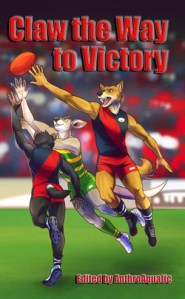
claw coverFebruary’s Book of the Month, Claw the Way to Victory, is edited by Sean Rivercritic of AnthroAquatic and includes stories from several FWG members.

We’ve all watched sports played by humans, or have participated in sports with our human limbs and senses.

What would happen if the sporting events we loved were played by animal people?

Claw the Way to Victory looks to answer that question with a variety of stories, each showcasing a different sport and just how the instincts of an animal matched with the intelligence of a human can help or hurt a player.

Scratching? Biting?

Against the rules?

Not this time.


Cover art by Pac.

Parental rating General/Mature (possible violent content). Available from Jaffa Books.

Guild News: February 2016

New Members

Welcome to our newest member Frances Pauli!

Member News

Book news: Fred Patten’s latest anthology, Cats and More Cats, was released at Further Confusion and will soon be available for order from FurPlanet‘s website. The first furry anthology from Jaffa Books, Claw the Way to Victory, was released at Anthro New England and is edited by Sean Rivercritic of AnthroAquatic. Bill Kieffer’s novella The Goat: Building a Perfect Victim is forthcoming from Red Ferret Press.

Short stories: You can read Madison “Makyo” Scott-Clary’s story “Milkshakes and Foxes” in the Further Confusion conbook, and Mary E. Lowd’s flash fiction piece “Dealership with the Devil” is online at Theme of Absence. (Check out their interview with her as well.)

Rechan has been accepted as an Associate Editor at EMP Publishing, for their online horror magazine, and in crowdfunding news, Joel Kreissman has begun a Kickstarter campaign to fund illustrations for his novel.

Congratulations, everyone!

(Members: Want your news here? Start a thread in our Member News forum!)

Market News

Upcoming deadlines: The second issue of A Glimpse of Anthropomorphic Literature is reading through February 15, and Fur the ‘More is seeking “Cubicle Jungle” submissions for its conbook until February 15 (maximum 2000 words, full info here). FANG Volume 7 and FurPlanet’s science fiction horror anthology both close on March 1; see guidelines for both anthologies here.

Remember to keep an eye on our Calls for Submissions thread and our Publishing and Marketing forum for all the latest news and openings!

Guild News

We’re seeking an editor for the next volume of our Tales From the Guild anthology! See this post in our forums for more information, and if you’re interested, please get in touch by February 21.

Want to hang out and talk shop with other furry writers? Come join us in the forum shoutbox for the Coffeehouse Chats, Tuesdays at 7 p.m. Eastern and Thursdays at 12 p.m. Eastern. More info on the Coffeehouse Chats is here. (Remember, our forums are open to everyone, not just FWG members. Come register and join the conversation!)

Elsewhere on the Internet, we have a Goodreads group with a bookshelf featuring books by our members. Feel free to add any members’ books we’ve missed so far (see the instructions here on how to do that). We also have a Telegram group, and you can find more info on that and a link in this thread.

Remember, we’re always open for guest blog post submissions from FWG members — it’s a great way to help out fellow writers. See our guidelines for the details.

Have a happy and creative February! If you have news, suggestions, or other feedback to share, send an email to furwritersguild (at) gmail.com or leave a comment below.


Member Spotlight: Kandrel

1. Tell us about your most recent project (written or published). What inspired it?

Let me get to that in a moment.  This’ll make sense when I get down to it, trust me.

Up to this point, just about every story I’ve written has been in one of two categories.  In one, I was writing for submission.  Just about every anthology has at least a broad theme, so just to start with I’m working under thematic limitations.  Even in situations where the theme either coincided with my own interests or was broad enough that I could do my own take with it, there were always word limitations, or content limitations–things I had to include, or things that I wasn’t allowed to include.  Not that I’m saying they’re restrictive, mind you.  If you’ve read a few of the anthologies out there, I think you’ll find that the stories included are usually quite diverse.  It’s just that while going in, I’ve always got this image in mind that’s pretty tightly boxed.  The story must be about this long, and it must contain these themes, and here are the lines in the dirt across which I must not put a toe.  Anthologies are great for keeping the writing juices flowing.  There are even a few stories I’ve written that wouldn’t exist if it hadn’t been for these themes.

In the other category, I’m writing just for my own enjoyment–quick pieces to post online, or longer challenges I came up with for myself to hopefully make myself a more adept writer.  These are usually don’t conform to any particular limits, and in the past I’ve explored some rather more extreme topics in them.  I’d like to think that these pieces are what I use to really grow as an author, but I’m not fooling myself.  They lack focus.  They wander through the plot.  When I read back through them, they’re little morsels of golden prose, linked by an otherwise mediocre framework.  It’s the type of work that any competent editor would take a big red pen to–and on the few occasions that one’s gone into print, that’s exactly what happened.

So back to your question.  Over the last year, I’ve spent a lot of time working on my first full-length novel.  Unlike the anthology submissions, it’s really unbound by any particular limit–except that it needed to be long enough to be a novel.  And unlike the ones I’ve written for my own enjoyment, I’ve taken the time to give it a good polish.  At the time of answering your question here, it’s done and sitting in a slush pile.

2. What’s your writing process like? Are you a “pantser,” an outliner, or something in between?

I think I’m about as far as you can get from being a pantser.  In fact, I’d like to state for the record that I “pants” as little as possible.  I prefer my stories with no pants at all!  Before I torture this metaphor too much further, I’m actually telling the truth.  My process for story writing is to think up the world, plot, and characters, and then tell myself their story over and over and over in my head until I feel it’s ready to come out.  The process of writing for me only really starts once the story is done.

That said, the process of writing is a bit of a battle for me.  It’s a combat between ‘the way it sounded in my head’ and ‘the way it reads best on paper’.  I know what needs to happen, so the hours I spend at the keyboard are primarily spent looking for the most clear, concise, and beautiful way to tell the story that’s running through my head.  If there’s any “pants” to be had in my process, it’s the struggle to fit the whole scene in my head into as few words as I can manage in print.

pile cover3. What’s your favorite kind of story to write?

Absolutely sci-fi.  I grew up with (and still love) fantasy, but I’ve slowly grown out of the world of magic and wizards.  I think at this point I’m too much of a desk chair scientist to be happy with an answer of “It works that way because it’s magic.”

4. Which character from your work do you most identify with, and why?

Oooh, are you tempting me to reveal my dirty secrets of self-insertion?

Well, I do have a few characters I’ve written that I can identify with.  As many of my friends were quick to point out, the fox in the story “On the Bright Beach” is quite clearly my own attempt at wish fulfillment (You can find that one on my SoFurry).  Okay, fine.  I admit it.  I wrote the story as if I were there personally.  But really, it was meant to be just a fun romp, and I didn’t see any harm in it.

But that doesn’t really answer the question well.  It’s a bit of a cop-out to answer ‘With whom do I most identify’ with ‘Myself.’  I think if I had to pick a character in another story that I tried to put the most ‘me’ into without settling for self insertion, that would be Taj from “Seducing the Sky.” (This one’s in Hot Dish from Sofawolf Press.)  I don’t think I really have the credentials to claim to be what he is–a trained symbiote-pilot from a super-advanced predatory alien species–but the personality I drew from experience.  I really like the concept of a warrior-philosopher.  Even though my analytical side calls it complete bunk, the idea of a soldier that follows the mantra of Sun Tzu’s Art of War intrigues me. Continue reading “Member Spotlight: Kandrel”

FWG Events at Further Confusion 2016

Just a reminder for those of you headed to Further Confusion this weekend that there are two FWG-sponsored panels on the schedule:

Furry Writers’ Guild Reading
Friday, January 15, 5:00 – 6:30 PM
Hilton: Santa Clara
(Members: If interested in participating in the reading, please contact Mary E. Lowd.)
The Furry Writers’ Guild has a wide range of members who write in all different styles. Come listen to members of the FWG read from their work.

Furry Writers’ Guild Meet & Greet
Friday, January 15, 9:30 – 11:00 PM
Marriott: Almaden
The Furry Writers’ Guild exists to support and connect members of the furry writing community. Come meet other writers and talk about the future of furry writing. Open to all — both members and newcomers!

Thanks to Mary E. Lowd and Chipotle for hosting the events!

Book of the Month: Civilized Beasts

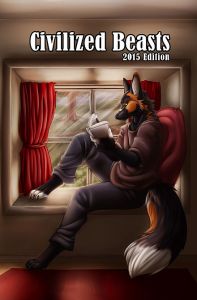
civbeasts coverJanuary’s Book of the Month, Civilized Beasts, is a furry/animal-themed poetry anthology with proceeds benefiting Wildlife Conservation Society. The book features work from a wide variety of poets and artists, including:

Larry D. Thomas
B. H. Tang
Kevin Gillam
Chris Wise
BanWynn Oakshadow
Arian Mabe
Marge Simon
Jason Huitt (Lunostophiles)
Eduard Dragomir Szabo
Sandi Stromberg
Renee Carter Hall
Edwin ‘Utunu’ Herrell
George Squares
Ceò
Amy Fontaine
Alice “Huskyteer” Dryden
Winston Derden
Carolyn A. Dahl
Kenket
Dwale
Joyce Parkes
Stefano “Mando” Zocchi
Dominique Goodall
Televassi
David Andrew Cowan
Altivo Overo
Kits Koriohn
Denise Clemons
Jack Warren
Lynn White
Bruce Boston
Laura “Munchkin” Govednik
Weasel

Published by Weasel Press and available from major retailers in print and ebook formats.

Guild News: January 2016

New Members

No new members this month, but if you’re interested in joining, you can find all the info here.

Member News

In book release news, the furry poetry anthology Civilized Beasts is now available in print and ebook formats, including poems from Renee Carter Hall, Huskyteer, and many more. The erotic anthology Will of the Alpha 3, edited by Rechan, has also been released, featuring fiction from Laura “Munchkin” Lewis, Ocean Tigrox, Dark End, and others. (It’s also available as an ebook from Bad Dog Books.) Renee Carter Hall’s holiday story collection Wishing Season has been released in paperback for the first time, and Phil Geusz’s novella Cheetah’s Win (first published in ROAR) is now available as a standalone ebook. Finally, Searska GreyRaven’s story “Reynard and the Dragon” (also first published in ROAR) has been reprinted in the mainstream anthology Swords of Darkness, available now for pre-order.

In periodicals, the new magazine A Glimpse of Anthropomorphic Literature made its debut last month, with the first issue available to read free until February 15, featuring stories from Ocean Tigrox and Amy Fontaine as well as reviews of several furry books. Mary E. Lowd has started a new ezine, Deep Sky Anchor, to feature her short fiction, and Dark End has now completed his murder mystery “The Missing Motive,” with the full story now up on FurAffinity.

In nonfiction, associate member Madison “Makyo” Scott-Clary’s article “On Postfurry” was featured in an episode of Culturally F’d.

Finally, in other member news, Fred Patten celebrated his 75th birthday last month. If you missed Phil Geusz’s interview with him, you can check it out here.

(Members: Want your news here? Start a thread in our Member News forum!)

Market News

Upcoming deadlines: ROAR #7 closes on February 1, and the second issue of A Glimpse of Anthropomorphic Literature is reading through February 15. (More info on both on our Paying Markets page.)

For conbooks, Fur the ‘More is seeking “Cubicle Jungle” submissions until February 15 (maximum 2000 words, full info here).

Remember to keep an eye on our Calls for Submissions thread and our Publishing and Marketing forum for all the latest news and openings!

Guild News

Want to hang out and talk shop with other furry writers? Come join us in the forum shoutbox for the Coffeehouse Chats, Tuesdays at 7 p.m. Eastern and Thursdays at 12 p.m. Eastern. More info on the Coffeehouse Chats is here. (Remember, our forums are open to everyone, not just FWG members. Come register and join the conversation!)

We’re always open for guest blog post submissions from members — good exposure and a great way to help out fellow writers. See our guidelines for details.

Elsewhere on the Internet, we have a Goodreads group with a bookshelf featuring books by our members. Feel free to add any members’ books we’ve missed so far (see the instructions here on how to do that). We also have a Telegram group, and you can find more info on that and a link in this thread.

Have a happy and creative 2016! If you have news, suggestions, or other feedback to share, send an email to furwritersguild (at) gmail.com or leave a comment below.


Guest post: “Setting Effective Writing Goals” by Renee Carter Hall

Setting Effective Writing Goals

by Renee Carter Hall


For many of us, a new year brings a feeling of a fresh start — a blank slate ready for new habits, new goals, and new accomplishments to celebrate. But after the novelty wears off and all the responsibilities, obligations, and distractions of day-to-day life rush back in, it’s easy for writing to get pushed back to the bottom of the to-do list. Here are a few tips to help you set goals that won’t set you up for disappointment.

1. Consider what you really want. That may sound obvious, but it’s easy to accept other people’s ideas of goals instead of your own. Do you want to write the first draft of a novel to challenge yourself, or because everyone else in your writing group is working on a novel instead of short stories? Consider, also, whether you want to set goals that deal with process (“write 3000 words a week,” “write for 1 hour every weekday”), goals that deal with projects (“finish 2 short stories a month,” “finish the first draft of my novel”), or a mixture of both.

2. Choose goals that are under your control. You might want the end result to be “find an agent” or “get a short story accepted to Magazine X,” but you can’t control whether agents or editors accept or reject your work. Instead, consider goals that are based on your own actions, like “query 10 agents” or “send at least 1 submission to Magazine X.”

3. Find the balance between challenge and realism. Some writers like the challenge of setting big goals and pushing themselves to achieve them; others would rather set the bar lower, get the confidence boost from achieving a smaller goal, and build from there. Consider your personality, your experience level, and your situation, and decide what’s right for you.

4. Write it down. Whether it’s in a private journal or posted online, a written list gives you a visual reminder to focus on — plus the fun of checking off your accomplishments. If it motivates you to share your goals with others, feel free; if not, keep it private.

5. Check in. Once a week, once a month — on whatever schedule works for you, glance over your goals and re-evaluate them. What steps you can take now to work toward each goal? Which ones have been accomplished? You may find that some goals are no longer relevant to you or may need to be reworked, and you might find others to add.

6. Celebrate accomplishments large and small. It’s easy to get disappointed by the goals that don’t get checked off, but try to keep the focus on what you do achieve. Celebrate your progress along the way, no matter how small that progress may seem, and reward yourself with something you love — an hour with the newest video game, the latest book from your favorite author, or a decadent dessert. (Just don’t derail any goals you might have for your health!)

I hope these tips help you make 2016 your most successful writing year yet. What are your goals — writing or otherwise — for 2016? Feel free to share them in the comments!


Member Spotlight: John Van Stry

1. Tell us about your most recent project (written or published). What inspired it?

The ‘Portals of Infinity’ series is my most recent project. It’s about a guy who discovers these portals that link all of these different realities together and his adventures as he deals with different realities, gods, goddesses, and champions. Book six just came out in October.

I can’t point to any one thing that inspired it, as it was actually inspired by a lot of different things. Mainly I was looking for a story that could be serialized and this was what I came up with after a lot of thought. I’ve been rather surprised by how well it has been received.

2. What’s your writing process like? Are you a “pantser,” an outliner, or something in between?

I guess something in between; when I start a story I usually have the beginning, the end, and a scene or two written down. But somewhere around the second or third chapter, once I have a feeling for the story, I’ll sit down and write a full outline. However, I do update the outline if necessary. Only the original plot points I started with don’t change.

3. What’s your favorite kind of story to write?

I actually prefer to write first person singular (and yes, that probably wasn’t what you meant when you asked that, right?) I guess I prefer stories with action and adventure, but it’s really hard for me to narrow it down, because many of my stories rarely have a single ‘kind’ to them, I tend to mix it up. I write SciFi or Fantasy predominately, but I’ve written Urban Fantasy, Paranormal Romance, and even a few odder things.

4. Which character from your work do you most identify with, and why?

This is actually a tough question, partially because I’ve got a lot of stuff out there now, as I have a few pen names. I guess I identify a little with Raj, from my book Children of Steel, because we’re both pilots, and we’re both martial artists (though I don’t teach or fight anymore), but I also identify a bit with Mark from The Hammer Commission as that story did come from a dream I had many years ago.

5. Which authors or books have most influenced your work?

That’s a very long list. Roger Zelazny definitely influenced my writing style; Robert Heinlein influenced my love of science fiction and the idea of capable heroes. But also Tolkien, Asimov, Roger Sterling, Lackey, Webber, Dickson, Capote, Zahn, Norman (Lisanne, not the Gor guy), McCaffrey, Correia, and the list goes on. I used to read a lot and I had a lot of authors who I really liked.

6. What’s the last book you read that you really loved?

I guess the last one I read that I really loved was Off Leash by Daniel Potter. It was a ‘Rollicking good yarn’ (sorry, but how often do you get to use the word ‘rollicking’ these days? Couldn’t pass it up). I write full time now, so I don’t get to read as much as I used to, but I came across this book via the board here after talking to Daniel, and I really had a great time reading it.

7. Besides writing, how do you like to spend your free time?

Right now? Fallout 4. Though I do wrench on my motorcycles and ride them whenever I can. I also play bass guitar, pretty much every day. I keep a couple set up next to my writing desk with a practice amp for when I take breaks.

8. Advice for other writers?

STORY! Always put the story first. People want to read a good story; they don’t want to be preached at. This isn’t to say you can’t have a viewpoint, or a ‘message’ you want to convey, but the story must always come first. If you don’t have a good story, you won’t sell any copies. The next piece of advice? GET PAID. As Larry Correia says, make that the first line in your business plan.

Another thing I would say is don’t overprice your work. No one is going to pay bookstore prices for an unknown ebook author, especially a self-published or micro-press one. 5.99 is too much, you should all be looking at 2.99 to start. Yes, you make more money on a 5.99 book, but 70 percent of 1 or 2 sales is a lot less at 5.99 than 70 percent of a thousand sales at 2.99.

Last of all, SciFi is not a big market; it’s actually a tiny market. Fantasy is bigger, but Romance is the biggest. If you like writing Romance, then you should write in that market, as you’ll find success a lot easier than in the other markets, and you can charge higher prices for your work. Furry is a very tiny, microscopic market, so it’s no wonder that the only authors doing well in it are writing Romance. There is also a huge prejudice against anything remotely furry in mainstream fiction, except for Paranormal Romance, which if it isn’t vampires, it’s pretty furry.

9. Where can readers find your work?

Amazon. I went exclusive with Amazon last year, because being in the Kindle Unlimited program was a good financial decision for me. I may start going ‘wide’ in 2016, depending on what Amazon does with that program going forward, but right now Amazon is THE place to buy and sell books. The other booksellers out there on line don’t understand the business, and are failing at it.

10. What’s your favorite thing about the furry fandom?

The friendships mainly. Back when I first got started in the fandom and was more active I made a lot of friends with a lot of the other creative folks. I still know quite a few writers and artists and talk to them occasionally. These days I’m not very active in the fandom anymore, I show up at a con or two, maybe log into a muck for a few minutes to check my mail, and that’s about it.


Guest post: “A Conversation with Fred Patten” by Phil Geusz

A Conversation with Fred Patten

by Phil Geusz

Tomorrow, December 11, 2015, Fred Patten will celebrate his 75th birthday. If you don’t already know who Fred is and why it’s important that the fandom (and especially the FWG!) should honor him, well… Perhaps the best way to learn more about who Fred is and what he’s done for us both as furries and as authors would be to read on.


1) You’re often credited as being among the handful of founders of the furry fandom. Can you give us an idea of what it was like, who else you personally knew that was involved, and generally tell us how it all came together?

I remember attending the 1980 Worldcon as a regular s-f fan, one of several from the Los Angeles Science Fantasy Society. I was particularly close with Mark Merlino at the time; we had recently created the C/FO and “invented anime fandom”. One of the favorites of both Merlino & I was Kimba the White Lion, though most of the other early anime fans preferred the giant robot cartoons. At the 1980 Worldcon, Merlino & I and Nicolai Shapero were intrigued by a painting in the Art Show of a cat-woman in a military flight suit standing next to a realistic futuristic fighter plane. The artist was nearby and introduced himself as Steve Gallacci, a USAF technical illustrator. The painting was a standalone illustration from a series that he’d had in mind for years, about a star system of artificially-evolved animal peoples who had forgotten their past and rediscovered it during a space war between the cat and rabbit nations. He had a manila folder full of rough notes in cartoon form that he offered to show us. We didn’t just glance at it; we studied it in detail. At the convention’s Art Auction all three of us got into a bidding war for that painting. None of us got it; I don’t know who did.

I don’t know who else joined the “Gallacci group” to look at his notes at the 1980 Worldcon, but Tim Fay and John Cawley were early members. Gallacci was just getting out of the USAF; he settled in Seattle, and came to most of the s-f and comics conventions on the West Coast during the 1980s. We used to gather around Gallacci at these conventions to see his latest addition to his notes, and the group gradually grew. Many of us were cartoonists, and traded sketches in the ever-present Black Sketchbooks. During conversations with each other, we discovered that we all particularly liked the stories that featured intelligent animals and animal-like aliens; Watership Down and Animal Farm, Kimba the White Lion and Bambi, and so on. During 1982 Don Bluth’s The Secret of NIMH came out and was a big topic of discussion.

As a separate matter, Vootie, the fanzine of the Funny Animal Liberation Front started in 1977. I had tried to join, but was turned down because I wasn’t a cartoonist. It was an APA for comic-book fans who didn’t like costumed superheroes and could draw. One of its members was Marc Schirmeister in L.A. During 1981 and 1982 it became obvious that Vootie was dying because of apathy among its organizers. Schirm tried to keep it going but he failed; the last Vootie was in February 1983. Schirm then organized Rowrbrazzle as its replacement, but he made an interest in funny animals rather than an ability to draw cartoons as the criterion for membership. I could write about them so I was accepted, as were several members of the Gallacci group, ex-Vootie members, and others who could draw funny animals; some friends of members. Schirm went on a recruiting drive among the 1983-84 Cal Arts students and made several of them Rowrbrazzle members whether they wanted to be or not. Most of them never contributed; Bruce Timm provided a “Duck Savage” drawing that he’d already done.

Rowrbrazzle #1 appeared in February 1984. By that time, early furry fandom was dividing between those who were in Rowrbrazzle and contributing to its quarterly issues, and those who gathered at conventions who were organized more by Mark Merlino & Rod O’Riley. Gallacci was concentrating on finalizing his story into publishable form as the comic book Albedo. The members of Rowrbrazzle #1 were Marc Schirmeister the Official Editor, Greg Bear, Jerry Beck, John Cawley, Dave Bennett, Jerry Collins, Tim Fay, Jim Groat, Richard Konkle, Brett Koth, Steve Martin, Bruce Timm, Ken Sample, Taral Wayne, Deal Whitley, Colleen Winters, and me. Some like Bruce Timm weren’t interested in furry fandom and dropped out right away. Jerry Beck got interested in animation. Deal Whitley was as active in furry fandom as his health would permit, until he became the first furry fan who died. John Cawley shifted over to Merlino’s group which evolved to putting on parties at conventions. Merlino’s Furry Parties, advertised on flyers throughout the convention, were responsible for the fandom coming to be called furry fandom. Other early furry fans were Roz Gibson, Mike Kazaleh, Stan Sakai, Tracy Horton who married Mike Kazaleh, Edd Vick, Diana Vick (no relation), Monika Livingston, and Kjartan Arnorsson. Merlino & O’Riley expanded the Furry Parties at s-f & comics conventions into the first furry conventions, the ConFurences, in 1989.

One of the early discussion topics in Rowrbrazzle was what was happening in the fandom. This is why I say that Rowrbrazzle wasn’t responsible for furry fandom, but it does prove that furry fandom existed by 1984. It was more than the Vootie membership and the Gallacci groups at conventions.


2) You’re also credited in a similar way with the founding of the anime and My Little Pony” fandoms. Have you any comments on how they came to be and your role in the matter? And… Just how did it come to pass that you’ve been at center of so many important cultural movements?

I may have co-founded furry fandom and anime fandom, but I’ve never watched My Little Pony. You can’t blame that on me.

I joined the Los Angeles Science Fantasy Society in 1960, which meets every Thursday evening, and I was an active s-f fan from 1960 until I had my stroke in 2005. I credit many of the LASFS members of the 1960s through the 2000s with helping me get established as an active fan who was on s-f convention committees, helped organize s-f theater parties, etc. I attended some of the first meetings of mystery fandom and Oz fandom, but I never became a leader in those. I was active early in comics fandom — I had an article on Mexican comic book superheroes in Alter Ego, one of the first comics fanzines, in 1965 — but I was not very interested in the costumed superheroes that most comics fans concentrated on. That’s why my interest ran more to the funny animals, the French bandes dessinées, and later the Japanese manga. I’ve always had a habit of volunteering, usually as a Secretary. When anime fandom and later furry fandom began to coalesce, I used my experience from the LASFS in organizing anime and furry clubs that wouldn’t fall apart in a few months.


3) All of the fandoms you’re involved in can in at least some fairness be described as a bit geeky”. (Keep in mind that I’m saying this as a proud, card-carrying geek myself.) Do you consider yourself a bit of a geek? Do you have any observations or comments on geekdom in general?

Yes, I’m a geek and proud of it. I was never interested in the social life of high school or college. I’m a lifelong bachelor. My mother wanted me to become a doctor or lawyer or something prestigious, but I’ve always liked books and became a librarian. I became nervous about what would happen to me when I graduated from college, and I joined a fraternity to force myself into a social life, but I hated it. When I discovered s-f fandom, they were my kind of people.


4) You’re a bibliophile and book-reviewer of note. About how many reviews do you suppose you’ve written over the years? Care to share some happy memories of the very finest or otherwise outstanding works you’ve read or reviewed?

I’ve probably written over a thousand reviews of furry books alone. Probably over 2,000 all told. My earliest review was of an arguably furry book; H. Beam Piper’s Little Fuzzy, in a 1962 fanzine. I’m depressed to read today a list in ISFDB of the reviews that I wrote in the 1970s; I don’t remember many of the books at all, much less what I said about them. From 1975 to 1977, I was the publisher, co-editor, and a major reviewer for Delap’s F&SF Review, a monthly s-f reviewzine; about 28 regular issues. Richard Delap & I argued about the direction that it should take, and he “fired” me to edit & publish it himself. It only lasted two more issues.

The review that I remember best was of Stephen King’s The Shining. I said that it was a very suspenseful horror novel, but there were several of what seemed like buildups to horror subclimaxes that were aborted and didn’t go anywhere. I got a letter from King saying that was all his editor’s fault. His original manuscript had been twice as long, and all those buildups had led to horror scenes that the editor had edited out; like the ominous firehose on a wall of the hotel that had attacked the boy before the scene had been cut.

Another is of Forest Wars by Graham Diamond; a truly awful novel that I had fun tearing apart. It had a vast empire that it took a man on horseback three whole days to gallop across. Since a galloping horse can only cover about 20 miles a day, that’s about 60 or 70 miles across. Some vast empire. Retreating farmers cut down their fields of grain rather than leaving it for slavering hordes of wild dogs to eat. Were the dogs expected to harvest the grain and bake it into bread for themselves?

Continue reading “Guest post: “A Conversation with Fred Patten” by Phil Geusz”