Member Spotlight: Dwale

1. Tell us about your most recent project (written or published). What inspired it?

My most recent completed project is a short story called “The Darkness of Dead Stars.” It was inspired by what I’d read about the ultimate fate of the universe and eschatology, though beyond the basic premise, it didn’t start to come together until I’d seen Von Trier’s film “Melancholia.” As with “Melancholia,” mood and atmosphere take priority over realism. This was necessary for my story because there yet remain unanswered questions in physics that make it impossible to determine certain details about the future of the universe; we just don’t have the data right now. However, I hope it will all sound feasible at the time of reading.

2. What’s your writing process like? Are you a “pantser,” an outliner, or something in between?

I usually let an idea bounce around in my head for months, even years before putting down any of it. That shouldn’t be taken for planning, though, as the plot is never more than roughed out when it comes time to write. Once it gets to that point, I alternate between daydreaming and trying to articulate those daydreams. I try to edit as I go as much as possible.

Once a rough draft is completed, it goes through a couple of rounds of editing, then I try to leave it alone for a few months. After that, I decide if the story should be scrapped, edited further, or completely rewritten.

For poetry, I employ automatism at first and clean it up as I go.

In both cases, the germ is usually something retained from hypnagogia.

3. What’s your favorite kind of story to write?

I have the most fun writing things that are completely absurd. Think “Looney Tunes” logic, but sordid, morose and infused with my personal symbology. It’s rare that I venture into this territory, though.

4. Which character from your work do you most identify with, and why?

That would vary, but the easy answer is “Aunty Fjola.” We’re both struggling with afflictions, though her ailment is as much physical as it is psychological, we’ve both also had to readjust from a life that was fairly bustling to one that is more passive and sedentary.

5. Which authors or books have most influenced your work?

Watership Down is the book that made me want to write seriously. I read it when I was eighteen or so, I had been writing poetry for years then and liked to think I knew what I was doing. Nope! I was humbled and resolved that someday I would be able to write something that good. I’ll let you know if it happens.

Orwell’s 1984 was also a big influence, I’ve read it many times. Terry Pratchett is someone I haven’t been reading very long, but he’s already made an impression. Neil Gaiman, William S. Burroughs, HP Lovecraft and Khalil Gibran also deserve mention, as do others I’m forgetting.

6. What’s the last book you read that you really loved?

“Loved” isn’t a word I would normally use, but… Going Postal by Terry Pratchett. It’s rare for a book to make me laugh aloud, but this one did, more than once.

7. Besides writing, how do you like to spend your free time?

Well, I like to spend my free time attended by nymphs in the pleasure gardens, but as this occurrence would be charitably termed “uncommon,” I mostly enjoy reading and taking in movies and music these days. The woods are nice, but we don’t have them here. I will always stop whatever I’m doing to watch rain or windstorms, that’s my favorite.

8. Advice for other writers?

Always strive to improve. Always do! Your art is not so small that you’ll ever want for room to grow.

9. Where can readers find your work?

Has mostly rough drafts, but there are some more polished ones. Persons are also welcome to contact me directly.

10. What’s your favorite thing about the furry fandom?

Furries are some of the most open and accepting people. No one’s worried about the skeletons in your closet, no one’s trying to look cool…or at least, no one’s succeeding! We have our share of unpleasant types, every fandom does, but there are some truly wonderful people who make it all worthwhile.


Check out Dwale’s member bio here!
Guest post: “Writing Furry Speculative Fiction” by Mary E. Lowd

Writing Furry Speculative Fiction

by Mary E. Lowd


My favorite books as a kid were all about talking animals. As I got older, it got harder to find those sorts of books. Sure, there’s the occasional piece of science-fiction with animal-like aliens or off-beat literary novel from the point of view of an animal, but, mostly, talking animals are seen as kid-stuff in our culture. So, when I set out to write a serious, hard science-fiction novel featuring talking otters as the main characters… Well, I was breaking new ground as far as I knew, and I had to make up the rules as I went along.

Since then, I’ve learned that there’s actually a name for the genre of fiction I was craving, and there’s a whole community of readers, writers, and publishers who’ve put a lot of thought into how that genre works. I was ecstatic when I discovered the furry genre. Finally, I wasn’t alone, writing about otters with spaceships.

There are a couple of different kinds of furry fiction. Perhaps the most mainstream is ‘the secret life of animals.’ These stories are usually set in our normal world — talking animals co-exist with humans who are simply unaware of the dramatic tales unfolding around them. (E.g. Watership Down by Richard Adams and Charlotte’s Web by E.B. White.) Animals in these stories are often only slightly anthropomorphic. They can think and talk like humans, but they’re otherwise normal animals.

The other extreme of furry fiction features animals who are so thoroughly anthropomorphized that the differences between different species have become largely aesthetic, possibly metaphorical. Foxes date bunnies; elk work in office buildings with mice. Instead of co-existing with humans in the normal world, these anthropomorphic animals replace humans. In this kind of fiction, the different animal species are merely different flavors, adding texture and color to characters in a simple short-hand.  (E.g. Maus by Art Spiegelman and Save the Day by D.J. Fahl.)

When writing speculative furry fiction, it’s possible to fall into these extremes. You could tell the story of the first colonists on Mars from the point of view of their pet cat. Or, the first colonists on Mars could be cats with no explanation given for their furriness. However, I love the stories that fall in-between, and, I like it best when those stories have an answer to the obvious question: why can the animals talk?

This question has been explored so much by the furry writing community that some people feel it doesn’t matter anymore, much like the question of faster than light travel in mainstream science-fiction. How does the FTL drive work? Who cares? It just does. However, the type of FTL drive in a sci-fi universe determines the sorts of stories that can be told there. Similarly, the type of anthropomorphic animals determines a great deal about a sci-fi universe’s history and culture. So, it’s worth knowing the tropes.

The oldest trope is parallel evolution. See, those golden-furred, feline bipeds who live in family groups with one male figurehead where the females do all the work… Those aren’t lions. They’re aliens. From a different planet. They just happened to evolve to be really similar to lions. (E.g. The Pride of Chanur by C.J. Cherryh.) This is a great trope. It’s easy to use and widely accepted.

Another answer to the question, ‘why can the animals talk?’, is that they were genetically uplifted by humans. (E.g. Startide Rising by David Brin.) This is my personal favorite. Of course, it raises its own question of ‘why?’ Were we designing soldiers, slaves, or simply companions? Are they treated as equals? If so, did they have to fight for their rights? How long did that take? Different answers to these questions lead to wildly different universes. If we were designing soldiers, then the talking animals are probably larger, predatory species. (E.g. Forests of the Night by S. Andrew Swann.) If we were designing obedient slaves, they  might be dogs or a docile species like bunnies. (E.g. Ship’s Boy by Phil Geusz.)

A final possibility is that the animals actually are humans who have drastically modified themselves. (E.g. The Book of Lapism by Phil Geusz.) In this case, the species of animals will be chosen by individual characters for personal reasons. Individuals who choose to modify themselves so extremely are likely to be rich, eccentric, socially outcast, or part of a fringe subculture.

And, of course, all of these answers can be adapted easily to fantasy universes by replacing science with magic and scientists with wizards.

As you can see, explanations have been developed that will fit anthropomorphic animal characters into almost any piece of speculative fiction. And, from fantasy to space opera to near future hard sci-fi, most speculative fiction can benefit from the color and texture added by a few talking animals. Besides, they’re just fun to read.

So, now that you’ve learned the basic tropes, go forth and add anthropomorphic animal characters to your speculative fiction!


This post first appeared on Jester Harley’s Manuscript Page.

Member Spotlight: Sarina Dorie

1. Tell us about your most recent project (written or published). What inspired it?

My most recent project has been weeding the garden. Aside from that, I have been writing a lot of short stories. I was really excited my story, “Day of the Nuptial Flight” came out in the July/August Fantasy and Science Fiction Magazine, a story someone called “alien, insect erotica.” I recently sold a series of 7 stories/paranormal love advice columns to Daily Science Fiction. Imagine Dear Abby meets the bogeyman.

The project I know I should be working on is Shadows and Starlight, the sequel to Silent Moon. The first book in the series came out with Soul Mate Publishing this year as an e-book and will be coming out as a print book on Amazon next month. The first book is a gothic mystery with werewolves and a Jane Eyre feel to it. The sequel will focus on one of the “wolfmen” in the first book and his relationship with a shapeshifter who resembles shadows and starlight in her true form. It has been really hard to find the time to finish editing it when I have been successfully writing and selling short fiction. It’s all a balancing act on the tightrope of time management!

2. What’s your writing process like? Are you a “pantser,” an outliner, or something in between?

I think I am something in between. I really like writing character and dialogue, possibly influenced by early play writing classes in college, but I know if I don’t make a plan, my characters will and that might not make the best story. Outlining means less cutting later, but it also takes away from the joy of spontaneity. It is a difficult balance. More tightrope walking.

3. What’s your favorite kind of story to write?

I love to write about magic and I like to write about relationships. I heard a writer once say that all romance is a kind of magic and that might be why many of my stories lean toward romance.

4. Which character from your work do you most identify with, and why?

Arg, that is so hard. I went to art school to be an illustrator and one of my teachers once said all portraits are self-portraits and all paintings are of yourself—whether you intend it or not. I think I put something of myself in every character and the ones I don’t are the flattest and least alive. Usually when I write about school teachers those are the characters that are the most authentically myself because I am putting direct experiences into my writing. The characters that are aliens or outcasts or monsters that I write about feel symbolic of my experiences living overseas because I was an alien in those circumstances.

When a friend and I were discussing my beauty and the beast obsession, most recently seen in “A Monster and a Gentleman” which came out in Hot Dish this year with my pseudonym, I wondered what that meant about my mindset and mentality toward men and women and gender roles. My friend said that actually she thought I thought I was the monster, not the beauty. That gave me a different perspective. I think this really came out in Cassia in Silent Moon. I identified with the struggle for acceptance and self-acceptance of being a monster/flawed/an outcast.

Continue reading “Member Spotlight: Sarina Dorie”

Guest post: “Why I Review” by Tarl “Voice” Hoch

Why I Review

by Tarl “Voice” Hoch


For those that follow either my Smashwords or Goodreads accounts (or my Facebook and Twitter for that matter) will know that for the last year or so I have been reviewing any and all books that I read. No matter what they are, be they religious texts to fiction novels, I head over to the sites when I am done and rate them, plus give them each a review.

Someone once asked me why. Why do I review, and why is it so damned important to me that I do?

The fact is, it helps the community, it helps the writer, and it helps the purchaser.

In all of my time doing this, I’ve tried to stick to the constructive criticism model I learned in University. Say something nice, then something that needed improvement, and then something nice. Though I didn’t see very many students following this model in my art classes, I saw just how effective it was when someone actually followed that guideline. I’m also happy to say, except for two or three books, I have been able to stick to that formula.

You see, reviewing helps writers. It helps them to know what they could improve upon in their story. If only one person says something, then it’s kind of pointless. But if you have ten, or twenty, or fifty people saying that your pacing is choppy, then you know what you need to work on. It also gives you to know what worked in your story as well. If everyone raves about how hot your sex scenes are, then you know you don’t need to work on them, and can concentrate on the stuff that DOES need work.

But as mentioned, reviewing also helps purchasers. I have taken novels and short stories off my wish list because of poor reviews. Let me make this clear before I continue, they have to be GOOD reviews. Well thought out, well spoken, before I will listen to them. None of this “IT WAS AWESOME!” crap. Anyway, if someone has commented on a novel being terrible due to the ending, or the pacing, or grammar, or whatever, then I am more likely not to get it. Not only does it save me money, but it also saves me frustration at the author when I read it (and hopefully lets the author know what they need to work on).

And last, reviewing helps the community. Be it writer, or be it furry, reviewing works constructively lets authors know you’re reading their material, it gets knowledge of a book or anthology out there, and it lets the culture grow and evolve in a positive manner. Without reviewing, everything would just sort of stagnate. No one would get feedback, besides sales authors wouldn’t know if people were reading or enjoying their material, and no one would be able to improve upon their work.

In the end, I review because as a writer, it helps not only my community, but it helps other writers to improve their craft. I try to give as detailed reviews as possible and try to be fair and honest with each one I give. I’m not perfect, and there have been reviews where words fail me and I have to put something down. But for the most part, I try to explain the best I can what I liked and didn’t like about each and everything I read.

So that is why I review everything I read.

I suggest you do the same. It helps a lot of people out when you do, especially if you take the time to make it detailed and you give it in the constructive criticism format. Not all books are perfect, because no writer or editor is perfect. But that said, no book is ever complete crap either, and there is always something positive to say about a story (though I’ve come across a couple where I honestly couldn’t think of anything good to say, and those two stories still bother me because of that).

In the end, the brief time it takes to actually type out a short review is so minor compared to the benefit to those it touches, that there really isn’t a reason why you shouldn’t be reviewing the stuff you read.


This post first appeared on Tarl “Voice” Hoch’s blog on Goodreads.


Book of the Month: Huvek by James L. Steele

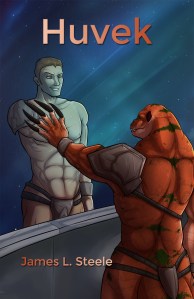
Huvek coverAugust’s Book of the Month is by FWG member James L. Steele.

Humanity has gone to the stars, split and fused the atom, colonized hundreds of worlds, and rejoiced at first contact with alien life. Until the killing started.

Man has been at war with the Kesvek for over forty years. Nearly indestructible, relentless in battle, and unwilling to negotiate, the reptiles constantly push forward. Colony after colony has falls, and the human race can do little but hold them back. Humanity knows very little about their enemy.

The Kesvek plan to change that.

There is much to learn, and the Kesvek are willing to teach.  So long as humans can survive the process, mankind will discover what caused the conflict, and what is required for peace.

No matter the cost.

Order from FurPlanet. (Mature content.)


Guild News: August

New Members

Welcome to our newest members Eduardo Soliz, Franklin Leo, Cadence, and Slip-Wolf!

Member News

Huskyteer recently participated in a short story reading at Kirkdale Bookshop as part of the Sydenham Arts Festival, and her story “The Wolf’s Holiday” was voted the audience’s favorite. You can read more about the evening at her blog. She also has a poem in Far Off Places, Volume II, Issue II (Sartorial), available here.

Kandrel’s Pile is now available as a digital edition from Rabbit Valley.

M. C. A. Hogarth published the children’s book Vinny the Armadillo Makes a Friend, the e-book Some Things Transcend (sequel to Even the Wingless), and the audiobook edition of “Broken Chains.”

Mary E. Lowd’s story “The Hand-Havers” appears in the October 2014 issue of Analog.

And yours truly (Renee Carter Hall) has a flash piece, “How Mother Rabbit Lost Her Name,” in Lakeside Circus. (Definitely not a children’s story.)

(Members: Want to make sure your news gets included here? Start a thread in the Member News forum!)

Market News

Some deadlines coming up fast: You’ve only got until August 4 to submit to the Fur Reality conbook, and both FANG and Will of the Alpha 2 close to submissions on August 31. There’s also an August 31 deadline for the conbooks of Oklacon and Furpocalypse. (See our Convention Books page for the rundown.)

Markets now open to submissions: Heat and Hot Dish, both from Sofawolf and both with a deadline of September 30 (see our Paying Markets page for details and links). The VancouFUR conbook is now open as well.

Guild News

Members, there’s just one week left to get your votes and nominations in for the Cóyotl Awards! Voting for the 2013 awards and nominations for the 2014 awards both end August 8. The 2013 voting form (for works published in 2012) is here, and the nomination form for 2014 (works published in 2013) is here. If you have any trouble getting to the Cóyotls website, you can also send your votes and nominations via email to coyotlawards@gmail.com. (Don’t know what to nominate from 2013? Check out our recommendations thread.)

We remain open to guest blog posts from members! See the guidelines here.

Want to hang out and talk shop with other furry writers? Come join us for the Coffeehouse Chats, Tuesday evenings from 7-8 p.m. Eastern in the forum shoutbox. (Sometimes later than 8 p.m. if we really get going!) It’s an informal way to check in with your weekly writing progress and goals.

And if you’ve got something you need a beta for, we have a critique board in our forum (you’ll need to be registered with the forum in order to view it).

That’s all for this month. As always, send an email to furwritersguild (at) gmail.com with news, suggestions, and other feedback, or just comment here.

One last question…

Between Dawn of the Planet of the Apes and Guardians of the Galaxy, it’s been a decent summer so far for fans of anthro characters. Who’s your favorite anthro movie character of all time? (Okay, you can list a top 5 if you can’t narrow it down to one!)