Book of the Month: The Painted Cat by Austen Crowder

May’s Book of the Month, The Painted Cat, is by member Austen Crowder (author of Bait and Switch).

painted cat cover“Janet lives in two worlds.

In one world, she is Miss Perch, teacher at a small school deep in the corn grids, helping kids who are turning into cartoon find their way out of town.

In the other, she is Bunny Cat, and paints herself up to be the very same type of cartoon cat her small town has grown to hate.

The wall separating those two worlds is starting to break down. Between rekindling a relationship with an old college flame and discovering how much she loves being Bunny Cat her two worlds are starting to merge. Keeping up the appearances of two separate lives is bad enough, but when kids start getting sent away for turning toon she knows she can’t stand on the sideline any longer.

Two things are for sure: the two worlds won’t stay distinct for much longer, and Janet won’t come out unscathed.”

Parental rating PG.  Available from FurPlanet.

Guild News: May 2015

New Members

Welcome to our newest members Sean Cleary/Gödel Fishbreath, John Van Stry, and Bill Kieffer!

Member News

The furry site [adjective][species] published their first poetry feature in April, including works from several of our members and forum friends. Well worth a read, even if you think you’re not into poetry — you just might be surprised. (We also have a new poetry section in our forums.)

Several of our members also have stories and poems up on QuarterReads, a site offering flash fiction and poetry for just 25 cents a read. See this thread for more info.

Eduardo Soliz recently released Super-Short Sci-Fi Stories 2.8, available for just 99 cents at Amazon and other fine digital bookstores, and Donald Jacob Uitvlugt‘sTo Sail the Winds of Song” is online at Another Dimension. Patrick “Bahumat” Rochefort’sFrom Winter’s Ashes” continued with Chapter 2.1.

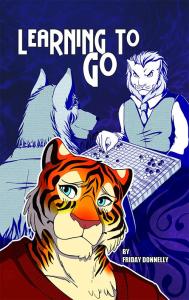
In book news, Friday’s first book Learning to Go will be available very soon from Jaffa Books, Weasel’s Cigarette Burns is now available from Kool Kids Press, and Austen Crowder’s second novel The Painted Cat is available for pre-order from FurPlanet. Congrats, everyone!

(Members: Want your news here? Start a thread in our Member News forum!)

Market News

Upcoming deadlines:  Trick or Treat 3 closes to submissions on June 1. For conbook deadlines, Megaplex’s conbook closes on May 22 and Maltese FurCon’s on June 15.

Remember to keep an eye on our Calls for Submissions thread and our Publishing and Marketing forum for the latest news and openings!

Guild News

Nominations for the Cóyotl Awards are open through June 1. Members, now’s your chance to recognize the best furry fiction from 2014. If you need a refresher on what’s eligible, check out our 2014 recommended works thread and be sure to add your favorites!

The FWG now has a Goodreads group! (Thanks, Munchkin!) That means we also now have a bookshelf featuring books by our members. If you’re on Goodreads, feel free to add any members’ books we’ve missed so far (see the instructions here on how to do that).

We’re always open for guest blog post submissions from members — good exposure and a great way to help out fellow writers. See our guidelines for details.

Need a beta reader? Check out our critique board (you’ll need to be registered with the forum in order to view it).

Want to hang out and talk shop with other furry writers? Come join us for the Coffeehouse Chats, Tuesdays at 7 p.m. Eastern, Thursdays at 12 p.m. Eastern, and Saturdays at 5 p.m. Eastern — all held right in the forum shoutbox. More info here.

As always, our forums are open to everyone, not just FWG members. Come register and join the conversation!

That’s all for this month! Send an email to furwritersguild (at) gmail.com with news, suggestions, and other feedback, or just comment here.

Member Spotlight: Bill “Hafoc” Rogers

1. Tell us about your most recent project (written or published). What inspired it?

My most recent published work is “Squeezer,” a story in the Rabbit Valley anthology Trick or Treat II: Historical Halloween.

Lately, for whatever reason, I’ve been reading and writing a lot of detective stories. I had a series of crime stories involving a modern-day character named Derrick Clydesbank. I had also read a fair deal about the Jack the Ripper case. When the call went out for stories about historical Halloweens, those things percolated and produced my story, “Squeezer,” set in “Vixtorian” London.

Of course this is a century and a half before Derrick’s day, in another country, so I couldn’t use my modern characters. I did still slip in a Father Clydesbank, an “Anglican” priest. He is probably one of Derrick’s less dangerous relatives.

The story is also a horror story, and as usual in horror stories I go with whatever horrifies me myself. Some people think horror writers are monsters for being able to think up such cruel and terrifying stories, but I think most of them are just poor fools who are easier to scare than normal.

2. What’s your writing process like? Are you a “pantser,” an outliner, or something in between?

When I’m on the trail of something really big I go by the seat of the pants. I follow the characters where they lead, and when they show me where they are going I am at least as surprised by it as any reader would be.

The interesting thing about such seat of the pants writing, for me, is that it is always clear that the characters clearly knew where the story was going all along. I never need to go back to put in hints, clues, or foreshadowing; they’re all there already. The story was complete, hanging out there somewhere, and all I did was write it down the way it happened. I’m not sure whether this is more delightful or creepy.

Of course, as I said, I’ve done crime and mystery stories lately, and those are different. To the extent that a story is a mystery, it is more a puzzle than a piece of literature. Puzzles need clues, forms, shapes, and frameworks. The pieces all have to fit, and you have to decide where the detective and the reader will find them. Mystery stories I plan out in my head in advance, although I don’t write formal outlines for them. A few notes are sufficient.

3. What’s your favorite kind of story to write?

The big sweeping adventure tale within which I can get lost. Hopefully my readers will too!

4. Which character from your work do you most identify with, and why?

I don’t identify with any of them too much, although of course all of them incorporate parts of me.

Probably the character I can come closest to identifying with is Dean Lansen, one of the protagonists in Hilltown, a science fiction/fantasy novel published by Melange Books. In a way this is vain because Dean is something more or less than human, almost godlike within his limited range. However, he feels set apart from humanity, as I sometimes do. Above all else, Dean was a character in some of my dreams and lives in a dream version of a town well known and very dear to me. He may not be me, but he is a close neighbor and I know him well.

5. Which authors or books have most influenced your work?

Robert A. Heinlein’s classic teen science fiction novels, such books as Starship Troopers; Have Spacesuit, Will Travel; Tunnel in the Sky; Rocket Ship Galileo (space Nazis!) and of course his various short story collections of the era. I don’t think they have influenced my style all that much, but they lined one shelf in a library where I went as a kid, and I read them all at least once. They got me going in science fiction, which led me to fantasy and furry lit.

In fact, my approach to the furry fandom was via science fiction. I wrote and enjoyed stories with alien characters who were more than just small men in green face paint. Good aliens act and think differently because they aren’t human. Good furry characters do too.

6. What’s the last book you read that you really loved?

One Corpse Too Many by Ellis Peters. It is a mystery set in England during The Anarchy, as I believe it is called. It stars her pious clergyman, good detective, and fine human being, Brother Cadfael.

7. Besides writing, how do you like to spend your free time?

I enjoy those furry conventions I visit. I enjoy reading SF, fantasy, and history, messing around with AM radios to see what comes in at night, and sightseeing and all the usual tourist stuff.

8. Advice for other writers?

Read.

Do what works for you. To make people groan, I like to say “There’s no way to do it wrong, that’s why they call it writing.”

Another piece of advice someone gave me (unfortunately I forget whom) also comes into play. Everyone has a certain amount of bad writing in them. Some more, some less, but everybody has at least some bad stuff. You have to write all that out before the good stuff starts coming out. Get to it.

Have fun. It will keep you going.

9. Where can readers find your work?

My stories appear in Rabbit Valley’s anthologies Trick or Treat, Trick or Treat II, and Pulp! I have a story in the FurPlanet anthology Abandoned Places. My novel Hilltown was published by Melange Books, you may find it at http://www.melange-books.com/authors/billrogers/hilltown.html. I had several stories in the online magazine Anthro, at anthrozine.com. That magazine hasn’t had any activity in a long time but the archived stories are still in place, including mine.

10. What’s your favorite thing about the furry fandom?

The creativity. Other fandoms are creative and dedicated in following their fantasy worlds of choice, be it Trek, comics, or whatever. They create their own characters to explore those worlds. But in the furry fandom, most of us create the worlds too.

Check out Bill “Hafoc” Rogers’ member bio here!
Guest post: “Getting More Out of Your Writing” by Donald Jacob Uitvlugt

Getting More Out of Your Writing

by Donald Jacob Uitvlugt


Writing is both a craft and an art. There are aspects that cannot be taught; you either have it or you don’t. But plenty of the skills that go into making a good writer can be learned. The general rule of thumb: Writing more leads to writing better.

But what’s the best way to get more writing done? I’ve never been a fan of writing exercises for their own sake. They always strike me as too artificial. Writing is about telling stories. That doesn’t mean you shouldn’t practice your craft. But make your practice work for you. You may even get paid for it.

Here are a few ways I’ve turned what could have been a writing exercise into something more:


1) Flash Fiction

Do you need to work on dialogue? Do you want to practice your action scenes? Unsure whether first person or third person POV is right for your story? Flash fiction can be the perfect way to improve your writing through experimentation.

I define flash fiction as any story under 1000 words, though there are markets under 500 words, or even 100-word stories.

There are many advantages to working in such a small scale. In flash fiction, every word counts. Practicing flash fiction can teach you to choose the right word in the right situation. Flash fiction is also great for experimentation. I’ve written flash that are only dialogue or that just paint an impressionistic portrait of a single character. In a rough spot on your novel? Write the worst day your main character ever had, and do it in 500 words.

Flash is all about instant gratification. I’ve written five or more drafts of a 100-word story and still finished in a single day. In the midst of a long project, it can be nice to remember that you can finish a story.


2) Short Stories

Longer fiction (say, 2,000 to 7,000 words) has many of the advantages of writing flash fiction while providing additional opportunities in practicing your craft. If flash fiction allows you to experiment and to focus on individual narrative elements, short stories are the place to work on structural features of stories such as pacing and combining scenes into successful sequences.

In the 1930s and 40s, writer in the US often got their start writing for the pulp fiction magazines. Today, print-on-demand anthologies and e-anthologies can serve the same function. You can’t get rich writing for them, but you may be able to buy that Rabbit Valley book you have your eye on.


3) Blogs, Forums, and Social Media

One of the goals of the Furry Writers’ Guild is to foster professionalism among furry writers. Professionalism is a broad concept, but one of the things it means is this: You should write at a level that people pay you for what you write.

Money and art are not enemies. The days of noble patronage of the arts are long gone. Even if you are never able to support yourself by your writing, being paid for your writing frees you that little bit more to create more. People show what they think is important by what they will pay for. Take your writing seriously enough to expect to be paid for it.

That said, there are times when it’s perfectly fine to write and not be paid. Or at any rate, not in money. In addition to trying to sell your stories, look for opportunities where your writing can create what might be called social capital.

The age in which we live puts the writer in control of their own destiny in a way like never before. Readers want to connect not just with your stories, but with you and your personal story. Blogs, forums, Twitter and other forms of social media enable you as a writer to connect with people around the world.

But it’s not about shoving your work down their throats. It’s all about building friendships. Take the time to write something people can connect with. Write professionally (e.g. without texting abbreviations), because people will judge you based on how you present yourself online. Put yourself out there, even for free, but do it strategically.

Today’s internet is like a bizarre cocktail party taken to several orders of magnitude. Don’t whore yourself out to anyone who comes along. Find a community where you think you can add to the conversation and focus there. Give more than you take, and at worst you may make some friends. At best, you may find a community of people interested in your work.

And yes, this blog is an effort in practicing what I preach.


Links I Find Helpful

I want to conclude by giving a few links I’ve personally found helpful in trying to act on the thoughts I’ve outlined here. My own interest is in speculative fiction (fantasy, horror, science fiction), so there is a definite bias in that direction. Not that these are not strictly furry markets, but in my experience, most people in speculative fiction are very open-minded, so long as the story is told well.


Flash Fiction

http://www.microbookends.com/ MicroBookends is a weekly micro fiction contest based on a photo prompt. A very cool community surrounds this group.

http://thecultofme.blogspot.com/ This blog sponsors a monthly flash fiction contest with a significant giftcard prize.

http://specklit.com/ One of the highest paying sites for 100 word stories.

http://www.drabblecast.org/ Home for many weird and wonderful things, including drabbles and great short stories.


Short Stories

http://www.ralan.com/ In my humble opinion, your best one-stop site for finding markets to sell speculative fiction.

http://thegrinder.diabolicalplots.com/ When Duotrope became a pay site, The Submissions Grinder became the best free search engine for calls for submission.

http://horrortree.com/ The best on-stop site for horror calls. The calendar view is extremely helpful.

http://thewritersarena.com/ Full disclosure — I’m regularly a judge at this weekly one-on-one writing contest. But if you’re up to the challenge of writing a story under 4000 words in one week on an assigned topic, the Arena can be a lot of fun.


Blogs, Et Cetera

https://furrywritersguild.com/

http://www.anthroaquatic.com/forum/index.php

https://twitter.com/FurWritersGuild

You probably know all these links already, but the Furry Writers’ Guild is a perfect example of social media done right. Writers helping other writers not because they’re getting paid but because they want to fill the world with more good stories. Learn from what the guild members do well!


Member Spotlight: Eduardo Soliz

1. Tell us about your most recent project (written or published). What inspired it?

​I recently compiled the first three of my Con Fluff collections into a single volume titled Fuzzy Words. The digital version is currently on sale or can be borrowed on Amazon, and I am in the process of having print copies done, which is very exciting!
fuzzy words cover
2. What’s your writing process like? Are you a “pantser,” an outliner, or something in between?

I am a bit of both; nearly every story begins with an outline, but I don’t force myself to stick to it once the words start to flow. I like to say that “stories write themselves” and it has proven to be true on many occasions. I’ve had funny stories turn serious and drabbles that grew into a few thousand words.

3. What’s your favorite kind of story to write?

My favorite stories to write are the ones in which I lead the reader down a certain path only to throw them a curve at the end. It’s a tricky thing to do right, though, you don’t want to just pull a ‘deus ex.’

4. Which character from your work do you most identify with, and why?

My Christmas story for 2013, “Christmas Wishes,” featured a character that was spending Christmas away from his family for the first time. I certainly sympathized to his plight, having spent my first Christmas away from family fairly recently.

5. Which authors or books have most influenced your work?

My biggest influence is easily Isaac Asimov. In addition to enjoying his science fiction novels and short stories, I loved the way he would write his own thoughts about how a story or book came to be, the “story behind the story” as it was. I have even gone as far to incorporate that device into my own short story collections.

6. What’s the last book you read that you really loved?

As of late, I have been reading books by furry authors to get an idea of what is out there. I found Argo by Rick Griffin to be quite thought-provoking, with some interesting ideas about robots.

7. Besides writing, how do you like to spend your free time?
eduardo soliz
I enjoy your typical nerd hobbies like video games and comic books, but also like to go out camping and experience the great outdoors every so often. I also record two podcasts, a short slice-of-life podcast called 300 Seconds and a convention discussion one I record with friends named Con Talk.

8. Advice for other writers?

Don’t give up no matter how badly you initially fail. I sold exactly two copies of my first e-book the first year that I put my work up for sale, and sold exactly zero paper books at Furry Fiesta a few years ago. Was I discouraged? Hell yes, I was. Did I stop? Hell, no.

9. Where can readers find your work?

A selection of short stories can be found on my website, eduardosoliz.com. I’m currently trying to upload a new one every month. In addition, the site also contains links to my e-books, blog and podcasts.

10. What’s your favorite thing about the furry fandom?

The amount of creativity to be found in the fandom is nothing short of incredible. Even if a fur isn’t an artist or a musician or a craftsmaker, or a writer, nearly every furry is a creator, even if all they create is a fursona.

Check out Eduardo Soliz’s member bio here!

Guest post: “Seeing the Road Ahead” by Kyell Gold

Seeing the Road Ahead

by Kyell Gold


“Mediocrity knows nothing higher than itself; but talent instantly recognizes genius.”

—Sir Arthur Conan Doyle


If you’re only a short way into your writing career and you’re discouraged by how far you have to go, there’s a silver lining: you’re on the right path. Being a writer, or indeed any creative professional, takes people through many stages. Ira Glass has talked about “the gap” that happens when you’ve progressed a little way into your field, far enough to recognize the work of the really good people but not there yourself yet. He talks about the importance of pushing through that gap, and I think anyone starting out in a creative field should watch that video.
 
The above Conan Doyle quotation is one I ran across recently and it struck me as not only another way to look at Ira Glass’s “gap,” but also a way to encourage people who feel stuck there. I think a lot of people starting out in art don’t realize that it takes a certain amount of skill just to be able to evaluate the work of others in your field. When you get to this stage where you’re thinking, “my work will never be as good as these works I admire,” what you may not realize is that you’re already on the way there.

Critiquing is one of the most important skills in writing (and, I think, any art). You have to be able to critique your own work, and the easiest way to develop that skill is to critique the work of others. If you can’t look at a piece and judge its quality, even in a very rough sense, you’re not going to be able to refine your work and make it better; you’re not going to learn from your mistakes and make your next effort even better.

This is hard to do. When you haven’t tried to look at any work objectively, to see what the artist was trying to do and where the flaws are, you see in your own work only the beautiful story that was in your head. When other people look at your work and tell you that your characters are flat or that your dialogue is stiff and unrealistic (or any other critiques), it’s discouraging not (only) because they don’t like it, but because you can’t see those flaws to correct them. It’s like being in that dream where you’re being given a test in a class you can’t remember having taken. In a way, it doesn’t feel fair.

When I read slushpiles for magazines, one of the things that consistently amazed me was how people would send in these terrible submissions, poorly punctuated with grammar and spelling that even most Internet forum posters would cringe at, and they would claim to have read our magazine. I would think, “Seriously? You read our stories and you think this belongs alongside it?” But those people just hadn’t developed the critical faculty yet.

How do you go about this? Discuss writing with other people or read reviews of books from many different sources—friends, professional reviewers, anywhere you can find them. Listen to other people explain critically what’s good and bad about many different pieces of writing and try to understand their views. This is something I still do, because like most things, learning to critique is not something you’re ever done with. Eventually you will develop your own thoughts about what works and doesn’t work, and you will have other beginning writers listening to you.

So if you’re discouraged about the state of your writing (or other art) compared to the people you admire, take heart and keep going. Because you’re on the right path. It’s a long one, but you’re a step closer than you were when you started.

Book of the Month: A Shard of Sun by Jess E. Owen

April’s Book of the Month, A Shard of Sun, is the latest in the Summer King Chronicles from member Jess E. Owen.

shard cover“Shard is a gryfon entrusted with a great responsibility. A dragon of the Sunland has left her newborn kit to his care, and now Shard has difficult decisions to make about how best to keep the swiftly growing dragonet safe, while remaining true to his own destiny and the prophecy of the Summer King. He sets out to return the dragonet to his kin in the Sunland and find help for his own quest, but his hope for making wise and benevolent allies is quickly replaced with the reality of cold, mistrustful dragons who want nothing to do with gryfons, Shard, or his wars in warmer lands.

In the Silver Isles, the warrior gryfon Caj sets out on a dangerous hunt for his mad wingbrother, Sverin, once the mighty Red King. The safety of the pride, and in the end, Caj’s life, may depend on his success or failure.

Meanwhile, Shard’s wingbrother Kjorn seeks to find him and reconcile, and his quest will take him across the land that was once his birthright and into the heart of tricky alliances, enmities, and the ever-looming threat of the Voiceless, fear-mongering wyrms.

The Song of the Summer King promises that one will rise higher, one will see farther, and his wing beats will part the storm . . . but as Shard learns more of the world and the tangled threads of fate, he begins to fear that no one can part the storm of growing hatred and fear–not even a Summer King.”


Suitable for ages 11 to 18 (and up!). Available now for Kindle, print version coming soon.

2014 Cóyotl Awards open for nominations

It’s that time again — the 2014 Cóyotl Awards are now open for nominations! All FWG members are eligible to make nominations, and they should be submitted through this page:

http://coyotlawards.org/nominate/

(If you have trouble with the website, you can also email your nominations to coyotlawards [at] gmail.com.)

Remember, the nominated works don’t have to be written by FWG members, and self-published works are also eligible (including those self-posted to sites like FurAffinity and SoFurry), as long as they were published in 2014.

Nominations will run through June 1.

If you need a reminder of the furry fiction that was published last year, check out the 2014 Recommended Works thread on the forums:

http://www.anthroaquatic.com/forum/index.php?topic=326.0

And whether you’re a member or not, feel free to add your suggestions to that thread to let our members know what’s worth checking out!

Guild News: April 2015

New Members

We’ll have new members to report next month, as I’m still waiting on information to be able to add some new members to our directory. In the meantime, if you’re interested in joining (or know someone who is), find out how here!

Member News

Donald Jacob Uitvlugt’s story “From Hell’s Heart” has appeared at NewMyths.com, and  Mary E. Lowd’s story “Songs of Fish and Flowers” is online at Lakeside Circus. Jess E. Owen’s latest novel in the Summer King Chronicles, A Shard of Sun, is now available for Kindle. The stories of Vixyy Fox are being featured on the website of Dog Is My Co-Pilot, Inc, a nonprofit organization that helps find homes for shelter dogs at risk of euthanasia. And Eduardo Soliz has been busy — his Fuzzy Words: The Con Fluff Collection is now available on Amazon, his microfiction “Special Patient” appears on BigWorldNetwork.com, and his story “Epiphany” appeared in the Furry Fiesta 2015 conbook.

Our associate members have been busy, too. Jay was a guest on the Furballd podcast, and Weasel has a short story in the latest edition of Earth is Huge and We’re All On It, as well as three poems in Crazy Concrete.

(Members: Want your news here? Start a thread in our Member News forum!)

Market News

Upcoming deadlines:  Claw the Way to Victory has an extended deadline now of May 1, and submissions to Weasel Press’ Typewriter Emergencies close on May 1. See our Paying Markets page for more info, and get your stories in!

In conbook news, Anthrocon’s conbook closes to submissions on May 1, and Megaplex’s closes on May 22. (See our conbook page for info and links.)

Openings: The furry anthology Fragments of Life’s Heart is now open for submissions (deadline August 15).

Remember to keep an eye on our Calls for Submissions thread and our Publishing and Marketing forum for the latest news and openings!

Guild News

FWG election season has begun, and any members wishing to run for the office of president must announce their intent by the end of April.  Emails will be sent to members as crucial election deadlines approach, but please also keep an eye on the Guild Election subforum for election announcements, debate, and news!

Cóyotl Award nominations will also be opening soon! Watch their website and Twitter feed for updates.

In other award news, thank you to all those who nominated the FWG site in the Best Website category of the Ursa Major Awards. Some of our members’ works also received nominations; you can see the full list of the 2014 nominees on the front page of their website.

Check out Weasel‘s review of our first anthology, Tales From the Guild: Music to Your Ears.

We’re always open for guest blog post submissions! Good exposure and a great way to help out your fellow writers. See our guidelines for full details.

Need a beta reader? Check out our critique board (you’ll need to be registered with the forum in order to view it).

Want to hang out and talk shop with other furry writers? Come join us for the Coffeehouse Chats, Tuesdays at 7 p.m. Eastern, Thursdays at 12 p.m. Eastern, and Saturdays at 5 p.m. Eastern (new time!) — all held right in the forum shoutbox. More info here.

Remember, our forums are open to everyone, not just FWG members. Come register and join the conversation!

That’s all for this month! As always, send an email to furwritersguild (at) gmail.com with news, suggestions, and other feedback, or just comment here.

Member Spotlight: Vixyy Fox

vixyy

(Editor’s Note: When I sent the member spotlight questions to Vixyy, I should have known I’d get an unconventional reply! I’ve published these responses just as I received them; warnings for adult language in the poem.)

Good morning everyone,

I have been asked by the Furry Writers’ Guild if I could put something together concerning my writing and authorship. I am delighted by this request; though I am wont to speak about myself. This, I suppose, has a lot to do with my upbringing which held such a thing as bragging; and no one likes a braggart. Neither did my father like tattoos but that’s neither here nor there, is it? All the same, and fighting back the bad taste in my mouth for doing so, I will attempt to answer some questions about the writer who is Vixyy Fox.

Now that sounded strange to my mind. You should know that I don’t actually think of myself in those terms. When I write I simply exist. Consider it this way; when you look through your eyes you do not perceive your body but only the things around your body and perhaps the parts of your body you might have in the peripheral of what you are viewing. For instance, as I type this I can see my hands. In a more personal revelation; the real life me hardly even glances in the mirror when passing one by. It only reflects an aging person getting on in life and that’s not who I am.

As strange as this explanation feels; when I talk about Vixyy I also understand that we are different people and yet we are the same person. No… I do not have a split personality disorder. Something of this nature is too simple an explanation. Vixyy is my totem (animal spirit guide / guardian angel) and we live together.

In this endeavor I have been given some questions to answer. I will do this but more in an order that seems to have a natural flow to it. This is one of the secrets of writing; everything should flow in a natural progression. You do not start at the end and work your way back only to jump to the middle, then to the beginning and then to the end again like a perverted form of Hop Scotch.

Five writing facts about Vixyy Fox.

  1. I do not touch type.
  2. I would be lost without my spell checker.
  3. I do not pre-plan anything.
  4. The stories flow from my fingers.
  5. I am male writing as a female.

*sighs… (upon viewing the questions posed) The reply for each of these could be a one word answer or pages long in length. I suppose the only way to truly tackle it is head on.

What’s your writing process like? Are you a “pantser,” an outliner, or something in between?

I had to look ‘pantser’ up just to be sure of its meaning. I am a Fox after all and Foxes do pant; which was the wrong meaning of course. I love Google and use it constantly for finding such things. I am not a font of knowledge but I do research heavily when I’m on to something. Along these lines I would like to suggest a book to all writers. It’s called ‘Maybe You Should Write A Book’. Ignore the title as it it’s silly but to the point. Also ignore the first half of the tome as it was written by a publisher and summed up as ‘moneymoneymoneymoney’. The second half is absolutely wonderful because he had all these really BIG named authors write a piece on ‘how they write’. You will find that each and every one of them pursues their art form in a different way.

I would be considered a ‘pantster’ – meaning you write by the seat of your pants. This is an aviation expression by the way, something I am very familiar with having worked in the industry for forty years. Flying by the seat of your pants can be considered good or bad depending upon who is using the expression and the results it incurs. ‘Instruments be damned’ you’re flying (writing) strictly on visual and gut instinct with any preconceived outline/flight plan thrown out the window.

I plan nothing. This is not an ego ‘thing’. I have tried outlining (at least in my mind) and it just does not work for me. This is one of the reasons I so love the Thursday Prompt. The prompt gives me a direction in which to fly and off I go. What I will tell you now I do not expect everyone to believe, nor do I expect you to attempt emulation. You will not be able to do this unless it is inside of you already. Sometimes I go so far into the story I connect with something and find I know things of a time and era that I have no business knowing.

First an explanation, and then an example. (Just so you know; the word ‘I’ bothers me.)

When I write I go into the story and watch it like a movie and then simply record what I see. I have always been a chronic daydreamer (something that got me into a lot of trouble in school) and I see my writing as an extension of this. The few times I went into a story with a preconceived notion of how things would go, the characters just chuckled and did as they wished leaving me to stay behind or tag along.

My characters come to life within the words.

They are real to me and become dear friends. I have cried real tears when some have died during the course of a story. I have also laughed with them over some small thing, been concerned when things were not going well and, indeed, felt more than a bit naughty watching their sexual play.

This, I feel, is reflective of life and the fact that the words are living. The thought rather gives new light to the idea written in the Bible that God spoke things into existence, doesn’t it?

Continue reading “Member Spotlight: Vixyy Fox”