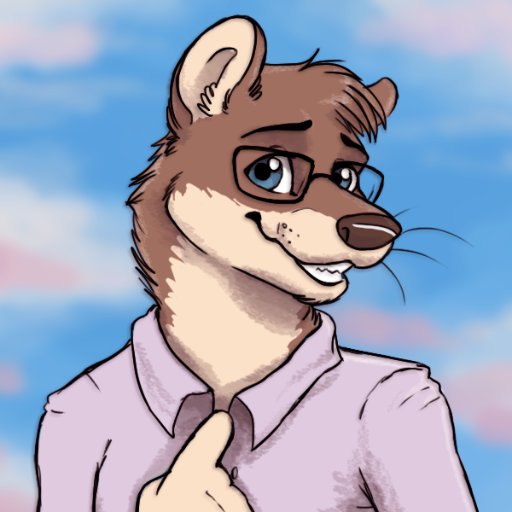
Member Spotlight: Rob Baird

1. Tell us about your most recent project (written or published). What inspired it?

I’ve been working on a short story cycle that follows the residents of a fictional small town on the Oregon coast. Cannon Shoals is typical of such towns, intimate but clannish, full of people who are trying to balance their dreams against the reality of economic depression and the sense that the world is passing them by. I was inspired by my summers spent in the Santiam Valley, and all the little towns you drive through on winding, lonely highways — places where the water dried up or the railroad left or the mill closed and things just, as the poem goes, “fell apart.” Yeats was talking about the cataclysm of the Great War, but I think that for many places the apocalypse is more subtle and more drab. There are a lot of interesting stories to tell there.

2. What’s your writing process like? Are you a “pantser,” an outliner, or something in between?

I believe in outlines. I say “believe” because it is something like faith! Generally when I start I try to know roughly where I’m going, even if I don’t end up getting there. I find it hard to begin writing with an empty page.

3. What’s your favorite kind of story to write?

My favorite kind of story is the kind where world-curious, upbeat animal-folk learn that there are few problems one cannot solve through the twin powers of good-natured optimism and clever banter. A lot of my stories are ones where I count it as a success if my readers come away with a smile, a lifted mood, and knowing some obscure bit of trivia that they didn’t know before.

4. Which character from your work do you most identify with, and why?

Teobas Franklyn starts my story An Iron Road Running as a starry-eyed, irrepressible kid on his first day of his dream job working on a railroad. Over the course of the novel, the work becomes more trying and he finds himself well out of his depth, but by keeping his wits about him he matures into someone people look to for help, guidance, and solutions to difficult problems. Teo, who ends the story still excited and optimistic, but with his optimism guided by world-wisdom, is the kind of person I’d like to grow up and become.

5. Which authors or books have most influenced your work?

Robert Heinlein and Rudyard Kipling, for the knack they have at celebrating and lauding individuals with indomitable spirits. Other golden-age SF writers, too: Leiber and Asimov and Cordwainer Smith. I know they seem archaic and even naïve now but I feel like that sense of optimism and grand adventure needs to be recaptured. That we should look with wonder and excitement to every new horizon; that frontiers still await us, be they physical or technological or scientific or philosophical — and that, moreover, through ingenuity and dedication and willpower and intellect, such frontiers are our birthright. Furry is such a singularity of great writers that it’s hard to name specific ones in fandom, but pretty much every time I sit down at a keyboard I wish I could write like Huskyteer and Cinnamon, or that I had the same honed gift for ideas as Rechan and Kyell Gold. Those are really the furry authors I look up to and who influence me.
Continue reading “Member Spotlight: Rob Baird”

Member Spotlight: Amy Fontaine

1. Tell us about your most recent project (written or published). What inspired it?

I have a novel, Mist, forthcoming from Thurston Howl Publications. It’s not recently written, as I first wrote it a few years ago – back when I was in high school! But it’s a “recent” or more accurately a current project because I’m going to be working on it over the coming year as we prepare it for publication.

I never really knew what inspired Mist until I dug through an old journal and realized that before I started writing or even outlining the book I had a dream about five animals made of mist in this gray, veiled, mysterious place:  a wolf, a stag, a hare, a lynx, and a snake. Those animals ended up representing the five main characters of Mist, though the hare later morphed into a mongoose. The wonders of the subconscious mind!

2. What’s your writing process like? Are you a “pantser,” an outliner, or something in between?

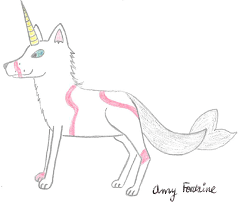
Amy Fontaine - wolphicornIt really depends on the project. With short stories, I tend to get an idea and then just run with it and see what happens. Sometimes I know exactly where I’m going and sometimes I don’t, and sometimes I think I do and then the story has its own plan. With novels, I like to have more of an outline and a sense of the overarching structure before I begin. But it’s still somewhat fluid, and I am often surprised.
Poems usually come in sporadic bursts, like desert monsoons, and get refined later.

3. What’s your favorite kind of story to write?

I like to write speculative fiction – stories that ask questions, pose “What if?” scenarios, take the reader on a journey to a place where strange and wondrous things can happen.

4. Which character from your work do you most identify with, and why?

Hmm. This is a hard one. They are all their own people/creatures, but they all have little pieces of me inside them I suppose.

I can relate to the dragon narrator of “The Monster’s Story”, published in A Menagerie of Heroes (the RainFurrest 2015 Charity Anthology). He has such a wealth of love in his heart and just wants to be generous and kind. In the end the world uses that against him, though, in a sense, his love helps him to transcend it.

5. Which authors or books have most influenced your work?

Growing up, I loved the Harry Potter series, The Hobbit and The Lord of the Rings, the Animorphs series, and The Last Unicorn. I also loved fiction and nonfiction about animals, including works by Jean Craighead George, Gary Paulsen, and Jack London. I think this amalgamation caused me to want to write stories involving magic and animals. A lot of my writing thus far has involved those two elements.

The Last Unicorn, The Lord of the Rings, and Animorphs also gave me an interest in stories with bittersweet, ambiguous endings. I don’t usually favor neatly tied-up happy endings. Such stories don’t haunt me. They don’t continue to live and breathe in my brain. And they aren’t consistent with reality.

Poetry-wise, Mary Oliver, Rainer Maria Rilke, William Stafford, and Naomi Shihab Nye are a few of my biggest influences.

6. What’s the last book you read that you really loved?

The Night Circus by Erin Morgenstern. It’s a surreal, beautiful, richly detailed fantasy love story.

7. Besides writing, how do you like to spend your free time?amy fontaine

I am a wildlife biologist, so I spend a lot of my time chasing animals around. I also like to draw and play musical instruments, neither well. I enjoy reading about anything from astronomy to comparative mythology. I love traveling and exploring and seeing the world.

And I pray, because I am continually astounded and humbled by the universe and I’m grateful to be one small part of it.

8. Advice for other writers?

Don’t give up. If you love to write, make time for that passion in your life. If you want to be published, don’t let rejection stop you. Listen with an open mind to suggestions, refine and improve your craft, and keep trying.

Most importantly, daydream and have fun.

9. Where can readers find your work?

My author website is in the works, but for now, you can find a few samples of my work through my page on Goodreads. Contact me there if you’re interested in reading more!

10. What’s your favorite thing about the furry fandom?

I am a relative newcomer to the furry fandom, so I have never been to any conventions, nor am I a member of any furry websites other than the FWG forum. But I would love to attend a convention someday and meet others who share my interest in anthropomorphic animal characters.

What I like so far about this fun, dynamic place is its vibrant creativity, its diversity, its inclusiveness and friendliness, and its wonderful ways of combining two of my favorite things – fantasy and animals.


Check out Amy Fontaine’s member bio here!

Guest post from Kyell Gold: “Deciding which scenes to keep”

When you write a first draft, you shouldn’t be thinking about scene-level editing. There are times when you might think, “oh, I want to write this scene but I probably won’t use it,” but go ahead and write it. At the worst, it’s an exercise in writing. It might reveal something about your character that doesn’t come up elsewhere, but that you’ll know. At best, you might find a place for it in the story and it might add new depth.

But how do you know? You won’t know until you know what your story’s about, what the character journey is and what you want to convey to the reader. Then every scene in your story should advance character or plot (ideally both). In science fiction and fantasy (and furry stories sometimes) you can get away with a scene that is mostly worldbuilding, but it’s best to work the worldbuilding into plot or character advancement.

A great way to figure this out is to summarize each of your scenes in a sentence: “Lee discusses his future job prospects with his former boss.” Then figure out how each of the scenes connects to the others. Trey Parker and Matt Stone of South Park use that method, and they say that in every case, the word connecting your scenes should be either “therefore” or “but.” If you can only connect the scenes with “and then,” that means that the previous scene isn’t flowing into the next one, and you’re going to lose some of the story’s energy.

For example:

“Lee discusses his future job prospects with his former boss.”

THEREFORE

“Lee contacts some people but gets a lot of rejections.”

THEREFORE

“Lee goes to see his boyfriend to cheer himself up.”

BUT THEN

“Lee’s boyfriend is unsympathetic because he’s preoccupied with his own problems.”

Those scenes all flow nicely into each other and connect well. You can then look at the overall theme: is this story about Lee’s job or his relationship? If it’s more about the job, then maybe going back to his boyfriend and going down that road isn’t the right way to go; it’s putting too much weight on the boyfriend. At that point maybe you’d want Lee to talk to another co-worker instead, or maybe visit something else related to his job. Maybe you could have him discover that he has worth beyond his job, or find another way to do his job. Whatever your story’s about, every scene should play into that somehow.

So how do you decide whether the scene is important to the character or the plot? Well, every scene should start with your character wanting something, having a goal that’s important either to the plot or to the character development. At the end of the scene, the reader should know if they reached that goal or not. For example, in the above scenes, Lee wants to get a new job. So in the first scene, he gets some contacts from his former boss. In the second, he wants interviews, so he calls a bunch of people, but doesn’t get any interviews. In the third, he wants to feel better about himself, so he goes to look for external validation from his boyfriend. Now, you can look at the wants in those scenes and say, “Is this the way I want the story to go?” For example, if we want the story to be more about Lee’s relationship to his job rather than his boyfriend, we could say, “wanting validation from his boyfriend isn’t important to the story I’m telling right now.”

(It’s also possible to have multiple storylines going on, and so a scene might follow directly from one a few scenes ago. That’s okay as long as each scene has one of those causal relationships to a previous scene. Readers can keep multiple stories in their head, but cluttered stories with scenes that go nowhere make it harder to care about them.)

Ideally you want all your scenes to advance both the plot and the character journey. In the above example, you might decide that actually showing Lee getting a bunch of rejections isn’t necessary to the plot. Then you could skip directly from the conversation with his former boss to going to visit his boyfriend, and drop the information about the rejections into his conversation. “Well, my boss gave me three names and I’ve got three rejections. How was your day?” (for example).

Or you might use the rejections to show Lee’s shift in mood, where he starts the first one happy and upbeat and has gotten beaten down by the last one. This could explain why he’s more snappy than usual when he visits his boyfriend. Maybe one of the people he calls says something prejudiced about foxes that sets him on edge. You have to decide what is most important to the character and the story.

Editing isn’t an easy process, and often you’ll find yourself having to toss out scenes you like a lot. Post them on your site as a deleted scene and explain why you cut them, or just keep them for future reference on your drive. It’s important that they not remain in your story if they’re getting in the way of the story, though. I will say that in general you should err on the side of cutting out scenes, because you are already biased toward keeping all your precious words. Also, your beta readers (beta readers are very important) are much more likely to tell you that something is missing and needs to be added back in than that a scene is unnecessary and needs to be cut.

So examine each scene, ask what it does to advance your plot and character, and if the answer is “not much,” consider cutting the scene and delivering whatever information it provides within another scene. This might be very hard at first, but the more you do it, the more you’ll find your stories are engaging from beginning to end, packed only with scenes that make the reader want to go on to the next one.

An earlier version of this column appeared in Kyell’s April 2016 newsletter.

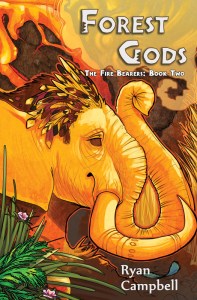
Book of the Month: Forest Gods

June’s Book of the Month is Forest Gods, the sequel to God of Clay by FWG member Ryan Campbell, and the second in his Fire Bearers trilogy.

forestgods_front-cover-lg
Cover by Zhivago

Kwaee, god of the forest, has turned all his power toward the destruction of the human tribe that he accuses of serving the treacherous fire god Ogya. Seeking reasons for the ancient conflict, Clay and Doto embark on a dangerous journey far outside the forest in search of savanna god Sarmu.

Meanwhile, in the human village, the healer Cloud fights new and terrifying threats from the forest and tries to help her people survive, but at every turn, she must battle prince Laughing Dog, who seeks to turn their king down a path that could lead to the end of humanity.

Along both their journeys lie dangers they never expected—and secrets that may have been better left buried.

Forest Gods is available in print from the publisher, Sofawolf Press, and in print and Kindle ebook from Amazon.

Guild News: June 2016

New Members

Welcome to our newest member, Madison “Arara” Keller! If you’re interested in joining us, see this page to find out how.

Member News

Erin Quinn’s first novel Tailless has been released by Rabbit Valley.

Joel “Zarpaulus” Kreissman’s novel The Pride of Parahumans has been accepted by Thurston Howl Publications.

In short fiction news, several members have stories in Fred Patten’s upcoming anthology Gods With Fur, including Alice “Huskyteer” Dryden, Kyell Gold, Mary E. Lowd, Watts Martin, and Televassi. Rechan sold the flash fiction piece “Letter from the Front Lines” to Bards and Sages Quarterly.

Huskyteer won the Ursa Major for her short story “The Analogue Cat.”

(Members: Want your news here? Start a thread in our Member News forum!)

Market News

The third volume of the charity anthology Wolf Warriors is seeking wolf-themed fiction, poetry, and creative nonfiction through June 15, 2016.

Fred Patten’s next anthology for FurPlanet, The Dogs of War, is looking for original furry military-themed stories “preferably of 4,000 to 20,000 words.” The emphasis should be on military actions, not politics; Fred notes that despite the title, he’s looking for all kinds of anthropomorphic animals, not just dogs. Payment: ½¢ per word, on publication. Deadline: October 1, 2016. (Read the submission call.)

ROAR 8, FurPlanet’s annual general audience anthology, will again be edited by Mary E. Lowd. Next year’s theme is “Paradise.” It will be open for submissions from September 1, 2016 through February 1, 2017. (Read the submission call.)

Laura “Munchkin” Lewis’s charity poetry anthology, Civilized Beasts, is accepting submissions for a 2016 volume.

Remember to keep an eye on our Calls for Submissions thread and our Publishing and Marketing forum for all the latest news and openings!

Guild News

New FWG president, Watts Martin (“Chipotle”), took office on June 1. (Read Watts’s introductory post.) Everyone in the Guild offers thanks and well-wishes to outgoing two-term president Renee Carter Hall!

The FWG University is now open! Our next workshop, “Four Simple Ways to Strengthen Your Prose,” will open for registration on June 20. For more info on this and other upcoming workshops, see this thread.

Voting remains open through July 1 for this year’s Cóyotl Awards.

Want to hang out and talk shop with other furry writers? Come join us in the forum shoutbox for the Coffeehouse Chats, Tuesdays at 7 p.m. Eastern and Thursdays at 12 p.m. Eastern. More info on the Coffeehouse Chats is here. (Remember, our forums are open to everyone, not just FWG members. Come register and join the conversation!)

Elsewhere on the Internet, we have a Goodreads group with a bookshelf featuring books by our members. Feel free to add any members’ books we’ve missed so far (see the instructions here on how to do that).

Remember, we’re always open for guest blog post submissions from FWG members—it’s a great way to help out fellow writers. See our guidelines for the details.

Have a creative and successful month! If you have news, suggestions, or other feedback to share, send an email to furwritersguild@gmail.com, or leave a comment below.

Member Spotlight: Renee Carter Hall

1. Tell us about your most recent project (written or published). What inspired it?

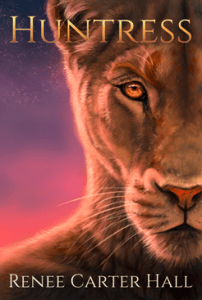
Huntress smallMy most recent published work is Huntress, the story of a young anthro lioness’ journey to become one of her people’s elite female hunters. Some of the character names and deities were taken from an old notion I’d had many years before to write a Watership Down-style novel about regular lions, but the story of Huntress was inspired by an episode of the National Geographic Channel’s show Taboo. It focused on the practice of “breast ironing,” where young women have to either painfully flatten their breasts so they can stay “girls” and keep going to school, or let their bodies develop, officially becoming women, and then be forced into marriage. The conflict of that choice stayed with me, and a more extreme version of it became part of the book.

2. What’s your writing process like? Are you a “pantser,” an outliner, or something in between?

The process can vary from project to project, but for longer works I usually make a few pages of notes brainstorming possible scenes, characters, elements, and so forth, which then turns into a list of key scenes. It’s a pretty flexible, organic type of outline, though, and things often get added, changed, or moved as I get into the writing. The other part of my process is that I try to work longhand for first drafts whenever I can, especially for short pieces; for a lot of different reasons, it feels better to me than composing with a keyboard.

3. What’s your favorite kind of story to write?

I’ve always felt most at home in fantasy, whereas science fiction is more a place I visit the suburbs of but don’t feel comfortable venturing into the heart of the city. I like adding a touch of humor where I can. And of course, I like writing anything with an animal or animal-like character involved, or I wouldn’t be here!

4. Which character from your work do you most identify with, and why?realdragonscover

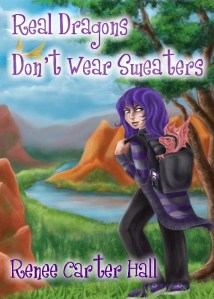
There’s a lot of me in Leya from Huntress — her longing, her drive, her perfectionism, and her questioning. I admit, though, sometimes I do feel like Dinkums from Real Dragons Don’t Wear Sweaters, wanting to be taken seriously as a fearsome creature of legend despite being pink, fuzzy, and cute. Whenever I feel like I should be writing some kind of gritty, edgy, epic trilogy that will win prestigious awards; whenever I feel like I’m just writing these silly, shallow little stories that will never really matter — yeah, that’s Dinkums.

5. Which authors or books have most influenced your work?

A lot of my influences aren’t technically (or primarily) authors, but when it comes to my furry fiction, it’s pretty easy to pick out the notable turning points on the timeline. I read Bambi around age 10 because I was curious how it compared to the movie — and found that in many ways I liked the book better. As I’ve read it again and again over the years, I’ve come to appreciate its reverence for the natural world and its adult sensibility that doesn’t resort to easy, sentimental answers. Later, books like Ratha’s Creature and Watership Down opened up the possibility of writing animal fantasy in a way that included culture and change (with or without humans being part of the mix). In late high school, I fell hard for the Redwall books, and though the formula eventually wore thin, that initial enchantment became a big influence on my first published novel, By Sword and Star (I wrote a whole blog post about that here).

Later on, around the time that I was getting into the furry fandom, I read S. Andrew Swann’s Forests of the Night and started to see possible ways to write the bipedal type of “furry” fiction, in addition to the more feral style of animal fantasy that I was already familiar with. Without question, my biggest influence among fandom works was a short story I discovered online, “Wings” by Todd G. Sutherland. That inspired my own story “Dog Days,” which then became my first story published within the fandom.

Continue reading “Member Spotlight: Renee Carter Hall”

Member Spotlight: George Squares

1. Tell us about your most recent project (written or published). What inspired it?

I think I’ve become known as a person interested in nonfiction writing just as much as fiction in the furry fandom. I publish things whenever I can at [adjective][species] (a team I’ve had so much pleasure working with), and I have a piece coming up about analyzing some of the sociological aspects of post-con depression.

But my biggest project, which I have been working on for well over a year now, is my novel The Bad in the Briar, which is about a fox with psychic powers who lives in an insular mountain community with a family who doesn’t have electricity. It’s a coming of age story with a splash of horror and adult content. I wanted to write a fantasy that felt very human and very earnest despite taking on an epic fantasy model. This might be a story about somebody from your home town who dropped off of the face of the earth as opposed to a crown prince discovering their heritage.

2. What’s your writing process like? Are you a “pantser,” an outliner, or something in between?

george squaresThe best metaphor I have for my process is something akin to clay relief sculpting. You have a planning stage where you draw out a rough idea of what you want your sculpture to look like. You add large chunks of clay to the piece, which look ugly and gormless as first, but once the big chunk is on the slate, you go through a subtractive process to redefine elements of your sculpture. You carve in small details and remove a lot of the raw product to make a beautiful piece, and then you add more rough shapes into the artwork to slowly shape it, repeating your process.

So for writing, I’ll do a very non-detailed skeleton outline. It will be simple and sparse but it will have a clear beginning, middle and end. I’ll leave myself a lot of wiggle room for the in-betweens to grow organically, but knowing what is going to happen with big decisions in the plot helps me ahead of time. It also allows me to work on something like the end before I write the beginning, or vice versa. Sometimes your finished product is going to veer away from your original plan, but that’s the nature of art, and sometimes it works out for the better.

Keeping a plan very simple is helpful for me, because I know that as you write and continue to add prose, you’ll introduce complications of your own, and the story will develop like a weed that’s getting out of control. You don’t have to add more complications to the planning stage.

3. What’s your favorite kind of story to write?

A lot of the pieces I tend to work on draw inspiration from living around poverty for most of my life. I like thinking about the places in America (and not just America) that often don’t get their stories told. Really bizarre, niche things like the inexplicable phenomenon that is roadside dinosaurs, or towns in the deep South that still exist to this day which only have one federal building in their town–that building being the post office.

We have places in America like the Biltmore Estate in Asheville, North Carolina which is this grand, majestic castle showing off the wealth and opulence of the Vanderbilts that exists within driving distance of some of the most ridiculous tourist traps you’ve ever seen; things like gemstone mines with egregious pictures of cartoon prospectors where tiny children pan for uncut gems and go wild about owning a “real-life” emerald. That kind of juxtaposition is amazing to me.

I also feel like for a community that spends so much of its time talking to long distance friends over the internet, surprisingly few stories incorporate aspects of online life. Little things like sending a text or showing off a character’s typing habits, or one person’s tendency to make typos versus another person. I try to incorporate how social dynamics have evolved a bit when it comes to things like instant messengers, texts and twitter.

Something that’s interesting to me is also how I feel like I’ve become this inadvertent liaison between writers who write and love erotica and writers who strictly write for a general audience. I write both of these things, and I care a heck of a lot about both. Furry is an interesting space that I think desperately needs stuff like smutty gay fiction as well as something you may read and say “oh hey, I can easily see this getting The John Newbery Medal.” All I can say is that art comes in many different forms, and I have high standards for all of it, no matter the content or the purpose of the writing.

4. Which character from your work do you most identify with, and why?

I think a lot of things that have irked me about adventure or fantasy novels is that the main character is stressed as an “every man.” They’re supposed to be our windows into fantastic worlds and they aren’t supposed to have the strongest personalities because it’s believed that these types of characters can be easier to relate to. That’s always bothered me, so I wanted to spend extra time on making sure I really liked the protagonist of The Bad in the Briar, Keene. He’s this quiet, observant guy with decent intentions. He hasn’t been dealt the best cards in life, but he copes with them in the best ways that he can, and I try to make those coping mechanisms fun. Continue reading “Member Spotlight: George Squares”

Book of the Month: Fellowship of the Ringtails

ringtails cover

May’s Book of the Month, Fellowship of the Ringtails, is by member Angela “LemurKat” Oliver.

The kingdom of Madigaska is in turmoil. The King has died under suspicious circumstances and now his Queen has usurped the throne. The only remnant of the last ruler is an illegitimate orphan. Born many miles away, and raised by a peaceable fishing tribe, she knows little of her heritage, her destiny. But with the fierce Hunter, Noir, on her trail, what hope does she have?

Set in an alternate world Madagascar, where the dominant life forms are lemurs with a level of technology equal to primitive tribes, “Lemurs: A Saga” contains true elements of Malagasy history and culture, intermingled with a heavy dose of pure fantasy. It is, indeed, epic fantasy, with lemurs.

Available from Amazon in paperback and ebook.

Guild News: May 2016

New Members

Welcome to our newest members Marshall L. Moseley, Gre7g Luterman, Thomas “Faux” Steele, Televassi, and Angela “LemurKat” Oliver!

Member News

In short fiction news, Mary E. Lowd’s flash fiction “Take Them To The Happiness Zoo” appeared in Theme of Absence last month, and Rechan’s story “The Monster Next Door” can be found in Creepy Campfire Quarterly #2.

In poetry news, the Second [adjective][species] Poetry Collection is now live, including poems from several FWG members, and [a][s] also featured a selection of animal-themed poems by the collection’s editor, Renee Carter Hall (day 1, day 2, and day 3).

(Members: Want your news here? Start a thread in our Member News forum!)

Market News

Upcoming deadlines: Issue 3 of A Glimpse of Anthropomorphic Literature is open until May 15.

New markets: The third volume of the charity anthology Wolf Warriors is seeking wolf-themed fiction, poetry, and creative nonfiction (deadline June 15), and the second volume of the poetry anthology Civilized Beasts is open for submissions from now until October 1 (see this thread for guidelines and updates).

Remember to keep an eye on our Calls for Submissions thread and our Publishing and Marketing forum for all the latest news and openings!

Guild News

Members, beginning on May 16, we’ll be voting on this proposal to change the FWG by-laws by adding two new officer positions. Watch your inbox for the ballot!

The FWG University is now open! Our first workshop, the FWG Poetry Workshop and Primer, begins tomorrow, May 2. It’s being held entirely in the forums, and all poets are welcome to join in.

Voting is now open through July 1 for this year’s Cóyotl Awards.

Want to hang out and talk shop with other furry writers? Come join us in the forum shoutbox for the Coffeehouse Chats, Tuesdays at 7 p.m. Eastern and Thursdays at 12 p.m. Eastern. More info on the Coffeehouse Chats is here. (Remember, our forums are open to everyone, not just FWG members. Come register and join the conversation!)

Elsewhere on the Internet, we have a Goodreads group with a bookshelf featuring books by our members. Feel free to add any members’ books we’ve missed so far (see the instructions here on how to do that).

Remember, we’re always open for guest blog post submissions from FWG members — it’s a great way to help out fellow writers. See our guidelines for the details.

Have a creative and successful month! If you have news, suggestions, or other feedback to share, send an email to furwritersguild@gmail.com or leave a comment below.

Member Spotlight: Tarl “Voice” Hoch

1. Tell us about your most recent project (written or published). What inspired it?

My most recent project is what I have come to call ASfHA. (Which stands for: Anthropomorphic Science Fiction Horror Anthology, which is quite a mouthful as you can see.) It’s largely inspired by a number of science fiction horror films I watched while growing up. Chief among these being Alien, Aliens, and Event Horizon. There is something to be said for the terrors that the future will bring to humans as we take each step forwards, and that intrigues me.

2. What’s your writing process like? Are you a “pantser,” an outliner, or something in between?

VoiceSpiderI’m a total pantser. Maybe it had to do with all the essays I had to write in University, but my stories only seem to flow when I am keyboard composing. I’ve tried doing the whole outline thing, and when it worked it worked beautifully, but ultimately I work better on the fly. The characters take on a life of their own and the story they tell is theirs. I’m just there to put it into words.

3. What’s your favorite kind of story to write?

The members of my local writer group would say ‘Female Betrayal’.

Really though, I enjoy writing stories with complex characters and the interactions between them. Take my Raven and Holly stories (featured in Taboo and Will of the Alpha 2 & 3, all published by FurPlanet). I’m not a huge fan of setting stories in our current timeline, yet here are a couple I can’t seem to get enough writing about. Sure, the stories are erotic, but the more you look into Raven and Holly’s lives, the more you realize just how complex it is and how much juggling it takes to maintain their polyamorous relationship. It’s something I enjoy exploring and more importantly, want to keep exploring.

4. Which character from your work do you most identify with, and why?

Kaden Stockheimer from Wild Night in Trick or Treat, published by Rabbit Valley.

I spent my twenties as a goth and even now still dip into the culture every so often since hanging up my lucky PVC pants. Kaden represents a lot of my own attitudes from that time in my life, and his experiences with his friends and his girlfriend share a lot of echoes with my own life. He’s not a self inserted character by a long shot, but is the closest I have ever come to putting a part of me into a character.

5. Which authors or books have most influenced your work?abandonedplaces cover

Lovecraft is easily my primary influence. Yes, he was a terribly xenophobe and racist, but he wrote weird fiction that changed the face of horror and influenced many of today’s contemporary horror masters. The scope of his horrors, the inclusion of multi-generational sin, and the idea that mankind is insignificant and unimportance in the scope of the universe are themes that still resonate today and are interesting to explore while writing.

C.L.Werner is another one. Despite writing primarily in the preexisting Warhammer setting, Werner manages to bring his own flavour and personal preferences to his writing. His fantasy stories always seem to have a touch of Lovecraft to them without smacking of it, and that’s always a win for me.

Lastly, Andrzej Sapkowski has recently become a large influence to me. His fantasy novels are easily the most realistic ones I have read when it comes to his characters and their interactions. Much like real life, his characters wear different masks for different situations or people, and often the dueling dialogues between them are as engaging as his fight scenes.

6. What’s the last book you read that you really loved?

She Nailed a Stake Through His Head: Tales of Biblical Terror, edited by Tim Lieder and published by Dybbuk Press. The concept captured my attention due to my degree in religious studies and my love of horror anthologies. The stories within were amazing and extremely creative. Not only did the writers who submitted capture various themes found within the Bible, but did it in such ways as to make your skin crawl and breath quicken over a variety of timelines.

7. Besides writing, how do you like to spend your free time?

tarl oceanI work with Ocean, Roland and Yannarra on the writing podcast Fangs and Fonts, which has been going for over two years now. I also read a lot, go for hikes, tend to my two feline overlords and fursuit for charities when time permits.

8. Advice for other writers?

When your inner voice says you can’t write, ignore it.

Keep writing, never stop, and continue to practice your craft. You will always continue to improve as long as you write. No matter how bad a rejection may sting or linger in your mind, always remember that you can either run from it, or learn from it. And trust me, learning from it is always the better option. Less repetition of painful lessons that way.

9. Where can readers find your work?

Primarily my works can be found through FurPlanet while my non-furry works can be found on Amazon. For a full list of what I have done, readers can check out my Goodreads page:

https://www.goodreads.com/author/show/5759304.Tarl_Voice_Hoch

10. What’s your favorite thing about the furry fandom?

It’s where I met my wife.

Also, the sheer creative force in the fandom is amazing to watch. We have people from every walk of the creative arts who are constantly creating, be it stories, artwork, dance routines, music, you name it, furries create it. We’ve come a long way from when I first got into the fandom, and that was only 20 years ago. I am excited to see where this all goes, what works we create and how we will continue to change mainstream culture. It’s an exciting time for the fandom and I love it.


Check out Tarl “Voice” Hoch’s member bio here!