1. Tell us about your most recent project (written or published). What inspired it?
Let me get to that in a moment. This’ll make sense when I get down to it, trust me.
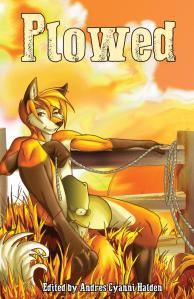
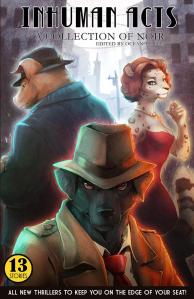
Up to this point, just about every story I’ve written has been in one of two categories. In one, I was writing for submission. Just about every anthology has at least a broad theme, so just to start with I’m working under thematic limitations. Even in situations where the theme either coincided with my own interests or was broad enough that I could do my own take with it, there were always word limitations, or content limitations–things I had to include, or things that I wasn’t allowed to include. Not that I’m saying they’re restrictive, mind you. If you’ve read a few of the anthologies out there, I think you’ll find that the stories included are usually quite diverse. It’s just that while going in, I’ve always got this image in mind that’s pretty tightly boxed. The story must be about this long, and it must contain these themes, and here are the lines in the dirt across which I must not put a toe. Anthologies are great for keeping the writing juices flowing. There are even a few stories I’ve written that wouldn’t exist if it hadn’t been for these themes.
In the other category, I’m writing just for my own enjoyment–quick pieces to post online, or longer challenges I came up with for myself to hopefully make myself a more adept writer. These are usually don’t conform to any particular limits, and in the past I’ve explored some rather more extreme topics in them. I’d like to think that these pieces are what I use to really grow as an author, but I’m not fooling myself. They lack focus. They wander through the plot. When I read back through them, they’re little morsels of golden prose, linked by an otherwise mediocre framework. It’s the type of work that any competent editor would take a big red pen to–and on the few occasions that one’s gone into print, that’s exactly what happened.
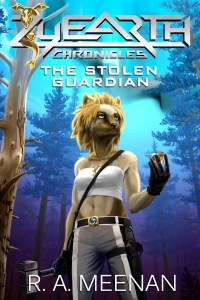
So back to your question. Over the last year, I’ve spent a lot of time working on my first full-length novel. Unlike the anthology submissions, it’s really unbound by any particular limit–except that it needed to be long enough to be a novel. And unlike the ones I’ve written for my own enjoyment, I’ve taken the time to give it a good polish. At the time of answering your question here, it’s done and sitting in a slush pile.
2. What’s your writing process like? Are you a “pantser,” an outliner, or something in between?
I think I’m about as far as you can get from being a pantser. In fact, I’d like to state for the record that I “pants” as little as possible. I prefer my stories with no pants at all! Before I torture this metaphor too much further, I’m actually telling the truth. My process for story writing is to think up the world, plot, and characters, and then tell myself their story over and over and over in my head until I feel it’s ready to come out. The process of writing for me only really starts once the story is done.
That said, the process of writing is a bit of a battle for me. It’s a combat between ‘the way it sounded in my head’ and ‘the way it reads best on paper’. I know what needs to happen, so the hours I spend at the keyboard are primarily spent looking for the most clear, concise, and beautiful way to tell the story that’s running through my head. If there’s any “pants” to be had in my process, it’s the struggle to fit the whole scene in my head into as few words as I can manage in print.
 3. What’s your favorite kind of story to write?
Absolutely sci-fi. I grew up with (and still love) fantasy, but I’ve slowly grown out of the world of magic and wizards. I think at this point I’m too much of a desk chair scientist to be happy with an answer of “It works that way because it’s magic.”
4. Which character from your work do you most identify with, and why?
Oooh, are you tempting me to reveal my dirty secrets of self-insertion?
Well, I do have a few characters I’ve written that I can identify with. As many of my friends were quick to point out, the fox in the story “On the Bright Beach” is quite clearly my own attempt at wish fulfillment (You can find that one on my SoFurry). Okay, fine. I admit it. I wrote the story as if I were there personally. But really, it was meant to be just a fun romp, and I didn’t see any harm in it.
But that doesn’t really answer the question well. It’s a bit of a cop-out to answer ‘With whom do I most identify’ with ‘Myself.’ I think if I had to pick a character in another story that I tried to put the most ‘me’ into without settling for self insertion, that would be Taj from “Seducing the Sky.” (This one’s in Hot Dish from Sofawolf Press.) I don’t think I really have the credentials to claim to be what he is–a trained symbiote-pilot from a super-advanced predatory alien species–but the personality I drew from experience. I really like the concept of a warrior-philosopher. Even though my analytical side calls it complete bunk, the idea of a soldier that follows the mantra of Sun Tzu’s Art of War intrigues me. Continue reading “Member Spotlight: Kandrel”