Member Spotlight: Tony Greyfox

1. Tell us about your most recent project (written or published). What inspired it?

It’s not published as yet, but my most recently accepted piece is an as-yet-unnamed (well, to-be-renamed) story that will appear in the upcoming noir-themed anthology from FurPlanet. It was actually my second try on that particular project – I’d started a piece and had a few thousand words down before I realized I had a start, a finish, and no way of connecting them, so I scrapped it. Brandon Sanderson’s podcast “Writing Excuses” helped me get the next one started: it advised that you should feel free to drop a project if it’s not working, and try something new. So I did – kicked around ideas for freshening up the genre and wound up combining noir with dieselpunk for a very cool style. And, as I often do, I had some help from music – in this case, the slightly obscure Canadian band Hemingway Corner. Their song “Annabelle” caught in my head during a lunchtime walk at work and propelled me into creating several characters, some plot points, etc. I love it when that happens.

2. What’s your writing process like? Are you a “pantser,” an outliner, or something in between?

Rarely do I have more than a rough idea of plot points when I sit down to write. I find that to be liberating, actually: it means that the story is written organically, rather than being pushed to this bullet point or that twist. One of my favorite exercises is to write something from random prompts. Occasionally I go to Twitter and ask my followers for three things, which I then write a story around. Two pieces published this year started from those random prompts, so it works well! I’m also often a first-draft writer, which comes from ten years of writing for newspapers on tight deadlines. Larger projects get multiple editing sessions and test reads, of course!

3. What’s your favorite kind of story to write?

The kind that draws me in emotionally – when my characters start “talking” to me about where they should be going and what they should be doing, or when they share their emotions with me. If I make myself tear up, it usually guarantees that story’s going to be excellent.

4. Which character from your work do you most identify with, and why?

Oh boy. Most of my characters have a piece or two of me included in them, but probably the closest would be from some of my earliest works. Back in the Usenet days I started posting stories based around a skunk named Erik and his partner, Colin, a raccoon. Erik’s a journalist, kind of laid back, not super self-confident, not sure about where he fits in life but determined enough to make his way forward with the help of his friends. I think that’s kind of where I’m at.

5. Which authors or books have most influenced your work?

I’ve been reading anything and everything since I was 3 or so, vast amounts of fantasy and SF along with some mainstream fiction, comics, and so forth. Along the way I stumbled across a collection of Raymond Chandler’s Philip Marlowe novels and fell in love with his work – it was one of the first times I realized that a good ending doesn’t necessarily have to be a happy ending. John Varley’s Titan series made that point as well, as did a relatively obscure series of military SF novels by Allan Cole and Chris Bunch (the Sten series – highly recommended).

6. What’s the last book you read that you really loved?

Book is hard to pick, so series: Mercedes Lackey and James Mallory’s Obsidian Trilogy is one of my favorites. I recently reread it because I really enjoy it. Jim Butcher’s Codex Alera series is pretty awesome too.

7. Besides writing, how do you like to spend your free time?

Photography’s a big one; I’m an avid shooter, with a penchant for birds and airplanes among other things. I also play a fair blues guitar and enjoy various video games. Con running is a big part of my free time lately; I’ve been working with VancouFur since it started, and am currently the President of the (soon to be officially registered as a non-profit society) BC Anthropomorphic Events Association.

8. Advice for other writers?

Write. Just write. Don’t have ideas? Ask for a prompt. Writer’s block? Change to something else and start again. Paint pictures with your words, whether they’re a stick figure or a Renoir – because every word painting you produce is valuable in some way, whether it’s just to you or to your readers.

9. Where can readers find your work?

This year, everywhere! I’ve got stories in, or scheduled to be in, The Furry Future, the noir anthology, Heat #12, and the Rainfurrest charity anthology – so far. If that’s not enough, most of my web-posted pieces (which are largely adult-themed, so be advised) over the years are on FurAffinity (tgreyfox) and Sofurry (Tony Greyfox).

10. What’s your favorite thing about the furry fandom?

This fandom is friendly, pretty chill, and allows me to write stories about two-legged animals boinking. What else could you ask for?


Check out Tony Greyfox’s member bio here!

Guest post: “The Writer’s Notebook” by Renee Carter Hall

The Writer’s Notebook

by Renee Carter Hall

Writers today have more tools than ever to choose from. We can tap out notes on a phone or type our stories on a laptop or tablet. With all the spellchecking, grammar checking, sync, and instant backups at our fingertips, why would anyone still bother to write by hand? What can a pen and notebook give us that a word processor can’t?

  • A slower process. In today’s on-demand culture, that might not sound like a benefit. But when it comes to writing, faster isn’t always better, and writing by hand can force you to slow down and weigh your thoughts as you put them on paper.
  • Fewer distractions. When you write by hand, there are no emails, games, or social media to demand your attention. You can also write in a coffee shop without scoping out the available power outlets — and while I’ve learned the hard way that waterproof ink is sometimes a good idea, I’ve still never gotten an error message from a notebook.
  • A different mindset.  For me, there’s something very direct and true about writing first drafts by hand. Typed writing can feel “finished” before its time, and while I’d never trade a computer for editing, the drafting process feels more intimate in my own handwriting than a font. I’m sure some of this is generational, but to me, writing done by hand is writing for the self, while typing on a keyboard puts me in a “public writing” mindset — blog posts, emails, functional writing instead of creative — where writing by hand reminds me of childhood days spent scribbling stories in wide-ruled notebooks, and reminds me that writing is supposed to be fun. A journal feels like a safe, private, patient space to experiment, in a way a blinking cursor can’t duplicate.

I’ve kept some form of writer’s notebook (or journal, whatever term appeals to you) for over twenty years, and I can’t imagine giving it up. My journals have been to me what a sketchbook is to an artist: a gym for exercise, a laboratory for experimentation, a butterfly net for rounding up stray thoughts. Unless I’m on a tight deadline where I have to get from first draft to submitted work in a hurry, my preference is to write the first draft by hand. (This also has the fringe benefit of easing me into the editing process, since I always start making changes to the text as I’m typing up the draft.)

My notebooks also place my writing within the larger scope of my life. Interspersed among story drafts and notes are quirky lists of favorite commercials, possible character names, passages I’ve loved from books and poems, and the odd to-do list. To me there’s something delightfully grounding in that. There’s also a physical pleasure in writing with a good pen on quality paper, and there’s a sense of accomplishment that comes with filling pages in a journal that isn’t quite matched by keeping track of word counts in a spreadsheet.

Keeping a notebook isn’t for everyone, of course. Some have physical restrictions that make writing by hand impractical, and if you’re prone to losing things, you’re probably better off with tools that allow for backups. Writers who keep notebooks have to be comfortable with a certain amount of chaos and inefficiency, but out of that chaos can come a playful serendipity that brings renewed focus, deeper contemplation, and revitalized creativity — all from putting pen to paper.

My current journal, open to the notes and brainstorming for this blog post.

Tips

  • Choose materials you’re comfortable with. That might be a handmade leather journal or a black-and-white composition book, a pencil or a fountain pen. Different moods and projects can also call for different tools.
  • Take it along. Try to choose a journal you can easily carry with you, or keep one at home and a smaller one in your bag.
  • Play! Experiment with tools — write in pencil, marker, crayon. Try out prompts. Paste in pictures from magazines, cancelled stamps, ticket stubs. Make it part of your life, not just your writing life.

Supplies

Member Spotlight: Nathanael “Friday” Gass

1. Tell us about your most recent project (written or published). What inspired it?

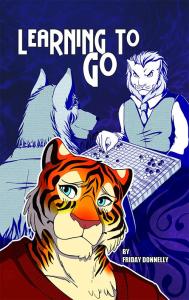
learning coverMy most recent project is Learning to Go. It’s a story about a tiger coming to terms with the idea that his relationship isn’t as healthy as it seems, and that maybe it’s time for him to move on. It asks the difficult question of “Whose responsibility is your happiness, and what’s okay to sacrifice for it?” It’s a story for people who are kind and maybe being taken advantage of, a way of helping them process that and give them an argument for putting themselves first sometimes. They deserve it, after all.

2. What’s your writing process like? Are you a “pantser,” an outliner, or something in between?

I generally have a good idea of where I want my story to go. When I have a novel burning in my brain, I tend to write 2-3 times a day and think about it during the rest. I pull in little experiences I have, little anecdotes and insights. I generally have a good idea of an outline in my head, but I’m not afraid to diverge from it if the story demands it.

3. What’s your favorite kind of story to write?

Anything with determined, manipulative (or sociopathic) characters. They don’t have to be the main character or the antagonist, but those sorts of characters tend to be the most fun to write and tend to give the plot the most fuel. They tend to make stuff happen.

4. Which character from your work do you most identify with, and why?

I identify with all my characters to some extent, and if any author tells you they don’t, I’d say they’re either lying or have some boring characters. You have to understand the points of view of a character to effectively portray them. That being said, the one I most identify with is Logan, a pig from an upcoming novel. To me, he’s the most bland major character I’ve written, which is a pretty good sign he’s the most like me.

5. Which authors or books have most influenced your work?

The Redwall series is probably the number one, since that’s what made me realize I liked furry material, but that’s so obvious I’ll give another answer. Life of Pi really hit home for me and made me realize just how beautiful and inspiring a medium text can be. I strive for that level of absurd realism used as a tool to expand the philosophical depth of my stories… and fail miserably. But I keep trying!

6. What’s the last book you read that you really loved?

At the risk of sounding narcissistic, I’ll say the work I’m editing right now tentatively titled Tempest In a Bottle. It’s not that I think it’s anything particularly special, it’s just… it’s exactly what I want to read. That’s why I wrote it, after all. If you want to know the last book someone else wrote that I really loved, then I’d have to go with Kyell Gold’s Out Of Position. It’s what got me back into both reading and writing.

7. Besides writing, how do you like to spend your free time?

Playing too much Dota 2.

8. Advice for other writers?

Listen to other people’s advice and thoughts about writing, understand why they recommend what they do, and know when to ignore it. Don’t be afraid to make mistakes… you should have beta readers to catch those. Listen to them and interact with them with respect and appreciation!

9. Where can readers find your work?

My non-published works can be found on FurAffinity, as can samples of published material (http://www.furaffinity.net/user/dandin/). News on upcoming publications can be found at my Twitter (https://twitter.com/FridayDandin).

10. What’s your favorite thing about the furry fandom?

Easily how open and friendly it is. I wish more communities learned from it!


Check out Nathanael “Friday” Gass’ member bio here!

Guest post: “It Isn’t Doggy Enough” by Carmen K. Welsh

It Isn’t Doggy Enough

by Carmen K. Welsh


As my time in graduate school draws to a close, commencement this June, I remember this is what my first term mentor said.

My thesis is a historical novel with anthropomorphic dogs in late Prohibition-era New York. For those who follow me on Twitter and through my ‘In Pretty Print‘ blog, I’ve been ranting/raving throughout its process. It had been a pet project of mine since sixth grade (!). I wrote the story on and off, using it as fodder to make my writing chops stronger in other areas before it went in a drawer or computer folder to be forgotten.

I became so disgusted with it that I prayed if I could get into a writing program that would give me the time to make it into something, I would actually complete it. If not, I would put it away forever. After all, I had other story ideas vying for attention, and I didn’t want to waste my writing on a piece that was going nowhere.

In November 2012, I found a promising MFA that actually responded to my queries. The program was in my state and I could get to its campus by train. The MFA was a hybrid-residency. This meant that for part of the year I’m on campus, meeting with schoolmates, faculty, and staff. For the rest of the term, I would work and submit online under the tutelage of a mentor chosen for me.

The deadline for submission to the program would be the last week in January 2013. By December 2012, I contacted both alma maters for transcripts, typed up a personal statement, and worked on a chapter from the dreaded manuscript to fit the school’s submission guidelines.

And then I prayed again.

I was told that I would receive a response by mid-April. This meant I’d start in summer term.

However, my mother has prescient dreams and when she said I would get into this program, I believed her. When March started, I received a call that I had been accepted!

June 2013 came. A mentor had been chosen for me, which made sense since I wouldn’t be familiar with anyone. Though I’ve been in other writing workshops thanks to my former community college, I felt intimidated by the fact that my chosen mentor was an internationally published horror novelist and I’ve never been a fan of horror though I respect the genre and its devotees.

I was also the only ‘furry’ in my workshop group. Thankfully, it was a small group of six and my mentor, as far as I knew, was not familiar with my genre, yet immediately tackled my chapters with academic gusto and literary fervor.

“It isn’t doggy enough,” he finally said, his German-accent colored after years of living in the U.S.

“I don’t feel the dogginess,” he told me.

I was stumped. What could I do? This had been a story near and dear to me, but after years of publishing other items, I knew that I’d reach critical mass with this piece. It was a dead-end.

“You’ll have to show more canine characteristics. I feel they are humans in fur coats.”

After I picked myself off the floor, my mentor offered several books for my recommended reading. Thankfully, all the titles were anthro and new to me!

The Bear Comes Home is a novel by Rafi Zabor, a jazz musician. The protagonist is an anthropomorphic bear who, with his ‘human handler’, goes from night club to night club playing his alto sax.

Next was the novel Lives of the Monster Dogs by Kirsten Bakis. This story runs more along the lines of The Island of Dr. Moreau with bio-engineered dogs using advanced prostheses to stand and move about upright.

The novel Felidae by Akif Pirincci is considered a crime/detective novel featuring a cat and his human who move into a suburb in Germany. The cat protagonist sets out to solve the mystery when the local cats begin to turn up mutilated and dead.

Paul Auster’s novel Timbuktu is told through the eyes of a dog living with his homeless owner. The dog doesn’t ‘talk’ but is a mild observer. After his owner dies, the dog strikes out alone to find his human’s fabled ‘Timbuktu’.

Last was the screenplay Heart of a Dog by Mikhail Bulgakov, a Russian playwright and satirist. During the Bolshevik-era, a scientist brings home a stray dog. After experimenting, the dog becomes a human man and mayhem ensues.

I tackled the story with a renewed vigor. My mentor also pointed out that I would have to bring about the ideas of race I struggled with to portray what made sense for dogs.

He told me that as NYC has always been culturally diverse, where were the different dogs located in the city? What breeds lived where? With his help, I dug deeper into the story than I’d ever done.

I was so pleased that I requested him for a second term. The program obliged — as a student can be allowed the same mentor twice — and the second semester became even more eye-opening. One particular chapter I swore nearly choked up my mentor. Though I received constructive criticism from classmates whose own works I admired, that day when my mentor explained how profound he felt towards the workshopped chapter and later his beaming feedback to an online assignment, I knew I was on the right track.

This journey began with a community college English professor telling me to consider creative writing, to the creative writing professor who said ‘Continue to write about these talking dogs’, and finally, to my professor/mentor, a published novelist, becoming excited by what I wrote. This is why I’m a writer.

My thesis will be several chapters of a brand-spanking new manuscript. I will have written the best pages I could. After graduation, I plan to continue the novel, with all the lessons that brought me to this moment. This is why I continue to write furry.

Book of the Month: The Painted Cat by Austen Crowder

May’s Book of the Month, The Painted Cat, is by member Austen Crowder (author of Bait and Switch).

painted cat cover“Janet lives in two worlds.

In one world, she is Miss Perch, teacher at a small school deep in the corn grids, helping kids who are turning into cartoon find their way out of town.

In the other, she is Bunny Cat, and paints herself up to be the very same type of cartoon cat her small town has grown to hate.

The wall separating those two worlds is starting to break down. Between rekindling a relationship with an old college flame and discovering how much she loves being Bunny Cat her two worlds are starting to merge. Keeping up the appearances of two separate lives is bad enough, but when kids start getting sent away for turning toon she knows she can’t stand on the sideline any longer.

Two things are for sure: the two worlds won’t stay distinct for much longer, and Janet won’t come out unscathed.”

Parental rating PG.  Available from FurPlanet.

Guild News: May 2015

New Members

Welcome to our newest members Sean Cleary/Gödel Fishbreath, John Van Stry, and Bill Kieffer!

Member News

The furry site [adjective][species] published their first poetry feature in April, including works from several of our members and forum friends. Well worth a read, even if you think you’re not into poetry — you just might be surprised. (We also have a new poetry section in our forums.)

Several of our members also have stories and poems up on QuarterReads, a site offering flash fiction and poetry for just 25 cents a read. See this thread for more info.

Eduardo Soliz recently released Super-Short Sci-Fi Stories 2.8, available for just 99 cents at Amazon and other fine digital bookstores, and Donald Jacob Uitvlugt‘sTo Sail the Winds of Song” is online at Another Dimension. Patrick “Bahumat” Rochefort’sFrom Winter’s Ashes” continued with Chapter 2.1.

In book news, Friday’s first book Learning to Go will be available very soon from Jaffa Books, Weasel’s Cigarette Burns is now available from Kool Kids Press, and Austen Crowder’s second novel The Painted Cat is available for pre-order from FurPlanet. Congrats, everyone!

(Members: Want your news here? Start a thread in our Member News forum!)

Market News

Upcoming deadlines:  Trick or Treat 3 closes to submissions on June 1. For conbook deadlines, Megaplex’s conbook closes on May 22 and Maltese FurCon’s on June 15.

Remember to keep an eye on our Calls for Submissions thread and our Publishing and Marketing forum for the latest news and openings!

Guild News

Nominations for the Cóyotl Awards are open through June 1. Members, now’s your chance to recognize the best furry fiction from 2014. If you need a refresher on what’s eligible, check out our 2014 recommended works thread and be sure to add your favorites!

The FWG now has a Goodreads group! (Thanks, Munchkin!) That means we also now have a bookshelf featuring books by our members. If you’re on Goodreads, feel free to add any members’ books we’ve missed so far (see the instructions here on how to do that).

We’re always open for guest blog post submissions from members — good exposure and a great way to help out fellow writers. See our guidelines for details.

Need a beta reader? Check out our critique board (you’ll need to be registered with the forum in order to view it).

Want to hang out and talk shop with other furry writers? Come join us for the Coffeehouse Chats, Tuesdays at 7 p.m. Eastern, Thursdays at 12 p.m. Eastern, and Saturdays at 5 p.m. Eastern — all held right in the forum shoutbox. More info here.

As always, our forums are open to everyone, not just FWG members. Come register and join the conversation!

That’s all for this month! Send an email to furwritersguild (at) gmail.com with news, suggestions, and other feedback, or just comment here.

Member Spotlight: Bill “Hafoc” Rogers

1. Tell us about your most recent project (written or published). What inspired it?

My most recent published work is “Squeezer,” a story in the Rabbit Valley anthology Trick or Treat II: Historical Halloween.

Lately, for whatever reason, I’ve been reading and writing a lot of detective stories. I had a series of crime stories involving a modern-day character named Derrick Clydesbank. I had also read a fair deal about the Jack the Ripper case. When the call went out for stories about historical Halloweens, those things percolated and produced my story, “Squeezer,” set in “Vixtorian” London.

Of course this is a century and a half before Derrick’s day, in another country, so I couldn’t use my modern characters. I did still slip in a Father Clydesbank, an “Anglican” priest. He is probably one of Derrick’s less dangerous relatives.

The story is also a horror story, and as usual in horror stories I go with whatever horrifies me myself. Some people think horror writers are monsters for being able to think up such cruel and terrifying stories, but I think most of them are just poor fools who are easier to scare than normal.

2. What’s your writing process like? Are you a “pantser,” an outliner, or something in between?

When I’m on the trail of something really big I go by the seat of the pants. I follow the characters where they lead, and when they show me where they are going I am at least as surprised by it as any reader would be.

The interesting thing about such seat of the pants writing, for me, is that it is always clear that the characters clearly knew where the story was going all along. I never need to go back to put in hints, clues, or foreshadowing; they’re all there already. The story was complete, hanging out there somewhere, and all I did was write it down the way it happened. I’m not sure whether this is more delightful or creepy.

Of course, as I said, I’ve done crime and mystery stories lately, and those are different. To the extent that a story is a mystery, it is more a puzzle than a piece of literature. Puzzles need clues, forms, shapes, and frameworks. The pieces all have to fit, and you have to decide where the detective and the reader will find them. Mystery stories I plan out in my head in advance, although I don’t write formal outlines for them. A few notes are sufficient.

3. What’s your favorite kind of story to write?

The big sweeping adventure tale within which I can get lost. Hopefully my readers will too!

4. Which character from your work do you most identify with, and why?

I don’t identify with any of them too much, although of course all of them incorporate parts of me.

Probably the character I can come closest to identifying with is Dean Lansen, one of the protagonists in Hilltown, a science fiction/fantasy novel published by Melange Books. In a way this is vain because Dean is something more or less than human, almost godlike within his limited range. However, he feels set apart from humanity, as I sometimes do. Above all else, Dean was a character in some of my dreams and lives in a dream version of a town well known and very dear to me. He may not be me, but he is a close neighbor and I know him well.

5. Which authors or books have most influenced your work?

Robert A. Heinlein’s classic teen science fiction novels, such books as Starship Troopers; Have Spacesuit, Will Travel; Tunnel in the Sky; Rocket Ship Galileo (space Nazis!) and of course his various short story collections of the era. I don’t think they have influenced my style all that much, but they lined one shelf in a library where I went as a kid, and I read them all at least once. They got me going in science fiction, which led me to fantasy and furry lit.

In fact, my approach to the furry fandom was via science fiction. I wrote and enjoyed stories with alien characters who were more than just small men in green face paint. Good aliens act and think differently because they aren’t human. Good furry characters do too.

6. What’s the last book you read that you really loved?

One Corpse Too Many by Ellis Peters. It is a mystery set in England during The Anarchy, as I believe it is called. It stars her pious clergyman, good detective, and fine human being, Brother Cadfael.

7. Besides writing, how do you like to spend your free time?

I enjoy those furry conventions I visit. I enjoy reading SF, fantasy, and history, messing around with AM radios to see what comes in at night, and sightseeing and all the usual tourist stuff.

8. Advice for other writers?

Read.

Do what works for you. To make people groan, I like to say “There’s no way to do it wrong, that’s why they call it writing.”

Another piece of advice someone gave me (unfortunately I forget whom) also comes into play. Everyone has a certain amount of bad writing in them. Some more, some less, but everybody has at least some bad stuff. You have to write all that out before the good stuff starts coming out. Get to it.

Have fun. It will keep you going.

9. Where can readers find your work?

My stories appear in Rabbit Valley’s anthologies Trick or Treat, Trick or Treat II, and Pulp! I have a story in the FurPlanet anthology Abandoned Places. My novel Hilltown was published by Melange Books, you may find it at http://www.melange-books.com/authors/billrogers/hilltown.html. I had several stories in the online magazine Anthro, at anthrozine.com. That magazine hasn’t had any activity in a long time but the archived stories are still in place, including mine.

10. What’s your favorite thing about the furry fandom?

The creativity. Other fandoms are creative and dedicated in following their fantasy worlds of choice, be it Trek, comics, or whatever. They create their own characters to explore those worlds. But in the furry fandom, most of us create the worlds too.

Check out Bill “Hafoc” Rogers’ member bio here!

Guest post: “Getting More Out of Your Writing” by Donald Jacob Uitvlugt

Getting More Out of Your Writing

by Donald Jacob Uitvlugt


Writing is both a craft and an art. There are aspects that cannot be taught; you either have it or you don’t. But plenty of the skills that go into making a good writer can be learned. The general rule of thumb: Writing more leads to writing better.

But what’s the best way to get more writing done? I’ve never been a fan of writing exercises for their own sake. They always strike me as too artificial. Writing is about telling stories. That doesn’t mean you shouldn’t practice your craft. But make your practice work for you. You may even get paid for it.

Here are a few ways I’ve turned what could have been a writing exercise into something more:


1) Flash Fiction

Do you need to work on dialogue? Do you want to practice your action scenes? Unsure whether first person or third person POV is right for your story? Flash fiction can be the perfect way to improve your writing through experimentation.

I define flash fiction as any story under 1000 words, though there are markets under 500 words, or even 100-word stories.

There are many advantages to working in such a small scale. In flash fiction, every word counts. Practicing flash fiction can teach you to choose the right word in the right situation. Flash fiction is also great for experimentation. I’ve written flash that are only dialogue or that just paint an impressionistic portrait of a single character. In a rough spot on your novel? Write the worst day your main character ever had, and do it in 500 words.

Flash is all about instant gratification. I’ve written five or more drafts of a 100-word story and still finished in a single day. In the midst of a long project, it can be nice to remember that you can finish a story.


2) Short Stories

Longer fiction (say, 2,000 to 7,000 words) has many of the advantages of writing flash fiction while providing additional opportunities in practicing your craft. If flash fiction allows you to experiment and to focus on individual narrative elements, short stories are the place to work on structural features of stories such as pacing and combining scenes into successful sequences.

In the 1930s and 40s, writer in the US often got their start writing for the pulp fiction magazines. Today, print-on-demand anthologies and e-anthologies can serve the same function. You can’t get rich writing for them, but you may be able to buy that Rabbit Valley book you have your eye on.


3) Blogs, Forums, and Social Media

One of the goals of the Furry Writers’ Guild is to foster professionalism among furry writers. Professionalism is a broad concept, but one of the things it means is this: You should write at a level that people pay you for what you write.

Money and art are not enemies. The days of noble patronage of the arts are long gone. Even if you are never able to support yourself by your writing, being paid for your writing frees you that little bit more to create more. People show what they think is important by what they will pay for. Take your writing seriously enough to expect to be paid for it.

That said, there are times when it’s perfectly fine to write and not be paid. Or at any rate, not in money. In addition to trying to sell your stories, look for opportunities where your writing can create what might be called social capital.

The age in which we live puts the writer in control of their own destiny in a way like never before. Readers want to connect not just with your stories, but with you and your personal story. Blogs, forums, Twitter and other forms of social media enable you as a writer to connect with people around the world.

But it’s not about shoving your work down their throats. It’s all about building friendships. Take the time to write something people can connect with. Write professionally (e.g. without texting abbreviations), because people will judge you based on how you present yourself online. Put yourself out there, even for free, but do it strategically.

Today’s internet is like a bizarre cocktail party taken to several orders of magnitude. Don’t whore yourself out to anyone who comes along. Find a community where you think you can add to the conversation and focus there. Give more than you take, and at worst you may make some friends. At best, you may find a community of people interested in your work.

And yes, this blog is an effort in practicing what I preach.


Links I Find Helpful

I want to conclude by giving a few links I’ve personally found helpful in trying to act on the thoughts I’ve outlined here. My own interest is in speculative fiction (fantasy, horror, science fiction), so there is a definite bias in that direction. Not that these are not strictly furry markets, but in my experience, most people in speculative fiction are very open-minded, so long as the story is told well.


Flash Fiction

http://www.microbookends.com/ MicroBookends is a weekly micro fiction contest based on a photo prompt. A very cool community surrounds this group.

http://thecultofme.blogspot.com/ This blog sponsors a monthly flash fiction contest with a significant giftcard prize.

http://specklit.com/ One of the highest paying sites for 100 word stories.

http://www.drabblecast.org/ Home for many weird and wonderful things, including drabbles and great short stories.


Short Stories

http://www.ralan.com/ In my humble opinion, your best one-stop site for finding markets to sell speculative fiction.

http://thegrinder.diabolicalplots.com/ When Duotrope became a pay site, The Submissions Grinder became the best free search engine for calls for submission.

http://horrortree.com/ The best on-stop site for horror calls. The calendar view is extremely helpful.

http://thewritersarena.com/ Full disclosure — I’m regularly a judge at this weekly one-on-one writing contest. But if you’re up to the challenge of writing a story under 4000 words in one week on an assigned topic, the Arena can be a lot of fun.


Blogs, Et Cetera

https://furrywritersguild.com/

http://www.anthroaquatic.com/forum/index.php

https://twitter.com/FurWritersGuild

You probably know all these links already, but the Furry Writers’ Guild is a perfect example of social media done right. Writers helping other writers not because they’re getting paid but because they want to fill the world with more good stories. Learn from what the guild members do well!


Member Spotlight: Eduardo Soliz

1. Tell us about your most recent project (written or published). What inspired it?

​I recently compiled the first three of my Con Fluff collections into a single volume titled Fuzzy Words. The digital version is currently on sale or can be borrowed on Amazon, and I am in the process of having print copies done, which is very exciting!
fuzzy words cover
2. What’s your writing process like? Are you a “pantser,” an outliner, or something in between?

I am a bit of both; nearly every story begins with an outline, but I don’t force myself to stick to it once the words start to flow. I like to say that “stories write themselves” and it has proven to be true on many occasions. I’ve had funny stories turn serious and drabbles that grew into a few thousand words.

3. What’s your favorite kind of story to write?

My favorite stories to write are the ones in which I lead the reader down a certain path only to throw them a curve at the end. It’s a tricky thing to do right, though, you don’t want to just pull a ‘deus ex.’

4. Which character from your work do you most identify with, and why?

My Christmas story for 2013, “Christmas Wishes,” featured a character that was spending Christmas away from his family for the first time. I certainly sympathized to his plight, having spent my first Christmas away from family fairly recently.

5. Which authors or books have most influenced your work?

My biggest influence is easily Isaac Asimov. In addition to enjoying his science fiction novels and short stories, I loved the way he would write his own thoughts about how a story or book came to be, the “story behind the story” as it was. I have even gone as far to incorporate that device into my own short story collections.

6. What’s the last book you read that you really loved?

As of late, I have been reading books by furry authors to get an idea of what is out there. I found Argo by Rick Griffin to be quite thought-provoking, with some interesting ideas about robots.

7. Besides writing, how do you like to spend your free time?
eduardo soliz
I enjoy your typical nerd hobbies like video games and comic books, but also like to go out camping and experience the great outdoors every so often. I also record two podcasts, a short slice-of-life podcast called 300 Seconds and a convention discussion one I record with friends named Con Talk.

8. Advice for other writers?

Don’t give up no matter how badly you initially fail. I sold exactly two copies of my first e-book the first year that I put my work up for sale, and sold exactly zero paper books at Furry Fiesta a few years ago. Was I discouraged? Hell yes, I was. Did I stop? Hell, no.

9. Where can readers find your work?

A selection of short stories can be found on my website, eduardosoliz.com. I’m currently trying to upload a new one every month. In addition, the site also contains links to my e-books, blog and podcasts.

10. What’s your favorite thing about the furry fandom?

The amount of creativity to be found in the fandom is nothing short of incredible. Even if a fur isn’t an artist or a musician or a craftsmaker, or a writer, nearly every furry is a creator, even if all they create is a fursona.

Check out Eduardo Soliz’s member bio here!

Guest post: “Seeing the Road Ahead” by Kyell Gold

Seeing the Road Ahead

by Kyell Gold


“Mediocrity knows nothing higher than itself; but talent instantly recognizes genius.”

—Sir Arthur Conan Doyle


If you’re only a short way into your writing career and you’re discouraged by how far you have to go, there’s a silver lining: you’re on the right path. Being a writer, or indeed any creative professional, takes people through many stages. Ira Glass has talked about “the gap” that happens when you’ve progressed a little way into your field, far enough to recognize the work of the really good people but not there yourself yet. He talks about the importance of pushing through that gap, and I think anyone starting out in a creative field should watch that video.
 
The above Conan Doyle quotation is one I ran across recently and it struck me as not only another way to look at Ira Glass’s “gap,” but also a way to encourage people who feel stuck there. I think a lot of people starting out in art don’t realize that it takes a certain amount of skill just to be able to evaluate the work of others in your field. When you get to this stage where you’re thinking, “my work will never be as good as these works I admire,” what you may not realize is that you’re already on the way there.

Critiquing is one of the most important skills in writing (and, I think, any art). You have to be able to critique your own work, and the easiest way to develop that skill is to critique the work of others. If you can’t look at a piece and judge its quality, even in a very rough sense, you’re not going to be able to refine your work and make it better; you’re not going to learn from your mistakes and make your next effort even better.

This is hard to do. When you haven’t tried to look at any work objectively, to see what the artist was trying to do and where the flaws are, you see in your own work only the beautiful story that was in your head. When other people look at your work and tell you that your characters are flat or that your dialogue is stiff and unrealistic (or any other critiques), it’s discouraging not (only) because they don’t like it, but because you can’t see those flaws to correct them. It’s like being in that dream where you’re being given a test in a class you can’t remember having taken. In a way, it doesn’t feel fair.

When I read slushpiles for magazines, one of the things that consistently amazed me was how people would send in these terrible submissions, poorly punctuated with grammar and spelling that even most Internet forum posters would cringe at, and they would claim to have read our magazine. I would think, “Seriously? You read our stories and you think this belongs alongside it?” But those people just hadn’t developed the critical faculty yet.

How do you go about this? Discuss writing with other people or read reviews of books from many different sources—friends, professional reviewers, anywhere you can find them. Listen to other people explain critically what’s good and bad about many different pieces of writing and try to understand their views. This is something I still do, because like most things, learning to critique is not something you’re ever done with. Eventually you will develop your own thoughts about what works and doesn’t work, and you will have other beginning writers listening to you.

So if you’re discouraged about the state of your writing (or other art) compared to the people you admire, take heart and keep going. Because you’re on the right path. It’s a long one, but you’re a step closer than you were when you started.