FWG Monthly Newsletter: June 2021

Another month of the year has passed by. This month was Pride Month, and I hope people enjoyed reading the Pride Month Spotlights that were featured over the last few weeks. The Furry Writers’ Guild is blessed with so many members who identify as LGBTQ+, so in truth there could have been any number of people interviewed. We at the guild encourage everyone to continue supporting LGBTQ+ people and causes.

For this month’s newsletter, there will be three main topics to cover.
– The Leo Awards winners.
– Open anthology markets.
– Book promotion opportunities.


The Leo Awards are run by the Furry Book Review. They are a little different to other awards as there is never one single winner of each category. Instead, the awards seek to honour and highlight all exceptional furry fiction. As a consequence of this, all nominations that pass a benchmark score across a panel of judges is considered a winner of the award. This can be shared amongst the entire field of nominations, if all are considered worthy. (Note: I was one of the judges for this year’s awards, which were judged in March/April.)

The winners for the 2020 Leo Awards were as follows:

Novels

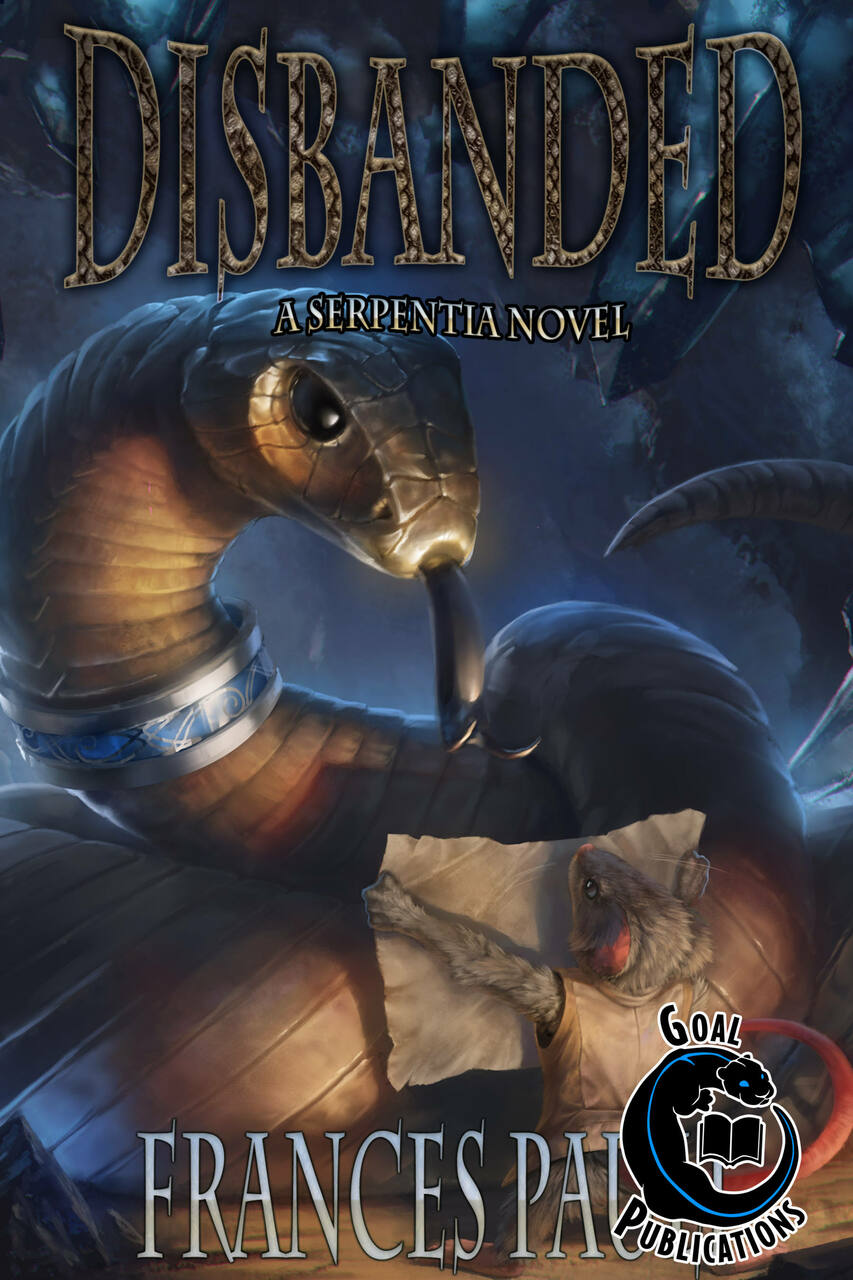
Disbanded, by Frances Pauli

Entanglement Boundby Mary E. Lowd

Qoholeth + Gallery Exhibitionby Madison Scott-Clary

Fox Spirit: A Two-Tailed Adventure, by Amy Clare Fontaine

Whip and Boot, by Herr Wozzeck

Ritual of the Ancientsby Ian Madison Keller

Symphony of Hunted Truthsby Leilani Wilson

Novellas

What Makes a Witch, by Linnea Capps

Rightful Salvageby Frances Pauli

Spin the Bottle, by Dajan Tafari

Anthologies

Difursity, by Weasel

Selections of Anthropomorphic Regalements, vol. 1, by KC Alpinus

Sensory De-tails, by Thurston Howl

Burnt Furby Ken MacGregor

OhMurrby Weasel

The Haunted Denby Tarl “Voice” Hoch and Thurston Howl

The Electric Sewer, by Thurston Howl

Short Stories

“The Battler” by Cedric G! Bacon in Even Furries Hate Nazis

“The Fire in Her Claws” by Mary E. Lowd in Daily Science Fiction

“Paths” by Kyell Gold in Sensory De-tails

“Water” by Utunu in The Voice of Dog

“Summer Strawberries” by Mary E. Lowd in The Voice of Dog

“Loving You is Wrong” by NightEyes Dayspring in The Voice of Dog

“Ember in the Night” by BanWynn Oakshadow in SPECIES: Wildcats

“Sharp” by Thurston Howl in Electric Sewer

“Keep Breathing” by Karter Mycroft in Zooscape

“Too Much Play” by TJ Minde in Give Yourself a Hand

“The Pine Lesson” by Ian Madison Keller in Ironclaw: Book of Legends

“These Are the Days of Our Lives” by Weasel in Sensory De-tails

Poems

“On Meeting My First Fur” by Chazz Chitwood in Furry Slut

Nonfiction

“Furry Erotica and Pornography: Art, Sex, and the Self” by Katav in From Paw to Print

From Paw to Print, compiled by Thurston Howl

Book Covers

Disbanded, by Ilya Royz

Once Broken, by Nomax

Selections of Anthropomorphic Regalements, vol. 1by Jonas Jödicke

When a Cat Loves a Dog, by Idess

Furry Slut, by Jessica Hart

Fox Spirit: A Two-Tailed Adventure, by Paola Tuazon

Purrgatorio, by Joseph Chou

Please support these wonderful writers by clicking through the links and buying what stands out to you. Trust me, they are all deserved winners!
Nominations are also open for the 2021 Leo Awards.


As always, the Furry Writers Market is the go-to place to find out which markets are currently open for submissions. Here is a quick rundown of the open calls.


The Furry Writers’ Guild is also looking for books to promote.
If you are a guild member who has a book release coming up, then please get in contact with us so that we can help share this news through our social media outlets. We will be keeping an eye out for new books ourselves, but if you don’t want us to miss it, send us an email or message and we can make a note of it.

For now, we will only promote self-published books if they are from a guild member. All books through a publisher will be considered. This scope may well change in the future, so keep checking back to our social media feeds and blog posts for more information.


The second half of 2021 is upon us. Things may not have been easy so far this year, but hopefully the next six months will see a gradual return to a better normal.
Keep writing, keep reading. Make it all furry!

J.F.R. Coates

FWG Pride Month Spotlight: Kayodé Lycaon

Welcome to the third and final Pride Month spotlight. This time we talked to Kayodé Lycaon (he/him), who has kindly answered our questions about his identity and his struggles. Please note that there is a content warning for some abusive subjects in some of these answers – Kayodé has highlighted them at the beginning of the relevant answers.


FWG: Tell the guild and our readers a bit about yourself.

Kayodé: Hi! I’m Kayodé Lycaon, a gregarious painted wolf living in the questionable habitat of southwestern Ohio, and I like to talk. A lot. So, steal a seat, grab someone else’s drink, and get comfortable.

I’ve done and learned a lot of things in my life. To misquote a phrase, I’m a wolf of many trades, master of one. I’m a senior software engineer who has worked in insurance, education, and now online sales. I’ve run a furry convention. I’m excellent at logistics. I read scientific papers, court cases, and textbooks. I run and play tabletop rpgs with friends. I leave dishes piled up next to the sink until I’m out of forks, but the kitchen table is always clean.

It’s a bit of a crazy life. (More on that later.)

FWG: What is your favourite work that you have written?

Kayodé: This is where I plug my wares, right? My story Dark Garden Lake in The Reclamation Project – Year One (Available in paperback from FurPlanet and ebook from Bad Dog Books.)

Shameless plugging aside, I really do love it. The setting of The Reclamation Project is full of moral and technological complexity. There’s a lot of room to explore ideas and characters. It’s a really good anthology that I was proud to contribute to.

The story itself is a huge milestone for me. It is the first story I consider to be “good”. Many of my previous dabbles at writing have had good concepts and ideas, but this was the first to have good execution. There are flaws, but for being so early in my writing career it’s better than it has any right to be.

When I finished writing Dark Garden Lake, I knew I had created something special. Every time I feel like a failure, I can look back at it and know that I’m both a writer and an author. Even if I never write again, I will still be those things.

FWG: What do you think makes a good story?

Kayodé: A good story engages with the reader’s imagination. All art has an audience, even if that is just the artist. Every reader has their own experiences to bring to the table. Every word the author doesn’t write, gets written by the reader.

In my own works, I’ll paint a scene with a few choice details and give the audience room to imagine. I drop a hint or two at a backstory that only exists in my notes. I slowly give the reader’s my characters’ thoughts, fears, and motivations so when the action hits, they know how the character feels without me having to say it.

FWG: How long have you been in the guild, and what changes have you seen with regards to how writing is handled since joining?

Kayodé: I haven’t been around here all that long. I officially became a member December 2019 about a year after I had started hanging out in the Telegram channel. A few months later, I was asked to fill in the Vice President role due to my prior experience in similar positions. Then the fire nation attac…the pandemic happened.

People stepped up to help run Oxfurred Comma. The newsletter is going out regularly. The guild has a number of volunteers who have come on board. It’s all very exciting and I’m looking forward to the future.

FWG: Can you give us a little insight into your identity, and how you fit onto the lgbtq+ spectrum?

Kayodé: I’m asexual, panromantic, and very much interested in sex. That last part throws people. (More on that when I talk about discovering my identity.)

There is an assumption by many people that asexuality is about lack of interest in sex. This belief is so pervasive that asexuality is seen as “opting out” of the LGBTQ+ community. The truth is, for some people, they identify as asexual because they have “opted out”. Since these people may later change their identification, this adds weight to this idea.

This incorrect belief is compounded by what asexuality actually is. Asexuality is about a lack of sexual attraction, not lack of interest in sex. For allosexual (non-asexual) people, sexual attraction is a fundamental experience. It is difficult to imagine what something feels like when you lack equivalent or applicable experience.

When I try to explain what asexuality feels like, I describe it as being horny without a target, but this leads people to imagine being frustrated or thwarted. This could not be further from the truth. When it comes to sex, I have plenty of choices, some being multi-player. I don’t feel any special connection to sex, it simply is, and I can do whatever I want with it.

This last part has led to many misunderstandings as I am also panromantic. I crave deep, meaningful relationships regardless of a person’s sexuality or gender, but those relationships have nothing to do with sex. This becomes a bit of a problem, as I can’t tell when someone thinks I’m flirting with them. It’s been a source of some painful misunderstandings and the butt of insensitive jokes.

It would be easier to deal with by “opting out” and just being on the sidelines as an ally, but I shouldn’t have to opt out. My experience is fundamentally different from a heterosexual person’s, and I have to deal with the same societal prejudices. Sexual attraction is pervasive at every level of society and culture. I’m constantly reminded that “your kind doesn’t belong here.” Whether I want sex or not, that makes me part of the LGBTQ+ community.

FWG: What does Pride mean to you?

Kayodé: Honestly, very little. I’ve always felt excluded from it as Kayodé and my memories prior to changing my name in 2019 are extremely spotty.

The one thing I do remember is being in fursuit on a float in a pride parade. Seeing all of the people in the crowd made me feel like I was on the outside looking at something beautiful within.

FWG: Was there a bit of a journey or story to you uncovering your identity? If so, would you be comfortable sharing with us?

Kayodé: It’s a long story inseparably linked to being bipolar and growing up in an emotionally abusive home. I’ll do my best to keep my descriptions brief, but my answer is long and may be triggering to some readers. Feel free to skip to the next bolded question.

I grew up in a family that considered mental illness to be at best a lack of character and at worst demon possession. “Try harder,” “suck it up,” and “you have no right to feel that way” were the messages I grew up with. Sexual desire of any kind was an unforgivable sin.

My struggle with identity started when I was nine years old and started having hypersexual episodes. Hypersexuality is terrible. At worst, hypersexuality is an unrelenting, insatiable need for sex. There is no relief from it. At best, sex consumes hours of each day just to stay sane. As I write this, I haven’t gotten to bed on time in weeks. Doctors and psychiatrists like to treat this as an addiction even though it is a well-documented symptom of mania. My parents were less charitable.

When I was twelve and other children were starting to go through puberty, I learned about how boys desire girls. It was all around me. At one point I got punched in the face by a jealous boyfriend getting mad for me talking to the person they had claimed. I didn’t understand any of it. I was constantly accused of being gay (an unforgivable sin) by my classmates because I wasn’t lusting after girls like they were.

By the time I was an adult, I didn’t understand what was wrong with me. I wanted to have sex, but there was no one I wanted to have sex with. I wanted to focus on my schoolwork, but I couldn’t. I wanted to write, but I couldn’t stick with it. I wanted to have self-control, but I didn’t. This was all my fault.

When I moved to Ohio, I attended my first furry convention and finally found a community where I belonged. The next year I was on staff. Slowly, through my first fursona, I started to explore who I was. The end result was depressing. I was a fatally flawed person condemned to fight the same struggles and make the same mistakes over and over again. My sexuality and gender were empty, null values that were assumed to be “straight” and “male” because that’s how everyone expected me to be.

Eventually, I started to discover my lack of sexual attraction had a label, but I was too busy with year-long cycles of depression and mania. In 2018, I made the mistake of letting someone talk me into being chairman of a convention. In August of that year, the accumulated stress of a lifetime caused something in my brain to snap and thus begin a four-month long descent into madness. Prior to this I’d long avoided engaging with the sexual side of the fandom. I embraced it fully and read everything furry and erotic I could get my paws on.

In Feburary 2019, I was diagnosed bipolar and started treatment. At the time, I described my brain, identity, and memories as a vase thrown against a wall and I was sitting on the floor looking at the pieces. My fursona was the only thing I could cling to remember who I was.

In June, he died. Slowly, medication gave me the self-control I had always lacked, and I began to realize it wasn’t me that was flawed. My previous fursona proved to be nothing more than a false mirror. And I broke. I became nothing.
In the aftermath, I had to build a new self. I sifted through the shattered pieces of who I used to be. I built a new fursona and gave him those pieces to carry. Slowly, Kayodé emerged. I read about asexuality and learned there was nothing wrong with my sexuality. I read about romantic and aromantic people and understood why I wanted the relationships I did.

I’m still grappling with who I’m becoming. My psychotic break severely damaged my long-term memory and I’m sure bipolar medication isn’t helping in that respect. I don’t have much to connect me to my past. My identity still has no gender. It is a complete blank that I have no strong feelings about. I’m used to being treated as male, so I use male pronouns. When I hear Kayodé or my legal name, I don’t recognize them as referring to me. When I hear my previous fursona’s name, it brings up a past I want nothing to do with.

But I know the important things. I know the things I want to do. I know why I feel the way I feel and I know there is nothing wrong with what I feel. That’s good enough for now.

FWG: How do you think being lgbtq+ has inspired or affected your stories? Have you written lgbtq+ characters into your works?

Kayodé: My own struggles with identity and relationships has more than inspired me—they are the entire purpose that drives my writing. Every one of my characters deliberately embodies a struggle or experience I have. It is somewhat unfortunate that I have an endless supply of source material.

Bipolar is defined by extremes. I have lived and experienced more in thirty years than a dozen neurotypical people would have in a lifetime. Mania fuels every extreme of emotion, from rage, to paranoia, to indescribable joy. Depression is an all-consuming emptiness. Psychosis is imagination unhinged, indistinguishable from reality. In four months, I lived an entire lifetime as an anthropomorphic wolf. Sadly, his experiences were worse than my own.

As a result, my (mostly male) characters span the entire rainbow: ace, bi, gay, trans, and more. I’ve found common experiences with all of them. With every story, I hope to give my audience a glimpse into a perspective they might not otherwise have seen.

FWG: Do you have favourite queer authors and has their literature affected your writing in the fandom?

Kayodé: I have limited experience with furry literature and none with any queer literature outside of the fandom. But since I’m here… I’ll embarrass the hell out of NightEyes, because that’s always fun! His short story A Moment of Darkness in Knotted (Available in paperback from FurPlanet and ebook from Bad Dog Books) was a story I really connected with. It’s taken me a while to notice, but reading it made me much more comfortable writing the stories I like to write. If he can write about cancer, I can write about mental health.

FWG: If you could convince everyone to read a single book, what would it be?

Kayodé: Without a doubt, Art & Fear by David Bayles and Ted Orland. I particularly like the audio book. It’s a book about the process of making art—“ordinary art”, as they call it. How many times do we sit down in front of a keyboard and get nothing done? This book won’t fix that, but it will explain, in depth, how art gets made (or not made). There are pitfalls everyone falls into. Insecurity about the things we create is the rule, not the exception.
If you want to have a better relationship with your writing, Art & Fear is a good book to read.

FWG: Any last words for our readers and guild members?

Kayodé: Thanks for reading! I hope you enjoyed reading my answers as much as I enjoyed writing them. (Also, buy the books!)


That is the last of the Pride Month spotlights for this year. We will be doing more spotlights throughout the year, of course.

The furry fandom is a special place because of (amongst other things) how open and welcoming it is to lgbtq+ people. It is a safe haven for many to explore and develop their identities, and this is something we need to cherish and embrace. This month and every month.

We at the Furry Writers’ Guild encourage everyone – our members, future members, and readers – to embrace and explore the myriad of identities that make us so special.

Stay Proud. Stay safe.
Happy reading.
FWG Pride Month Spotlight: George Squares

For the second Pride Spotlight of the month, we interviewed George Squares (he/him). Though George has had several short story credits to his name, he has recently been writing in a very different medium to most within the Furry Writers Guild.
This is what furry and queer writing means to him.


FWG: Tell the guild and our readers a bit about yourself.

George: Sure. I go by George Squares. I’m a gay man, I tend to focus heavily on writing horror, romance and erotica, and I’ve been in the furry writer’s guild for a long time. I’ve had stories published in anthologies such as Arcana and Dissident Signals for various presses.

Though I started out selling my writing for short story anthologies (one of the first things I published in the furry scene was a story called Interchangeable Parts in Will of the Alpha 2), these days I make a living off of script writing for various games studios. One of the biggest projects I’ve ever undertaken is managing and writing a visual novel for Echo Project called The Smoke Room, which updates approximately every month and a half. 

FWG: What is your favourite work that you have written?

George: Hard for me to say. I really enjoyed writing a highly risque transformation story that I put up on fur affinity called Something to Trade (it’s probably not a read for everybody), but I think my short story in Arcana, which was for The Sun’s Major Arcana, really stuck with me. But I think my strongest work is going into The Smoke Room at the moment.  

FWG: What do you think makes a good story?

George:
A lot of things can make for a good story, but at the end of the day, I think that the most important thing is emotional resonance. We remember how something made us feel the strongest, so if a story can make its audience feel, it will leave an impact. 

FWG: How long have you been in the guild, and what changes have you seen with regards to how writing is handled since joining?

George: I think I’ve technically been in it for around six to seven years. My involvement with the Guild had generally been around the periphery as my interest in publishing print media diminished. But what’s exciting for me to see more of recently is visual novels and interactive games getting embraced as “writing” in writing communities. People are opening up to supporting accessible multimedia projects that have as much depth as many books do.
 
FWG: Can you give us a little insight into your identity, and how you fit onto the lgbtq+ spectrum?


George: I call myself a gay man out of convenience (and I still consider that to be fairly accurate in terms of my identity), but if I went into the nitty gritty, I’m a masculine nonbinary person with some agender-leaning identity.
 
FWG: What does Pride mean to you?

George:
It means many things to me, but it mostly means a celebration of the perserverence of Queer (Or LGBTQIA+) identity over institutional hegemony and police brutality. I know we can trace most of the original celebration’s significance back to Marsha P. Johnson’s thrown brick at Stonewall. 

I’ve never had the chance to attend a pride event or celebration in person, but I know how important it is to people who are like me.
 
FWG: Was there a bit of a journey or story to you uncovering your identity? If so, would you be comfortable sharing with us?

George: A lot of it was pretty uncomfortable, as, no doubt, many folks in the same boat will tell you. My parents were devout baptists, so a lot of my adolescent and teen years had to be spent in secrecy and suppression. But a part of that was self-imposed due to religious indoctrination. 

It wasn’t until college, where I got to be on my own and explore who I was, until I felt ready to embrace something I already sort of knew from as early an age as 13. My parents were more accepting than I thought they would be at first. I still talk to them about this to this day, but our relationship is still rocky.

FWG: How do you think being lgbtq+ has inspired or affected your stories? Have you written lgbtq+ characters into your works?

George: Well, the graphic sex between men is impossible to miss, for starters. But when I’m writing without explicit sexual depictions, yeah, my sexual and gender identity always comes into factor. I think about what’s depicted as attractive or desirable to the PoV character. I think about what a touch is like between characters with chemistry vs. characters without it. And I think about what I would want to see in a work as a reader when I’m writing something, because even though we can’t always write only for ourselves, we can manage to write for people who are like us who are hungry for relatable stories.

FWG: Do you have favourite queer authors and has their literature affected your writing in the fandom?

George: Well I definitely have to mention Howly, who created Echo, which eventually led to the entirety of Echo Project. He’s very kind, he works hard, and he undervalues himself considerably, but I wouldn’t have been able to make games without him.

I also want to mention Redd the Shibe, who is my co-writer for The Smoke Room. We have banged our heads together on plenty of walls figuring out how to code and how to make a game but I really think we managed to get past our major hurdles, and I’m proud of us.   
I also need to mention some Devs in the MLM furry VN scene who I think are doing interesting work:
-Grizz (Password)
-Eddio (Killigan’s Treasure)
-Basket (Tennis Ace)
-Xarishro (Fuelled by Insanity)-Raus (Shelter)

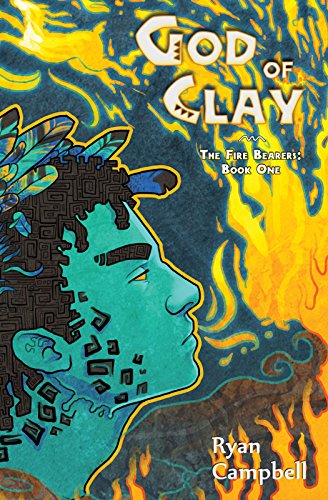
My earlier influences in terms of MLM representation in furry stories were K.M. Hirosaki/Rikoshi, Kyell Gold, and Ryan Campbell, and I’m looking forward to reading God of Fire in the near future. 
Robert Baird, and Ian Madison Keller are also really lovely writers who are enthused about their craft.

I have never asked my good friend and fellow writer Jess E. Owen’s private thoughts on her identity, but I would not be as good of a writer today without her, and I needed to mention her. 
I also need to mention my husband Cafealopex, whose early work in the Redwall Online Community over a decade ago inspired me to write in the first place.

FWG: If you could convince everyone to read a single book, what would it be?


George: Tough question, considering I want everybody to read widely, and I think everybody reading the same single book could lead to pop cultural problems (what’s that saying I keep hearing again and again about…. ‘read another book’), 
But… I think “Into the Wild” is a pretty solid nonfiction book that almost feels like it’s written like fiction, and I think anybody could get into it. It’s entertaining, it’s shocking, it paints a really good picture with scenes, and I think it has an important lesson.

IT is another book that I think would benefit a lot of people probably but it is very dark and very upsetting. 
If I had to choose a narrative game for everybody to play, it would be “Night in the Woods.”
If I had to pick a book for pride month for everybody to read? How about Wolfsong by T.J. Klune. Can’t go wrong with gay werewolf men. 

FWG: Any last words for our readers and guild members?

George: Remember that lots of things can be considered writing and that there’s lots of ways that you can make a living as a writer inside and out of this fandom. Don’t let anybody who tells you otherwise keep you in their shadow.

Celebrate pride month in your own way. 


George is one of the writers with visual novel company The Echo Project. Updates for all the visual novels can be found at The Echo Project’s Patreon page: https://www.patreon.com/EchoGame
You can follow George on Twitter @georgesquares

We have one more Pride Spotlight to come before the end of the month. In the meantime, please do check out George’s work. You will not be disappointed.

FWG Pride Month Spotlight: Ian Madison Keller

Pride is a very important month for so many reasons, especially amongst the furry community. Furries, as a whole, are significantly more queer than the rest of the population. Many identify with the lgbtq+ spectrum, and all efforts should be made to preserve the furry fandom as a space that is safe for everyone. The furry writing community is no different. This Pride Month, we will shine the spotlight on a few of the writers who give the furry community its wonderful diversity.

The first spotlight for this year’s Pride Month is Ian Madison Keller (he/him).


FWG: Tell the guild and our readers a bit about yourself.

Ian: I grew up in Utah and southern Idaho, and escaped to the Pacific Northwest as soon as I could. Although I wanted to be a writer since High school I ended up majoring in Accounting and not writing for many years.  But in 2012 I picked writing back up again and released my first book in 2014 and my first short stories were published in 2015. I also went back to school to get a certificate in editing, and have been editing stories and novels since 2018.

FWG: What is your favourite work that you have written?

Ian: Short stories, my favorite would be “Don’t Cry” one of the flash fictions I wrote for Flower’s Fang about the queen. I wrote it while figuring out the motivations for the queen and I just really love everything about it. Novels would be one of my latest, “Ritual of the Ancients.” I had a lot of fun writing the thriller elements and figuring out how the vampires and shifters of my world interact with each other.  

FWG: What do you think makes a good story?

Ian: A strong emotional core. No matter how action packed a book or movie, if I don’t care about the characters then I probably won’t finish it. 

FWG: How long have you been in the guild, and what changes have you seen with regards to how writing is handled since joining?

Ian: I’ve been with the guild since 2016. I’ve seen a lot more encouragement to new writers lately and more inclusivity, like with the online writing convention put on by the guild and the multiple ways to communicate, with the Discord, the forums, and the telegram channel.

FWG: Can you give us a little insight into your identity, and how you fit onto the lgbtq+ spectrum?

Ian:
I am trans-masculine and bisexual.

FWG: What does Pride mean to you?

Ian: Being proud, not ashamed, about my identity. Something I’ve struggled with a lot from growing up in the mormon church/church of latter-day saints. That’s why Pride looks like a big party, a celebration, because for so many of us we were told that our identities were wrong, something to hide, and even repress.

FWG: Was there a bit of a journey or story to you uncovering your identity? If so, would you be comfortable sharing with us?

Ian:
A very long one. I didn’t even know transgender was a thing until I was in college. I actually found out about it by typing “I wish I was a boy” into google and stumbling on LGBT and trans positive websites. Surprisingly the college I went to in Utah had an LGBT center, but there weren’t any trans-masc folks there. Even at the local Salt Lake City trans support group, I was usually the only guy there, and I got a lot of pushback from both that group and the women I dated to not transition. I ended up going back into the closet for more than a decade before actively pursuing transitioning again. 

FWG: How do you think being lgbtq+ has inspired or affected your stories? Have you written lgbtq+ characters into your works?

Ian: It affects all of my works, and almost everything I write has LGBTQ characters in it. Flower’s Fang has a lesbian couple, in The Dragon Tax you find out that one of the characters is bi, as well there is a non-binary elf character. And in my urban fantasy Changing Bodies story, the main character is a gay trans-man in the middle of transition. As well, I’ve written many short stories with a spectrum of characters of varying identities. 

As far as inspiration, some of my stories have been me wondering how a certain species might approach transitioning. Or how a vampire might deal with being transgender and unable to take hormones. Or about how dragons might feel about gender identities.

FWG: Do you have favourite queer authors and has their literature affected your writing in the fandom?

Ian: I honestly have not read a lot of books by queer authors. However, that is something I am currently working on by actively seeking out works by out queers. The way this has affected my writing is leading me to put lots of queer characters in my stories, so that others can read about the kinds of characters I wished I’d been reading about my whole life. 

Recently I did find a nonbinary author, Dorian Graves, who writes queer urban fantasy stories that I’ve greatly been enjoying.

FWG: If you could convince everyone to read a single book, what would it be?

Ian: I would go with House of Shards by Walter Jon Williams. This book is probably the biggest influence on my writing. Lots of humor wrapped in a serious story, and a whole host of alien races. 

FWG: Any last words for our readers and guild members?

Ian: Don’t forget the outside world exists! Be sure to put down books sometimes to venture out of the house. You’d be surprised by the things that can jump-start your creativity. Try to have hobbies outside reading and writing


Ian Madison Keller is a fantasy writer currently living in Oregon. Originally from Utah, he moved up to the Pacific Northwest on a whim a decade ago and never plans on leaving. Ian has been writing since 2013 with nine novels and more than a dozen published short stories out so far. Ian has also written under the name Madison Keller before transitioning in 2019 to Ian. His most recent series is Changing Bodies, a vampire & shifter urban fantasy published with Goal Publications. You can find more at his website, http://madisonkeller.net.

FWG Monthly Newsletter: May 2021

Welcome back once more for another monthly newsletter! This is going out a little late due to the change in presidency, which also means that things might be a little light on new information for this month.

June is, of course, Pride Month. There have typically been interviews done with writers who are lgbtq+, and I do not intend for this month to be any different. Obviously, things are a little delayed due to the hand-over, but I intend on reaching out to writers over the next few days in order to get some Pride Month spotlights released. If you believe you would make a good person to spotlight, please reach out to us.


You can find all kinds of submission calls for Furry writing in our Furry Writers’ Market! Currently, these markets are open.

Note that Zooscape will, as of the December 2021 issue, be a fully professional rate, as dictated by the SFWA. This means 8c/word on all accepted submissions, up to 5000 words.


As with the previous update, we are currently still finding our feet with this new role. Over time, we plan to have plenty more information included in these updates. New book releases will also be included with the anthology openings.

Until then, stay safe in these difficult times. Get vaccinated if possible and keep writing!

J.F.R. Coates

New Guild Presidency

Hello everyone!

Just a quick post for those of you who have been unaware of the recent developments with the guild, we now have a new president and vice-president.

Firstly, I would like to thank Linnea for all the hard work put in during the last year. The Furry Writers’ Guild has really improved as an organisation in this time. We hope to maintain this momentum.

For those who do not know me, I am J.F.R. Coates. I will be assisted by Kate Shaw as my VP. We are both looking forward to seeing how we can help further the guild, as well as maintaining the work put in during the last year. We do not want to see the guild taking any steps back, even if the steps forward we make may be small.

Over the next few days and weeks, we plan to set a firmer vision of what we want to achieve over this term. If there are any thoughts and suggestions for where you – the members – wish to see the guild go, then we are very happy to hear you! Please do contact us, either through the guild email or twitter accounts, or feel free to contact me directly via telegram at @JayFR.

I am aware the June Monthly Update has not gone out. I’ll get my head around everything involved with the transition, and aim to have something out during the week.

Thank you for reading. I am looking forward to this task of leading the Furry Writers’ Guild.

Here’s to a successful year ahead!

FWG Presidency Announcement

My fellow Guild members:

I’ll get right down to it — I, Linnea Capps, will be stepping down as president of the Furry Writers’ Guild.

The Guild finds itself at a crossroads. We have launched many new initiatives over the past year, and have been planning even more, working toward formal incorporation as a 501(c)(3) non-profit (alongside new membership benefits). This would require more involvement not only from Guild members but a massive investment of my own time and energy as president.

Unfortunately, I was recently diagnosed with a clinical case of burn-out. I’ll be okay with time to rest, but it has become clear I cannot continue to sacrifice my health this way. I am sorry to everyone this will disappoint, but I hope you’ll understand.

Our amazing staff (as well as many former presidents) have stepped up when needed to ensure that the Guild could continue to function. Unfortunately, with a lack of volunteer help and no other candidates for president, it is uncertain that there will be an enduring foundation for the Guild to expand its operations. It is thus infeasible to continue with these initiatives until such a foundation can be established.

With this in mind, let’s discuss what this means for the Guild going forward.


In accordance with the by-laws, we have gone through each current officer to accede to the presidency, with all declining the role. This leaves the Guild with no president and the by-laws lacking a way to deal with this situation. We have made our best effort to pass on the torch as fairly as possible. As such, beginning today, May 21st, 2021, the Furry Writers Guild will begin a special vote for an election of a president and vice president.

For a period of two weeks from May 21st, 2021 to June 4th, 2021 any Guild member may declare themself as a candidate for these positions. Candidates should announce their candidacies via the forums in the Guild Election section.

In the event that a new president is not elected, the remaining officers will form an interim committee with the intent to sustain our current services while constructing a plan for the Guild’s next steps. I will be staying on until after whatever transition takes place and am here to answer questions.


Before I close, I want to say one last thing — anyone considering running for president needs to understand the undertaking they are signing up for. Please reach out to me or other previous presidents to get an idea of what this entails. The end of our two-week period will be on June 4th, 2021. We’ll update everyone with any voting details as necessary then.


Sincerely, 


Linnea “LiteralGrill” Capps

President of the Furry Writers Guild

Asian American And Pacific Islander Heritage Month Spotlight: Mikasi

Welcome back to another spotlight for Asian American and Pacific Island Heritage Month! Last week, we had a lovely conversation with Robert Baird covering many topics. This week, we’ll be spotlighting Mikasi!

Mikasi is a Hainanese furry writing currently living the Republic of Singapore. During the day they work as a plastics R&D engineer. In their free time, they enjoy reading, going to museum exhibitions, and of course writing. While they began writing mostly speculative fiction, they currently focus on slice-of-life works.

With our introductions in the books, let’s get on to the interview!


FWG: What would you say makes a good story?

Mikasi: Something that makes you think about the scenes or thought it provokes when you are no longer reading it. Like when you are in the shower, or walking to work and you still think about those story/movie scenes despite no longer looking at it, it has done its job well.

A story that makes you feel, essientially.

FWG: If you could convince everyone reading this interview to read one piece of literature, what would it be?

Mikasi: For Anthologies, probably Stories of New Tibet Vol 1 and II. They show the fragility of life, and how easily it is devalued even though it takes considerable time and effort to replace. For novels, I enjoyed the Harry Potter series (up to book 6), because of vast amounts of worldbuilding which is itself hard to contemplate.

FWG: How would you say your Hainanese heritage has affected your writing?

Mikasi: I would say that in recent years, I started writing about characters from other countries who end up living in other countries. Such as the dorm student in my story “A Friend In Winter” (FANG 10), and “A Leap Forward” (Claw the Way to Victory).

There were occasions I had to live alone in other countries, such as in during my UK exchange program back in University, and I am all too aware I kind of look different I enjoy exploring this in fiction.

My Hainanese heritage also had me write stories with a taste of Chinese culture and legends, such as elements from Journey to the West (“Adversary’s Fall”, Gods With Fur)

FWG: Is that kind of “othering” (for lack of a better word) something you enjoy exploring through fiction, or is it more a way to try and emotionally sort through this difficult thing in a safe environment?

Mikasi: I try to put some of my own personal experiences where possible in my writing because it is “real” and hence will make the story relatable to those who’ve experienced the same before.

FWG: Are there any other things like themes, folklore, or other bits of your history that have made it into your stories you’d like to share?

Mikasi: I also wrote a story of a character who died, and has to experience his last 100 days on earth, based on Chinese underworld afterlife beliefs. It is during this 100 days that he discovers that despite their dedication, there is a time we have to let everything go

Singaporeans have to undergo a 22-24 month conscription process, so I have addressed conscription , and military service in both humorous (“Fathers to Sons”, Dogs of War) and less-humorous stories (“No Choice About It”, ROAR 10 and “In Better Times”, Difursity.)

FWG: The Stop Asian Hate movement has has a lot of discussion for folks in the United States. As someone who’s Asian, living in an Asian country, have you had to deal with some of the unfair and unfortunate bigotry towards certain members of the Asian community during the pandemic?

Mikasi: I have seen some bigotry in my country even before the pandemic, but most of it is due to cultural stereotypes of other ethnicities that may or may not be true for specific individuals. That said, it is unfair to judge a person on the basis of their culture or religion before knowing or understanding them.

In the UK, I have had a 7 and 9 year old sing a racist song to me and my 5 classmates, and in Canada, I had a storekeeper annoyed I asked her a product-related question, but I sometimes tell myself that I cannot use my own standards for judging people for others.

Singapore has 4 official races, but the Government’s strict laws (and penalties) against racism from anyone, even the majority race, keeps that to a minimum. Less aggressively, housing laws ensure a certain percentage of each race or ethnic group is present in every neighborhood, so no place is “Just for Race A, Just for Race B, etc.”.

When people meet and see one another everyday outside of school and work, they actually become more understanding and tolerant as other ethnicities don’t seem that “strange” to them.

FWG: If you could leave readers with a single piece of information about Hainanese culture or folklore, what would it be?

Mikasi: I don’t know much about specifically Hainanese culture, except Chicken Rice as a dish, but for Chinese culture in general, the epic legend Journey to the West (seems quite similar to The Wizard of Oz (one of my favorite books) by Frank Baum. They all feature characters from different backgrounds, (and species) who are seeking redemption from their previous misdeeds (Journey to the West), or looking for a higher sense of purpose (The Wizard of Oz).

This concept is actually very similar to our world. Despute everyone’s differences, in the end, ultimately, everyone is trying to pursue their own path to happiness, and whether or not we choose to help or disrupt them is entirely up to us.

And yes, we have our own holidays that draws a parallel with Western ones, such as the Dongzhi Festival (Winter Solstice Festival) which is held a few days before Christmas, and The 7th Month/Hungry Ghost Festival , which might seem similar to Day of The Dead or the traditional Halloween, though the 7th Month is a (Lunar) Month long.

This is interesting because despite all the above festivals and holidays originating from different places across the world, different cultures still make sense of personal beliefs in different yet very similar ways

FWG: Any last things you’d like to tell our readers?

Mikasi: There is a lot we can learn from stories that are very similar to real life. Because living people write stories, they put a bit of themselves and their life experiences into it. How the characters suffer, how they get past their adversities; they are all things people have all experienced at some point in history. Stories teach us we’re not alone in suffering and happiness.

They also give us a safe means to experience other people’s lives without (too) much harm. They allow us to travel to other worlds, worlds of the fantastical, of the strange, of the erotic and arcane, in futuristic cities and planets, and magical realms accompanied by angels and dragons. All this is possible, and more, just by the turn of the pages, and some willpower of reading those words written with lots of hard work.

So don’t be scared to try a book you haven’t read yet; perhaps a book you had on your cubhood bookshelf but never got round to reading. You might be surprised at what you might discover.


We would like to thank Mikasi once more for sitting down to chat with us. You can follow him on Twitter @MikasiWolf and see all of his current written works on his FurAffinity. Make sure to stay tuned for next week for another spotlight. Until next time, may your words flow like water.

Asian American And Pacific Islander Heritage Month Spotlight: Robert Baird

Hello everyone, and welcome back to another FWG interview! In honor of Asian American And Pacific Islander Heritage Month, we’ve reached out to several Asian furry authors to gain their perspectives on writing, every day life, and more. Today’s interview features Robert Baird.

Robert has been writing and posting stories within the fandom for over seventeen years so there’s no denying their experience. They were born in the United States but are currently residing in Berlin. With the introductions finished, let’s get on to the interview.


FWG: What would you say makes a good story?

Robert: I tend to gravitate towards stories with characters I can relate to, I think. I think a good story should be able to put the reader in someone else’s shoes. Not necessarily just to see new places or have new experiences, but even seeing the familiar through someone else’s eyes. I like that kind of intimacy, I think.

FWG: If you could convince everyone to read a single piece of literature right now, what would it be?

Robert: Okay, talk about being put on the spot. I’ll lead in by saying that I’m not sure there is one single piece of literature that I think will resonate with everyone, or maybe that is important for everyone to read, I find that I come back to A Canticle for Liebowitz often. I find something evocative in the idea of rebuilding, and perhaps also in the idea that we, as readers, might be aware of the cycles of history and I guess perhaps to break them.

FWG: Speaking of history, how would you say your heritage has affected your writing?

Robert: That’s also been cyclical, I guess I would say. Growing up, I never really thought too much about other cultures, and definitely not really my own. My dad was very “American,” I guess—things like Japanese folklore or observations weren’t much of a part of our lives. That fell to my mom to be a bit more interested.

As an adult, though, I’d say I’ve become a bit more aware of the way that other cultures are portrayed in popular culture, and I’ve made the effort to be more conscientious about that myself. It is less, if you follow, so much my heritage makes me want to write about Setsubun as it is that it makes me not want to write about other cultures in a way that is… “flattening,” for lack of a better word?

FWG: Trying to make sure you’re accurately depicting other cultures, making them interesting and engaging so people understand their significance. Something like that?

Robert: Yeah. It sounds funny to even describe dad as “assimilated”—he’s second-generation, we had a very “American” kind of childhood. And so it really wasn’t until fairly recently that I started to realize the kind of subtler ways that representation matters.

Even in furry, I think — maybe because of its crossover with anime and perhaps some of the more exoticizing science fiction — there is a disconnect between, I guess, the reality of a culture and how it’s portrayed. Which from a writing point of view, that also means there’s so much nuance that gets lost. It’s almost like a reduction to the most monolithic common denominator.

FWG: Is there something you’ve learned about Japanese culture through your explorations as an adult you notice people tend to get wrong often?

Robert: I think, bluntly, there can be — or there was when I was in college, maybe; perhaps it’s started to fade — a sort of putting it on a pedestal, or treating Japanese culture as sort of aspirational, in a way that masks some of the maybe less savory aspects? I guess the converse is true as well, though.

Americans in particular tend to view East Asians, I think, as pretty well integrated into the American fabric. I was in my 30s when I realized that my grandparents’ names weren’t actually “Mary” and “Harry,” or that Japanese immigrant weren’t allowed to naturalize until the 1950s. That’s not something my dad talked about. As I said, there’s just a lot of nuance that makes for a great of complexity.

I think the way that cultures get reduced to evocative imagery or interesting stories also masks the extent to which that presentation is a deliberate construct. My dad and his parents were on their way to being interned before a white farmer decided he could use some extra help. But I never really heard about that. I heard more about my relatives who served in the 82nd Airborne at Normandy. That’s part of a deliberate process of constructing one’s own history.

FWG: On another tough issue, a lot of discussions have begun in the United States surrounding the Stop Asian Hate movement. As someone not living in the states, have you been forced to deal with any of the unfortunate bigotry people have been facing since the beginning of the pandemic?

Robert: So. Yes. But—and there’s a significant “but” here—the character of it is a little different in Europe, or at least in Germany. I’ve definitely had people warn me about parts of town it’s best not to go to, but for the most part it’s been subtler. Not overt dislike or even overt racism but more an awkward lack of familiarity.

That said, I know acquaintances here who’ve gotten some slurs or, you know, COVID-related accusations thrown at them on public transit, say. And I have, thankfully, not had to experience any of them.

FWG: Would you have any suggestions on how other authors (or any of our readers) can be allies and support Asian people during this time?

Robert: So I’ll say that in general I’ve been very fortunate, both here and in the United States. Most of it was sort of playground-level nonsense. I’d say that kind of points at my answer to your question.

Two things. One is that, if you’re a kid of the 90s, like I am… y’know, I grew up on the Internet, in this kinda “don’t be so sensitive” environment. I would say do your best to genuinely consider the impact of things that you’d otherwise be inclined to dismiss as harmless or “just joking” or whatever. It adds up, and the thing is, it doesn’t have to. We could be better about that.

The second thing I would say is to remember that cultures are not monolithic. There is no one “Asian-American experience.” I would venture to say there’s not even one “Pacific Northwestern half-Japanese-American experience.” We should always expect to see diversity, and to look for the empathy that lets us understand that there are millions of Asian-American voices and none of us speak for all of us.

So we should strive for the empathy to listen without needing what we hear to be an answer, or a canonical explanation— just another picture of that complex patchwork that is any and maybe especially one that has been in the spotlight so harshly but at the same time gets viewed as “the model minority.

FWG: Any last things you’d like to tell the folks reading?

Robert: No, I would say “thank you” to you for reaching out. And I would say to readers, I hope I’ve said something you can take home as useful or helpful. But also, that not everyone will agree, probably! And you should expect that! I do!

And I think it’s a constant project to, y’know, keep our ears perked to hear why, and listen. I try to do that myself, and to remember that the world is complex, that it is always better to err on the side of compassion, and that I hope we’re all getting better at it.


We would like to thank Robert once again for letting us interview them! You can find their work on their website, Writing.Dog, and follow their adventures in life on Twitter @matrioshkadog. We hope you enjoyed this interview and will tune in next week to see the next author we have to feature. Until next time, may your words flow like water.

FWG Monthly Newsletter: April 2021

Welcome back once more for another monthly newsletter! “Wait, don’t these usually go out on the first of the month?” Yes they do, but we waited an extra day so we could share this exciting announcement!

We have had many authors ask for a tool to help advertise being open for commissions. At the same time, we’ve seen many fans of furry literature coming to Guild spaces asking for people to buy them from. So we got to work with the help of some friends in the Furry community to make it happen.

The Furry Writers’ Guild has teamed up with The Dealer’s Den to add the Writers Outlet to the Dealer’s Den Network of chats! The Dealer’s Den has been a staple as the auction website of the furry community for many years so we’re incredibly excited to have their expertise as a partner on this project.

This will be a place to post advertisements for taking custom commissions, openings for markets to write for, selling published works, and for anyone on the lookout for good furry fiction. Please check out the chatroom to see everything it has to offer.


You can find all kinds of submission calls for Furry writing in our Furry Writers’ Market! Currently, these markets are open.


Make sure to not miss the 2020 Coyotl Awards Presentation! It will be taking place on Saturday, May 8th at 10AM Pacific/1PM Eastern/6PM UTC. Please visit the Coyotl Awards website to get further details. We look forward to seeing who you all voted for.

One last thing: this month is Asian Pacific American Heritage Month. In honor 0f this, we’ll be featuring interviews with several Asian authors this month on our blog. Be sure to check these out to gain some new perspectives on the craft of writing and learn the bit about the heritage and culture of some of our guild’s finest authors.

Keep staying safe and offer yourself kindness when drawing on those creative capabilities during these tough times.

– FWG President Linnea “LiteralGrill” Capps